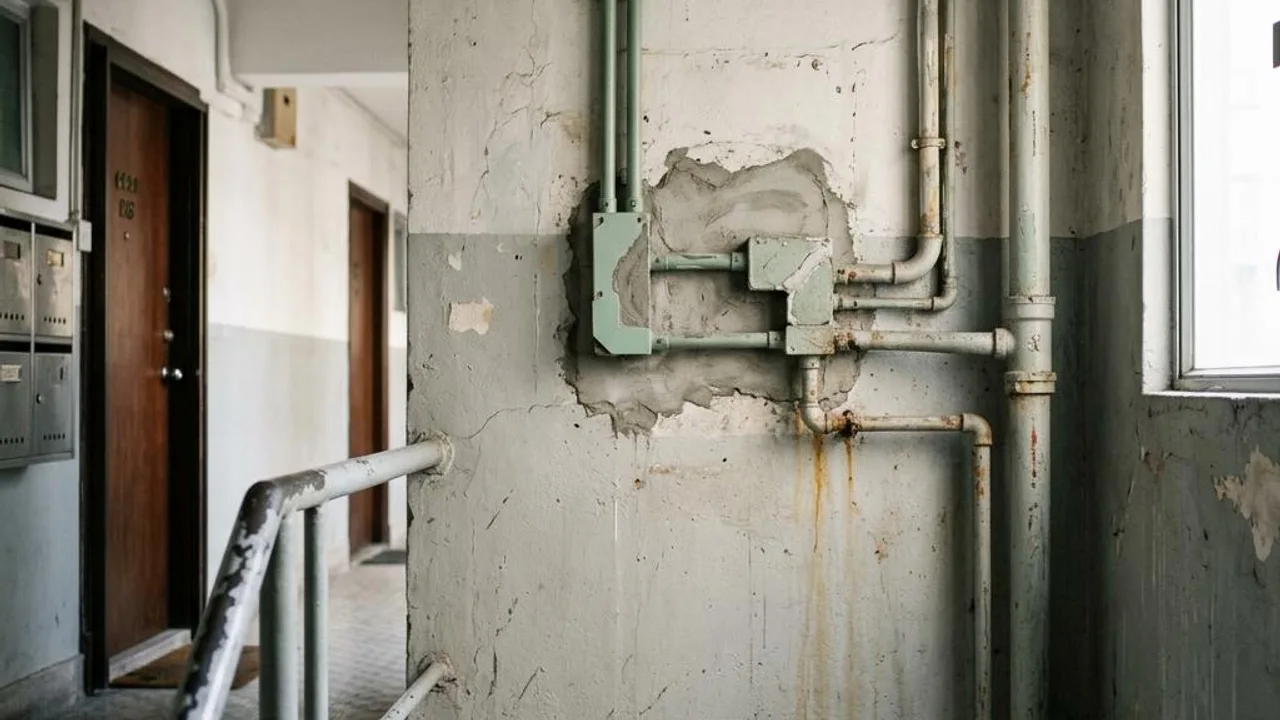
The potential crisis of non-transparent building maintenance accounts.
Many older single-block buildings and large residential estates in Hong Kong often experience information asymmetry in the major maintenance decision-making process because the power of the Incorporation Management Committee is too concentrated. When maintenance fund reserves are insufficient, the Incorporation is often in a rush to push for large-scale works; if there is a lack of transparent consultation, tender terms might contain targeted restrictions, hindering fair bidding. In Owners' Meetings, if high-cost projects are forcibly passed using proxy votes from sources unknown, the interests of minority owners will be seriously damaged.
This type of deep crisis involving non-transparent accounts not only forces residents to bear an additional, heavy financial burden, but if the engineering quality fails to meet standards, the property may also face the risk of a 'charge' (a claim being lodged) due to maintenance non-compliance. In the long term, this not only affects individual asset values but may also have a negative impact on the building's long-term residential safety. Minority owners must remain vigilant and proactively understand the financial operations of the Incorporation to protect their own legal rights and interests.
- The Management Committee has failed to regularly disclose financial statements and engineering progress.
- Tender terms are too stringent, which may exclude suitable contractors.
- Engineering settlement amounts exceeding expectations leading to significant fundraising.
- The proxy voting system is abused, affecting the fairness of voting results.
Deconstructing blind spots in engineering quotations and the risk of additional funding requests.
Owners often face the dilemma of 'low-price bidding, high-price settlement'. Contractors may hide grey areas in the tender, and after the works commence, they submit additional 'additional engineering costs' on the grounds of discovering structural ageing. For example, during concrete repair, the initially estimated material and labour requirements are significantly expanded, causing overall expenditure to spiral out of control. If the Incorporation lacks an independent consultant to act as a gatekeeper and blindly signs off on these procedures, owners will suffer huge financial losses.
This type of additional funding request often stems from insufficient preliminary surveys. Quotations often pack insurance, miscellaneous items, and temporary expenses together, making it difficult for owners to verify specific bills of quantities. It is recommended that when approving tenders, one must require the consultant to provide a detailed bill of quantities and clarify all quotation details, so as to avoid being forced to continuously raise extra funds in the middle of a project, resulting in a financial burden that exceeds the original expectations.
- Insufficient preliminary survey data leads to a massive increase in later engineering volume.
- Hidden miscellaneous fees cause overall engineering settlement amounts to spiral out of control.
- Contractors use additional work procedure clauses to increase extra profit.
- Lack of independent inspection proof leads to ambiguous billing accounts.
The legal right of owners to inspect accounts and monitor.
Minority owners are not just sitting ducks. According to the Building Management Ordinance of Hong Kong, the Management Committee must properly maintain accounting books, payment vouchers, and bank statements. After issuing a reasonable written notice, owners have the right to inspect these financial materials free of charge during appropriate times. If copies are needed, owners can pay reasonable photocopying fees to obtain them; this is the first important line of defence for monitoring Incorporation accounts.
When exercising the right to inspect accounts, one must pay attention to legal boundaries. Owners should communicate with the Incorporation through rational procedures and avoid barging into offices or making unfounded public accusations to avoid defamation lawsuits. At the same time, they should maintain communication with neighbours to jointly verify whether bank records and engineering payment requests match. For disputes involving professional engineering content, it is suggested to seek professional technical support rather than guessing based on personal experience.
- Citing the Building Management Ordinance to inspect accounting books.
- Notifying the Incorporation in writing to inspect accounts and obtain necessary copies.
- Comparing bank statements with actual engineering expenditure details.
- Verifying the whereabouts of proxy votes to ensure the fairness of meeting voting.
Analysis of account auditing and engineering supervision models.
Relying solely on owners' self-help for account inspection is often difficult to crack the complex engineering measurements and additional items from contractors. To improve monitoring efficiency, introducing third-party professional technical assessment is crucial. The following lists the features and applicable scenarios of different monitoring models; owners should adopt targeted defensive strategies based on the building's current maintenance needs.
Self-checking accounts is suitable for preliminary screening of income and expenditure; if procedural unfairness is involved, one can complain to the Home Affairs Department; for engineering quality and measurement disputes, one needs to hire an independent professional team to conduct an on-site reinspection. Combining the 'APAS' (Building Maintenance Tender Easy) platform provided by the government can reduce human intervention during the initial project planning stage and build a scientific supervision system for major building maintenance.
- Owner self-inspection is suitable for screening daily income and expenditure transfer details.
- The Home Affairs Department is suitable for handling mediation regarding Incorporation procedural violations.
- The URA 'APAS' provides fair valuation references.
- An independent inspection team conducts on-site engineering quality reinspection.
The role and necessity of a professional inspection team.
Faced with major maintenance costing tens of millions of dollars, relying solely on owners using their spare time to investigate has limited effectiveness. The core contradiction often lies in the discrepancy between the on-site construction area and the quotation list; for example, it is difficult for laymen to judge the actual quantity of concrete being broken and removed. At this time, an independent team equipped with professional testing instruments and experience can provide an objective on-site report, giving owners a basis to stand on during Incorporation meetings.
A professional team can assist in analysing details within the quotation, screening for unreasonable expenses. If a significant gap between the engineering volume and the actual situation is found, one should promptly require the Incorporation and the consultancy firm to explain, and if necessary, request the convening of an Extraordinary General Meeting to handle the dispute, ensuring public funds are used for their intended purpose.
- Using infrared thermal imaging cameras to detect exterior wall structures.
- Conducting professional hollow-spot detection to verify the quantity of repair works.
- Providing fair and objective on-site reinspection report data.
- Assisting in the analysis of contract disputes to avoid unnecessary expenditure.
FAQs
If suspicious expenditure is discovered in major maintenance accounts, what action should owners take first?
The owner should first issue a written notice requesting to examine the incorporated owners' accounting books and vouchers, then cross-reference the details of expenditure against the quotation. If any procedural irregularities or large, unexplained expenses are involved, they may seek advice from the Home Affairs Department and contact neighbours to discuss a collective strategy.
How should an owner respond if a contractor demands additional charges citing the discovery of extra work?
Additional funding requests are often the result of insufficient preliminary site surveys. The owner should require the incorporated owners and consultants to present detailed site evidence and an itemised list of extras to verify the necessity of the works, and should engage a third-party expert to help verify whether the scope and pricing of the project are reasonable.
Can hiring an independent engineering consultant for handover inspection prevent maintenance disputes?
Hiring an independent engineering consultant can provide impartial data on the quality of works on-site, assisting the owner in verifying the actual construction area and whether the project meets the required standards. This reduces information asymmetry and ensures that decision-making is evidence-based, though it cannot directly void a statutory contract already signed by the incorporated owners.