The impact of pushing windows with excessive force and leverage.
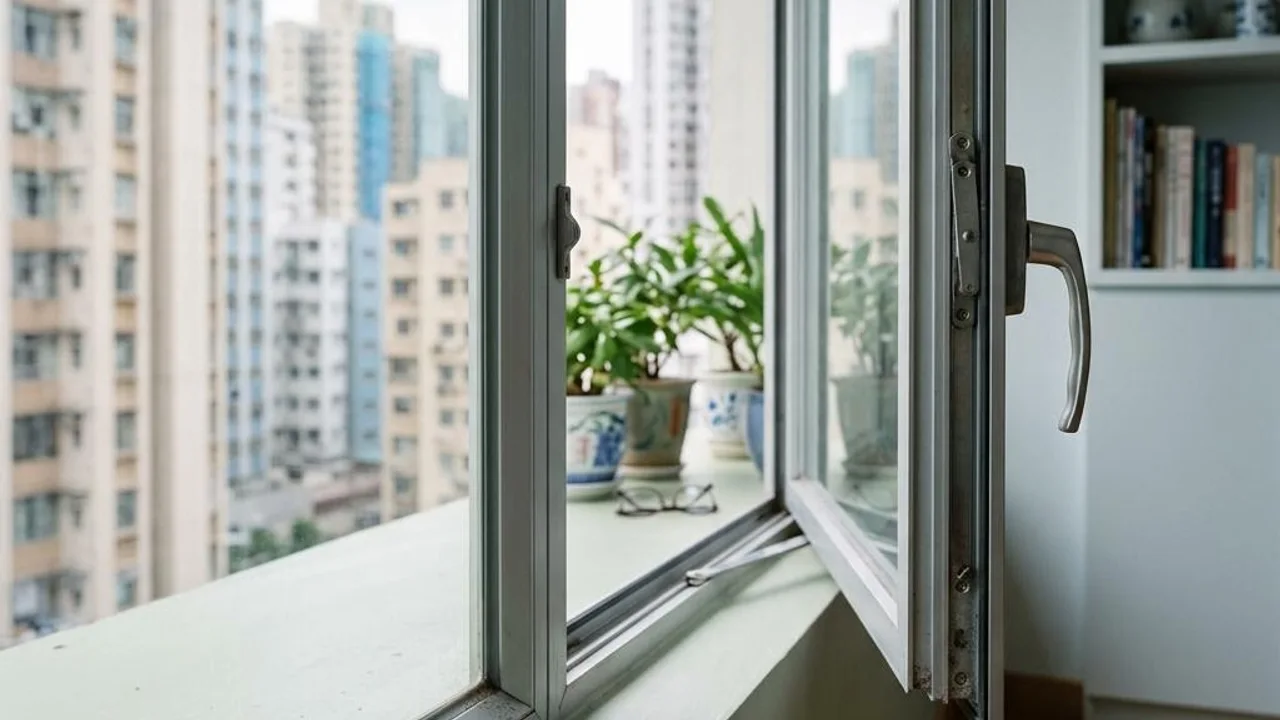
Buildings in Hong Kong bear long-term wind pressure, and window sashes are significantly heavy. When users frequently apply force incorrectly, especially when forcing them open when window hinges are jammed, the leverage effect formed at the handle transfers enormous torque to the window frame. Although aluminium alloy is corrosion-resistant, its ability to withstand shear and torsion has limits. Long-term forced application of force at a single point easily causes displacement of the window frame corner cleats, leading to deformation that is hard to notice with the naked eye.
Deformation of the window frame disrupts the precision balance of the aluminium window, not only increasing resistance when opening and closing but also causing the window sash and frame to fail to close tightly. This leads to premature damage of the surrounding waterproof rubber seals, becoming a channel for rainwater ingress in the future. Correct operation should involve using both hands to coordinate, sharing the pushing and pulling force to avoid structural fatigue caused by excessive force on one side.
- Avoid using one hand to grab the handle and force the window open.
- Ensure both hands apply force evenly when pushing and pulling the window sash.
- Be alert for abnormal metal friction sounds when opening and closing.
- Avoid continuous application of force when window hinges are jammed.
Common wear and tear problems at hardware connection points.
Hong Kong's climate is humid and has high salt content. Aluminium window hardware exposed to acid rain and salt spray for long periods is prone to galvanic corrosion. Early fixing methods using aluminium rivets have been gradually replaced by stainless steel window hinges, but if the screw torque is not installed according to standards, too loose will cause them to loosen under long-term vibration, while too tight will destroy the aluminium thread, resulting in stripped threads and causing the window hinge to lose stable support.
When the window hinge is unevenly stressed, it generates tilting shear force during the rotation of the window sash, causing metal parts to misalign and rub against each other, which is the source of the 'clicking' sound during operation. If these signals are ignored and maintenance adjustments are not made in time, severe cases can lead to deformation or even breakage of the hinge arm, posing a huge safety risk of the window sash suddenly coming off the track and falling.
- Regularly check if window hinges have signs of rust or powdering.
- Pay attention to whether fixing screws are loose or have stripped threads.
- Avoid forcing the window open or closed when the hardware already has abnormal noises.
- Confirm whether the window sash is aligned with the edge of the window frame.
Daily cleaning and safety maintenance strategies.
Daily maintenance should be based on safety first. Firstly, use a soft-bristled brush to regularly clear dust and sand from the window hinge slide rails; these hard objects accelerate hardware wear. Then, spray an appropriate amount of dry lubricant or silicone spray on the rotating joints. Do not use water-based rust removers, otherwise, it will be counterproductive as it will adhere to dust and accelerate hardware depletion.
Owners can periodically inspect the window hinge steel bars for bending and check for protruding screws visually. However, it must be emphasised that you must not lean your head or body out of the window to replace or tighten screws. This type of high-altitude risk operation must be handled by a qualified contractor. If you find the window frame is significantly tilted or the structure is unstable, please stop hitting it to calibrate by yourself immediately and seek a professional assessment.
- Regularly clear sand and stones from slide rails.
- Use suitable lubricant sprays.
- Visually inspect the integrity of the hardware's appearance.
- Do not perform high-risk high-altitude repairs.
Aluminium window inspection modes and professional assessment value.
Daily self-inspection is the foundation of prevention, but it is difficult to assess hidden microscopic torque values with the naked eye. The professional inspection team can use high-precision instruments like digital torque wrenches to check the actual stress condition of the window hinge screws. These quantitative data can precisely identify the critical point of metal fatigue, thereby effectively preventing structural hazards; this is more valuable for reference than simple visual observation.
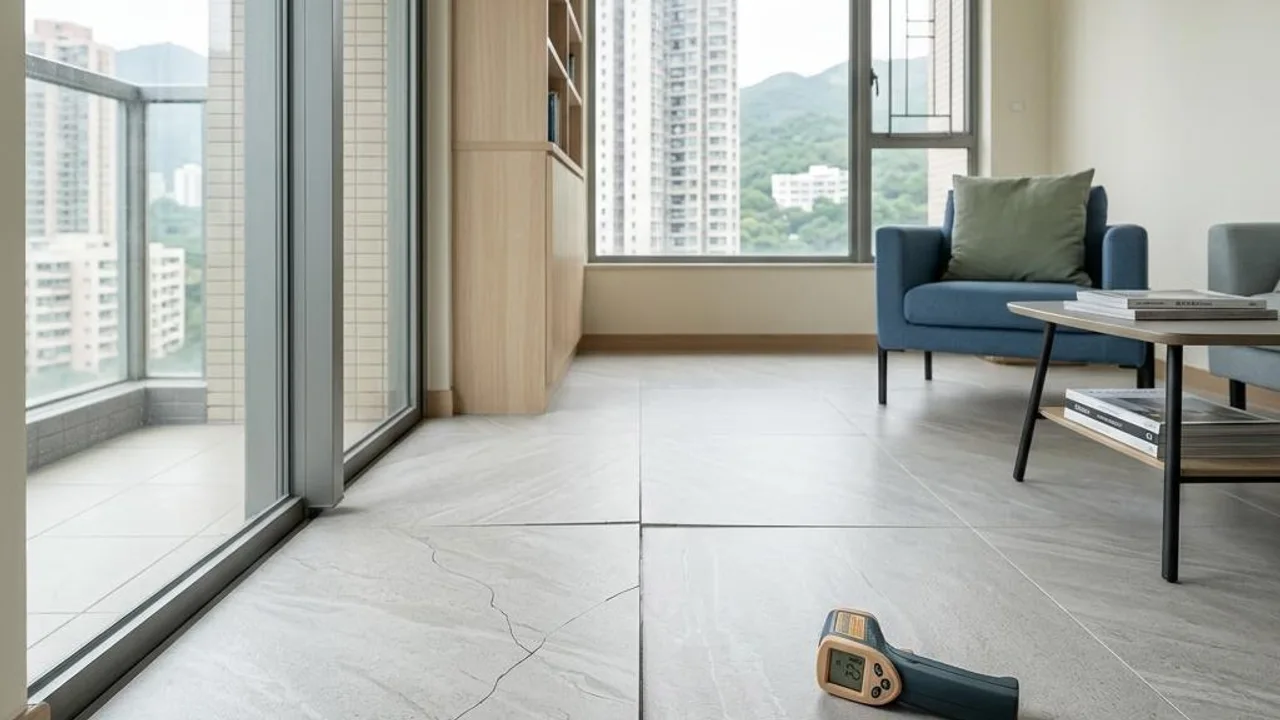
For new property handovers, secondary market transactions, and windows after major renovations, comprehensive inspections are recommended. Professional teams will not only evaluate the hardware function but also focus on waterproofing performance through infrared or other testing methods. Compared to finding someone to simply reinforce them, a professional, systematic inspection can provide scientifically-based repair suggestions to ensure home safety.
- Quarterly naked-eye inspections by residents.
- The inspection provided on this website is for general residential maintenance reference and cannot certify structure, electricity, gas safety, regulatory compliance, condition of hidden pipes, thickness of waterproofing layers, remaining useful life, or maintenance effectiveness. Thermal imaging technology only reflects surface temperature distribution and cannot be directly taken as a conclusion for the cause of leaks or hidden structural problems. Please do not view inspection tools as a guarantee that all hidden defects can be revealed. This service does not include statutory inspections under the Mandatory Window Inspection Scheme, which must be performed by qualified persons registered with the Buildings Department. For matters involving professional fields, please consult relevant professionals and do not conduct electricity tests, disassemble equipment, adjust water pressure valves, climb onto roofs, or perform dangerous operations on exterior windows yourself.
- Professional team digital torque testing.
- Professional infrared seepage assessment.
The necessity of seeking a professional team.
Aluminium windows involve structural loads and material mechanics; buildings in Hong Kong withstand strong winds at high altitudes all year round. If the problem of jammed operation is ignored, the long-term micro-cracks from metal fatigue can instantly disintegrate during typhoons. It is difficult for ordinary citizens to judge the aging degree of the waterproof sealant at window frame joints and the torque tolerance of the multi-point lock transmission shaft. These subtle risks often require professional intervention for assessment.
If a window appears to have obvious wobbling or abnormal noise, it is often a signal that the hardware component's lifespan has ended. Owners should seek qualified personnel to perform disassembly and inspection. Do not use power drills or force to reinforce them yourself, to avoid damaging the aluminium window frame structure. Professional teams can assist in assessing whether large-scale repairs or replacements are needed, solving safety hazards from the source.
- Identify structural micro-cracks that are hard to see with the naked eye.
- Quantify window hinge torque to ensure it meets original factory tolerances
- Conduct a comprehensive inspection of window frame weather stripping for aging
- Obtain professional advice for maintenance works
FAQs
If the window sash feels significantly heavy or makes unusual noises during daily operation, how should a property owner perform a preliminary check?
Owners can first check for visible bending of window hinges, loose screws, or flaking metal powder, and observe whether the sash aligns with the frame when closed. Do not lean out of the window to inspect. Once issues are discovered, contact qualified personnel to follow up.
What are the essential contraindications when using lubricant on window hinges?
Please use specific dry or silicone-based lubricants. The use of water-based rust removers is strictly prohibited, as the latter will attract dust and grit into the window frame's tracks, which will instead wear down the metal hinges and accelerate the aging of the hardware.
Why is there a risk in attempting to reinforce or repair aluminium windows yourself?
Aluminium window repairs involve metal mechanics and structural integrity. Without professional equipment to calibrate torque, self-reinforcement can easily lead to stripped threads or deformation of the window frame. Furthermore, works involving high-altitude access must be performed by qualified personnel to avoid the risk of falling objects.