Why check the exterior wall while standing by the window? Uncovering the hidden risks of aging building pipes.
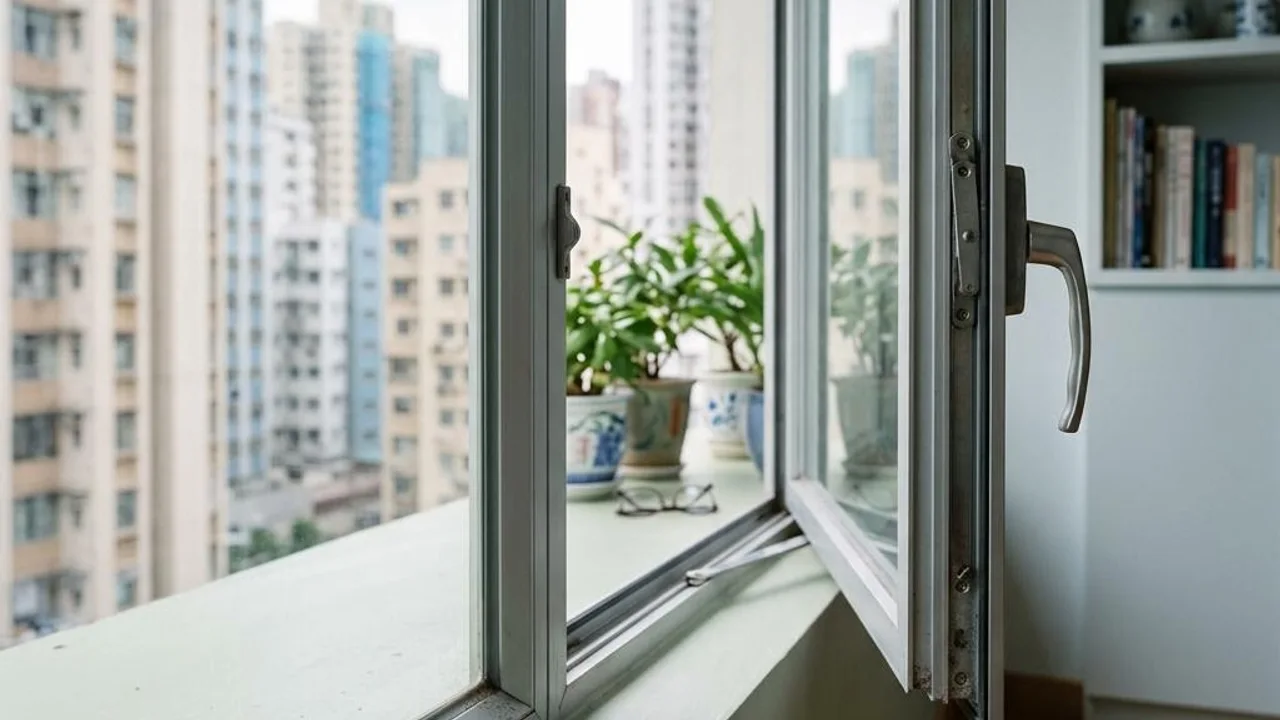
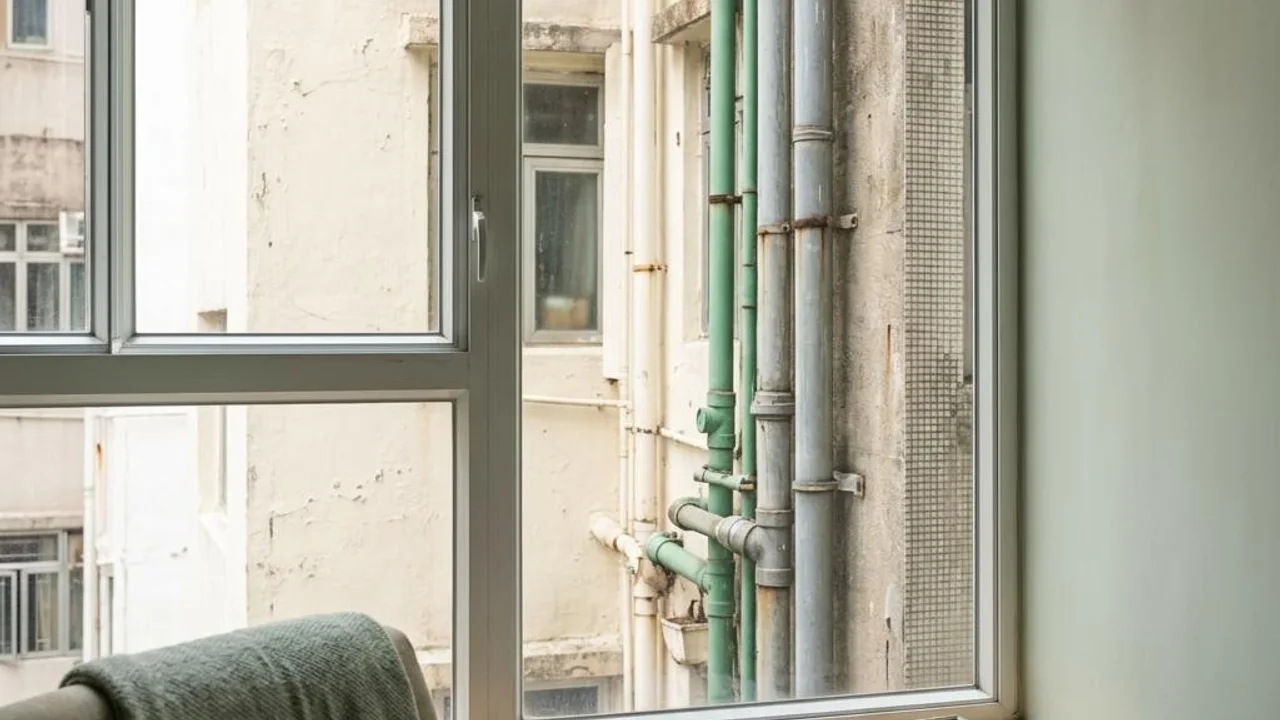
In Hong Kong's high-density residential environment, buyers often focus too much on interior decoration, ignoring the exterior wall pipes adjacent to the windows. In fact, these drainage pipes, salt/fresh water pipes, and air-conditioning drainage pipes distributed on the exterior wall are barometers of a building's health.
When pipes show visible signs of severe corrosion or abnormal water stains, it often indicates that the building is facing a long-term seepage crisis. If such a unit is purchased, the owner will not only have to deal with interior seepage, but may also face large-scale exterior wall repair costs resolved by the owners' corporation, potentially leading to a serious budget overrun for renovation.
- Observe whether there is any loosening at pipe connections.
- Check if the air-conditioning drainage pipe is dripping water continuously.
- Be alert for signs of corrosion on the exterior of drainage pipes.
- Assess the distance between the exterior wall pipes and the window sill edge.
What do pipe rust and patches indicate? Identifying building maintenance status.
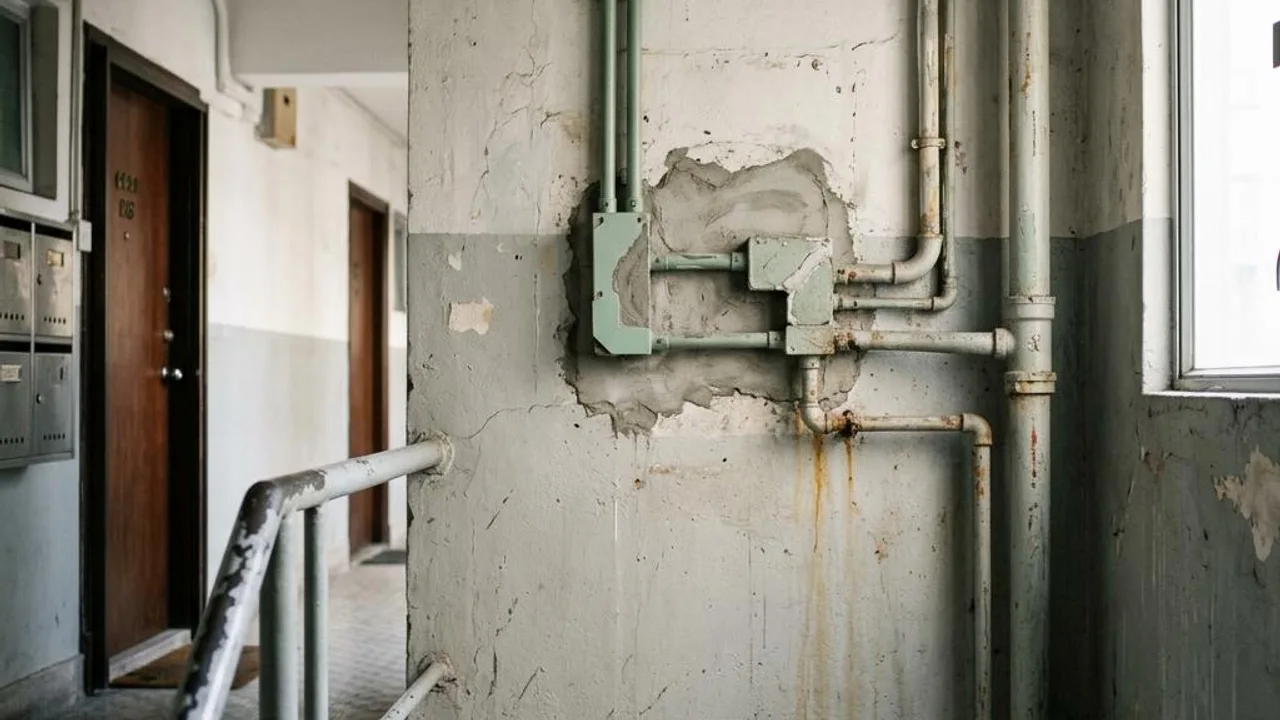
Carefully observe the exterior wall outside the window. If you see pipes wrapped in new materials or obvious new cement patches on the wall, it usually reflects that the building has undergone repairs for seepage or aging. These visual clues can help buyers make a preliminary judgment on the building's maintenance history and assess potential property risks.
If there are many repair marks on the exterior wall, it is recommended that buyers inquire with the management office or estate agent about the most recent exterior wall maintenance records. Understanding whether the building is still paying off repair costs in installments can prevent unexpected financial burdens after taking possession of the property.
- Green rust on the pipe surface indicates long-term lack of maintenance.
- Cement patches on parts of the wall suggest previous structural seepage repairs.
- New brackets and pipe wrapping might indicate the building has just completed repair works.
- Ask the management office to confirm if there are any outstanding maintenance debts.
The impact of damaged pipes on the floor above and the risk of water seepage to window sills.
Some owners mistakenly think that if there is no water leakage inside, it is safe, but the building's exterior wall structure is complex. The air-conditioning drainage pipes and kitchen/bathroom sewage pipes of the units above often pass above or beside your window. Once the joints of these exterior pipes age and break, water seepage will flow along the exterior wall.
Water can seep into the interior through tiny gaps in the window frame, triggering problems such as dampness on window sills and mould in wall corners. The root of this problem, caused by exterior walls or public pipes on the floor above, is not inside the unit; relying solely on interior waterproofing repairs is usually ineffective and must involve the intervention of the owners' corporation.
- Check for water marks by the window during rainy days or when the unit above is using water.
- Notice whether there is any paint peeling at the window sill edge.
- Confirm whether the seepage originates from the flow of the air-conditioning drainage pipe.
- Pay attention to whether the rubber seals of the window frame have aged and failed.
Safety observation scope and professional technical boundaries.
When facing exterior wall pipe problems, owners should distinguish between safety observation and professional inspection. Daily observation via the naked eye or telephoto photography to record pipe conditions, observing the degree of corrosion and checking for abnormal dripping, as well as inquiring with the management office about building maintenance reports, falls under the scope of an owner's safety observation.
It is strictly forbidden to try to reach out of the window to touch or self-repair exterior wall pipes. The exterior wall of a building is a public facility; unauthorised alterations not only violate the Deed of Mutual Covenant but also carry extremely high personal safety risks. When seepage is serious and continuously affects interior living, a professional technical team should be immediately engaged for an in-depth assessment.
- Use a mobile phone to zoom in and record the condition of the exterior wall.
- Regularly check window sills and corners for new water stains.
- Strictly forbidden to touch or alter exterior wall pipes by yourself.
- Seek professional assessment from a qualified property inspector at the right time.
Key points for handling common exterior wall pipe problems.
After identifying concerns about exterior wall seepage, the most important thing is to keep records. Record the patterns of the seepage, such as during rainy days, dry weather, or while the upstairs neighbour is using water. This first-hand information is crucial for subsequent reports to the management office or for assessment by professionals.
Remember not to try to handle the exterior wall yourself, as improper handling may lead to further damage to the pipes, causing larger-scale seepage or accidental falling objects. You should request an inspection of the common pipes belonging to the building via the property management office and have repairs conducted by a qualified contractor.
- Record the time and weather conditions when seepage appears.
- Proactively report the condition of public pipes to the property management office.
- Retain relevant photographic records for reference by technical personnel.
- Do not replace or repair exterior wall pipes yourself.
FAQs
If there is seepage from pipes outside the window, can I do waterproofing inside the unit myself?
No. If the source of seepage is the public pipes on the exterior wall, interior waterproofing can only cover the surface and cannot solve the root cause of the leak. Blindly sealing the wall might lead to water accumulation inside the structure, further damaging the wall. The owners' corporation must be contacted to arrange for qualified personnel to repair the exterior wall.
When buying a property, I found severe rust on the building's exterior pipes; how should I check who is responsible?
You should request the estate agent to obtain the most recent maintenance report and special fund expenditure records from the owners' corporation or management office. This confirms whether the pipe is a public asset and part of the building management scope, and whether there are any large-scale maintenance projects planned for the future.
Can I set up my own tools to observe the condition of the pipes by the window?
Absolutely not. When performing exterior wall inspections, one must ensure their own safety; it is strictly forbidden to lean out of the window, climb, or use unapproved scaffolding tools. If a detailed assessment of the pipe condition is needed, hire professional inspectors who have the relevant safety equipment and techniques to carry out the inspection.