Scientific flow field analysis and causes of airflow dead spots
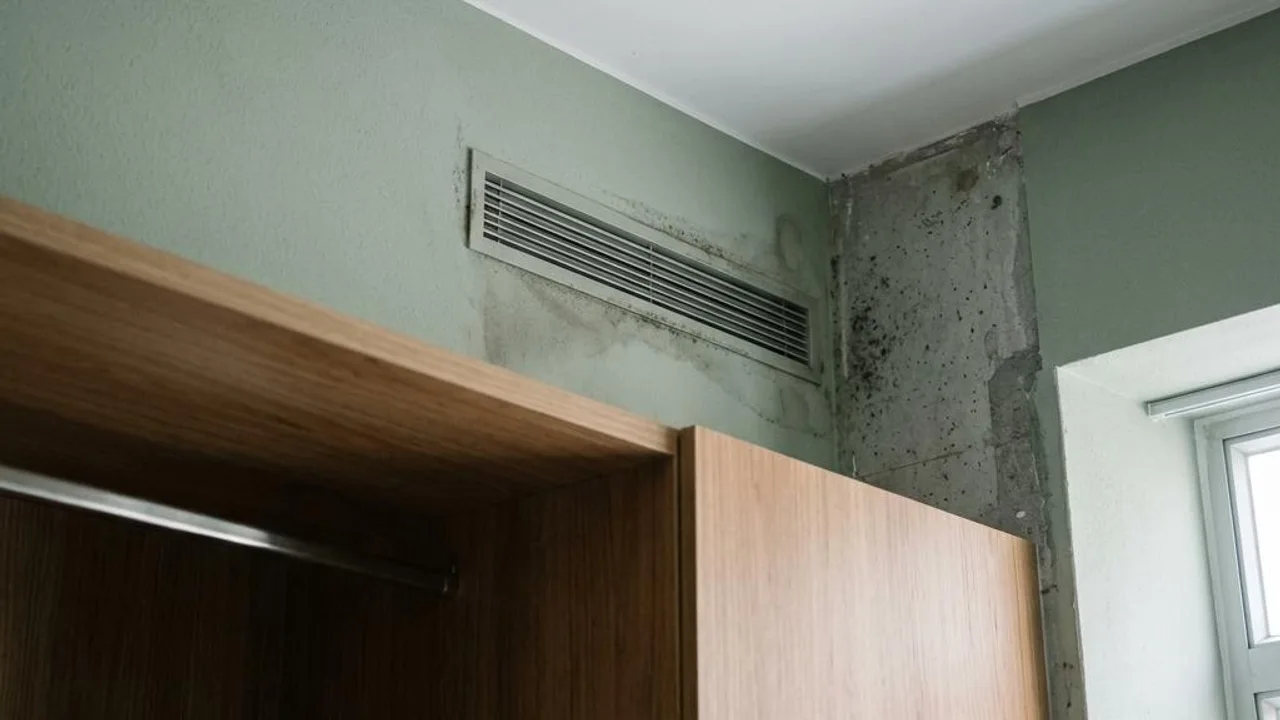
Basement parking spaces are located deep underground and lack direct sunlight, keeping them in a high-humidity environment for long periods. Deep beams, large column placements, and dense piping designs in the building structure easily block air movement, causing dead spots where airflow stagnates. When air cannot circulate freely in the space, moisture accumulates in these dead spots. If a vehicle is parked there for a long time, it is highly likely to trigger metal oxidation and rusting on the car body or mold on the interior trim.
Professional environmental testing involves scientific flow field analysis. Through high-precision anemometers and micro-anemometers, the airflow speed at various points in the parking space can be concretely quantified. This analysis can accurately label which areas belong to 'humidity islands'—those enclosed zones that cannot receive dry airflow—providing essential physical data support for subsequent improvement projects.
- Use high-precision anemometers to assess the airflow coverage of the entire area.
- Identify air dead spots and retention zones behind building structure beams and columns.
- Analyze the position of the return air vent in the parking space and whether the extraction operation is efficient.
- Define areas with potential for high humidity and mold growth risk.
Optimization of system circulation and dehumidification efficiency
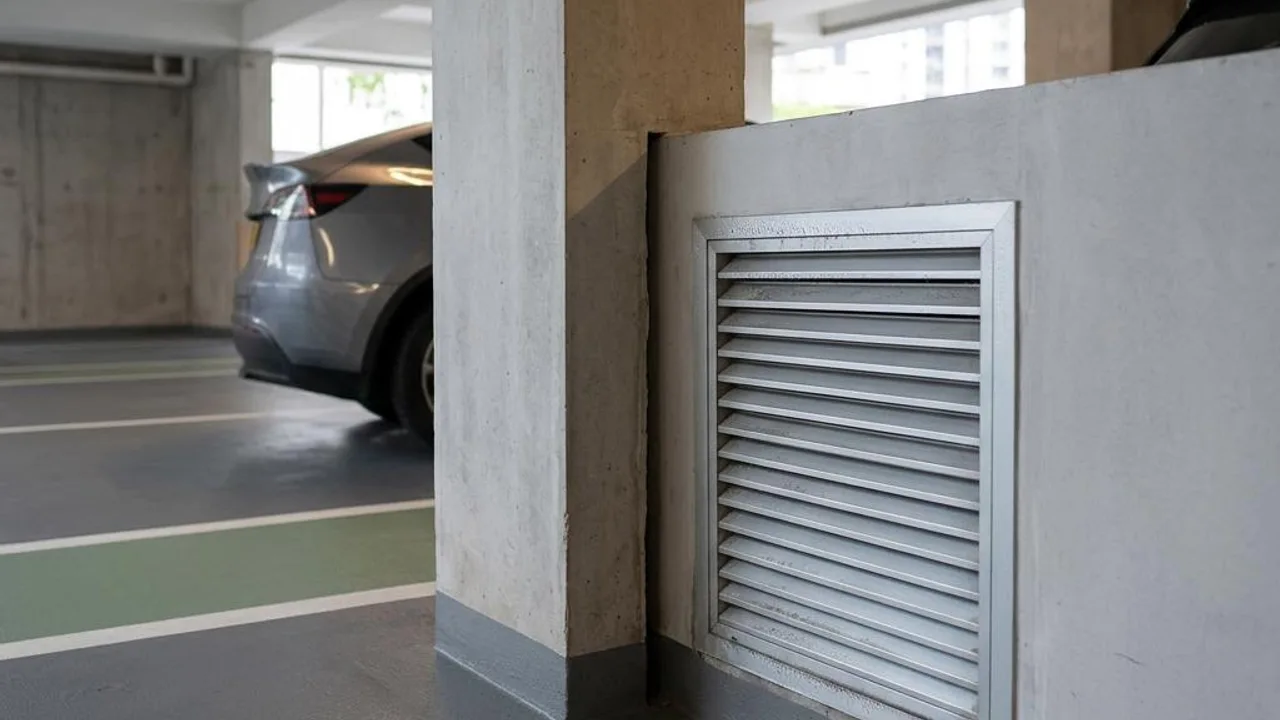
Once airflow dead spots are identified, systematic adjustments are needed to activate air circulation. Owners can change the projection angle of the ventilation equipment's louvers to alter the supply air direction, allowing it to avoid obstacles and reach deep into narrow parking spaces. If the space structure is too complex, installing circulating relay fans is also a common and effective solution, which can actively guide dry air to circulate behind structures and vehicle undercarriages, improving localized ventilation efficiency.
The balance of system operation is equally important. Ensure that the suction of the return air duct can be evenly distributed so that moisture can be smoothly introduced into the condensation drainage system. At the same time, the relative humidity in the parking space should be strictly monitored. It is recommended to keep it below 70% in the long term, which helps to inhibit the growth of mold spores, build a solid moisture-proof barrier for the underground space, and reduce the impact of extreme weather.
- Fine-tune ventilation louver angles to optimize air guidance.
- Install circulating relay fans at dead spots to enhance disturbance.
- Ensure that return air suction can be evenly distributed within the space.
- Strictly control relative humidity below 70% to inhibit mold.
Preventive maintenance and long-term asset protection
Incorporating airflow checking and ventilation maintenance into the annual management plan is a wise asset management strategy. Before the 'Returning South' (spring tide) or rainy season arrives, advance system checks and performance assessments can pre-emptively intercept moisture damage. Good air circulation not only protects the vehicle's appearance but also reduces the operating load of air conditioning or dehumidifier equipment, preventing increased energy consumption and premature damage due to long-term overload.
Through continuous scientific management, owners can reduce expensive expenses derived from mold contamination or electrical damage in the future. When the entire underground parking space ventilation network remains fluid, the maintenance frequency of mechanical equipment will decrease significantly, thereby maintaining the long-term asset value of the property. Prevention is better than cure; regular system performance evaluation is a necessary means to ensure the environmental quality of basement parking spaces.
- Plan annual check-ups and ventilation system maintenance cycles.
- Regularly evaluate equipment operation performance and clean filters.
- Optimize ventilation efficiency to reduce energy consumption for air conditioning and dehumidification equipment.
- Extend the service life of related facilities and building structures within the parking space.
Seeking professional ventilation engineering assistance
Basement parking space ventilation involves fluid dynamics and building aerodynamics, with a complex and changeable environment. General owners often find it difficult to perceive changes in flow velocity or humidity differences in hidden areas with the naked eye alone. To ensure that the anti-moisture scheme is effective and does not damage renovations, consulting an engineering team with recognized qualifications is key to ensuring the accuracy of the detection. Professional teams are equipped with precision instruments and can provide owners with quantitative analysis based on science.
Engineering personnel will assess the spatial layout of the parking space and suggest appropriate ventilation improvement plans. When choosing professionals, ensure that they can provide an objective on-site assessment report and suggest targeted improvement measures. Through professional assistance, owners can more clearly understand the potential problems of the parking space environment and take correct preventive measures, avoiding blindly trying unsuitable anti-moisture methods.
- Configure professional-grade anemometers and micro-flow measurement equipment.
- Perform scientific and data-based humidity distribution assessment.
- Adopt non-invasive detection methods that do not damage existing renovations.
- Provide objective and specific ventilation improvement plans according to site conditions.
Common questions and answers
Basement parking space environmental maintenance involves a variety of complex factors. The following are common concerns and professional observations for owners to help clarify correct maintenance concepts.
If you encounter persistent or unresolved dampness issues, it is recommended to engage a professional engineering team to conduct a detailed airflow and flow-field test to avoid incorrect operations.
- Q: Does the musty smell in the car park mean the dehumidification system has failed? A: Odour is an indicator of environmental conditions, suggesting the presence of moisture accumulation or mould growth in the space; however, it cannot serve as a standard for measuring health hazards or diagnosing air pollution values. This is a prompt to further investigate stagnant water in dead corners or ventilation efficiency; it is recommended to appoint a professional team to perform a detailed flow-field test.
- Q: Is a domestic dehumidifier enough to cover a large car park? A: The dehumidification capacity and air circulation radius of general domestic equipment are limited. If the car park structure is complex or located in a dead corner with poor ventilation, a single unit is usually unable to cover all areas effectively. It must be used in conjunction with circulation fans to stir the air, ensuring that dry air can reach every corner evenly.
- Q: Why does the car park still feel damp even after turning on the fan? A: Simply using a fan only disturbs the air. If the damp air is not exhausted or treated by dehumidification equipment, the moisture is merely moving within the space rather than being removed. The solution must combine ventilation and dehumidification to ensure an unobstructed circulation path, effectively guiding damp air towards the exhaust vent or dehumidification equipment.
FAQs
Does the musty smell in the car park mean the dehumidification system has failed?
Odour is an indicator of environmental conditions, suggesting the presence of moisture accumulation or mould growth in the space; however, it cannot serve as a standard for measuring health hazards or diagnosing air pollution values. This is a prompt to further investigate stagnant water in dead corners or ventilation efficiency; it is recommended to appoint a professional team to perform a detailed flow-field test.
Is a domestic dehumidifier enough to cover a large car park?
The dehumidification capacity and air circulation radius of general domestic equipment are limited. If the car park structure is complex or located in a dead corner with poor ventilation, a single unit is usually unable to cover all areas effectively. It must be used in conjunction with circulation fans to stir the air, ensuring that dry air can reach every corner evenly.
Why does the car park still feel damp even after turning on the fan?
Simply using a fan only disturbs the air. If the damp air is not exhausted or treated by dehumidification equipment, the moisture is merely moving within the space rather than being removed. The solution must combine ventilation and dehumidification to ensure an unobstructed circulation path, effectively guiding damp air towards the exhaust vent or dehumidification equipment.