Principles of confined spaces in new developments and odour accumulation
If an owner smells a pungent or slightly acidic odour upon taking possession, it is usually because the unit has been kept closed for a long period before move-in. In a static environment lacking air circulation, trace volatile substances from wall materials and paint cannot dissipate and become concentrated over time. This phenomenon is common in modern properties and is an initial condition after handover, not a quality issue with the paint.
Additionally, the humid and stuffy environment of spring and summer accelerates the release of these substances. When the indoor temperature rises, odours originally stable within the building materials become more apparent. This is a common phenomenon in new buildings; when a space that has been sealed for a long time is opened to outside air, the smell usually dissipates gradually as ventilation continues.
- Long-term sealing after handover causes accumulation of volatile substances.
- The high humidity and high temperature of spring and summer accelerate odour release.
- Lack of air circulation paths for indoor wall materials.
Composition characteristics of eco-friendly water-based emulsion paint
Modern eco-friendly paints mainly use water as a dispersing medium, significantly lowering the VOC content of traditional solvent-based coatings. However, to ensure smoothness after the paint film cures, film-forming additives are added to the formula, and the evaporation process can carry a slight fruity, ester-like, or acidic smell. Such odours are a normal reaction during the drying process of wall coatings, not long-term toxic emissions.
To suit the humid climate in Hong Kong, preservatives and anti-mould agents are usually added to the paint to prevent microorganisms from growing on walls when humidity is high. As moisture evaporates, these preservative components are released and blend with the limy smell of the plastering layer, creating the distinct 'new house' smell perceived by owners. These smells dissipate naturally as the paint dries thoroughly.
- Film-forming additives: Help the paint dry to form a smooth surface.
- Preservatives/anti-mould agents: Prevent water-based paint from deteriorating in humid environments.
- Water-based solvents: Act as the main dispersing medium for paint.
Scientific indoor air improvement strategies
The most effective method to improve new property odours is to create 'golden cross-ventilation'. Owners should fully open all windows on a sunny day and place a fan in the centre of the unit blowing towards the window, thereby creating negative pressure airflow to forcibly accelerate the replacement of indoor residual volatiles with fresh outdoor air. This is the most direct and efficient means of diluting odours.
When using air conditioning, avoid turning on internal circulation mode for long periods to prevent odour molecules from being adsorbed by filters and recirculated; it is recommended to introduce fresh air appropriately. If using activated carbon for local adsorption, it should be placed in the dead corners of cabinets and exposed to sunlight regularly to restore efficiency, but do not rely solely on adsorption media—comprehensive natural ventilation is the core of improving indoor air quality.
- Window cross-ventilation: Create negative pressure airflow to accelerate gas dilution.
- Avoid internal circulation: Introduce fresh air appropriately when air conditioning is in operation.
- Local adsorption: Place activated carbon in cabinet dead corners.
- Regular replacement: Ensure adsorption media maintain optimal performance.
Common sources of indoor odours and identification
Sources of indoor odours are diverse and should not be blamed entirely on wall paint. Paints are often slightly acidic or fruity and have a short release cycle; in contrast, wooden furniture using low-quality glue emits formaldehyde, which has a strong, throat-stinging sensation and a release period that can last for years. Distinguishing the source of the odour helps owners judge the severity of the problem and avoid misjudging the treatment direction.
If a silicone sealant smell appears in the unit, it presents as a strong vinegar odour, which will disappear once it has completely cured. For the earthy, dusty feeling emitted by the plastering layer, keep the environment dry to accelerate the dissipation. If, after long periods of ventilation, the pungency remains strong and irritating, one should consider whether it is the cumulative effect of renovation furniture or interior materials.
- Emulsion paint: Mostly slightly acidic or fruity, dissipation period is about 2 to 4 weeks.
- Plastering layer: Has an earthy or dusty feel, needs to dry to decrease.
- Wooden furniture: Contains formaldehyde glue, sharp odour, long release period.
- Silicone sealant: Has a strong acidic vinegar smell; usually odourless once cured.
Cumulative pollution and environmental assessment recommendations
Before moving in, if there are elderly people, infants, or odour-sensitive individuals in the home, you must be aware of the 'additive pollution effect'. A large quantity of newly installed wall cabinets, flooring, and various building materials releasing trace substances simultaneously may cause a decline in overall air quality. Moving in blindly may cause respiratory discomfort; it is recommended to allow a sufficient ventilation period after renovation is completed.
If the owner, after assessment, believes the source of the odour is unknown or the concentration is too high, they can consult professional inspectors to conduct an overall assessment of the indoor environment. Professionals can assist the owner in clarifying the source of VOC pollution and provide targeted environmental improvement suggestions to ensure residential health and living comfort after moving into the new home.
- Additive pollution assessment: Analysing the total VOC volume released by different building materials.
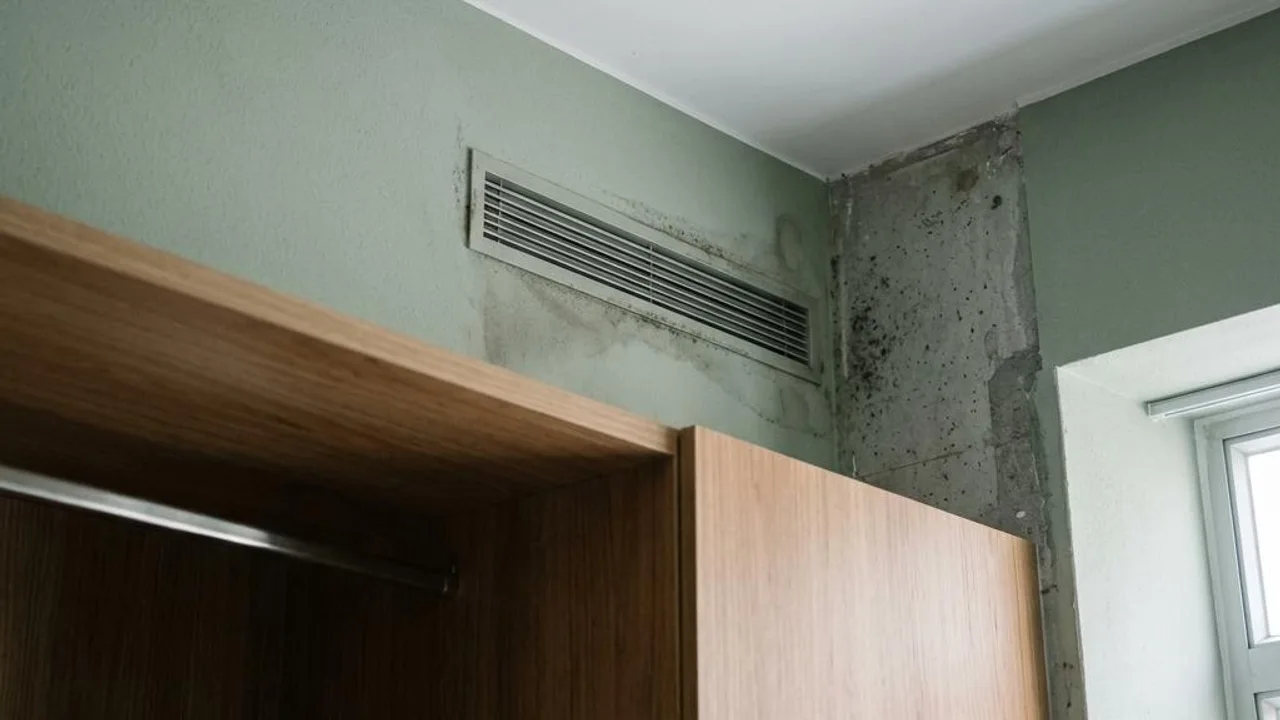
- Structural inspection: Ensuring renovation materials have not covered up structural defects.
- Professional advice: Providing environmental improvement guidelines based on test results.
FAQs
The paint smell in new properties is pungent; does this mean the wall paint is harmful to health?
Odours in new properties usually stem from the accumulation of paint film-forming additives or preservatives in an enclosed environment; this is a normal phenomenon after the handover and not purely a paint quality issue. Through continuous cross-ventilation, in most cases, the odour will naturally subside within a few weeks.
The property has been ventilated for a period of time; why is there still an odour indoors?
Odour sources are diverse; it could be the combined smell of paint, silicone sealant, and adhesives in wooden furniture. If there is no improvement after long-term ventilation, it is recommended to check if it is caused by formaldehyde released from wooden furniture, as this type of odour is harder to eliminate completely through short-term ventilation.
Can activated carbon bags effectively resolve the new house odour throughout the entire property?
Activated carbon has an adsorption effect on volatile substances in small-range spaces but cannot solve the problem of air accumulation throughout the whole house. The key to resolving new property odours lies in the forced convection exchange of indoor and outdoor air; activated carbon can only act as an aid and cannot replace ventilation.