Causes of micro-climates in enclosed spaces of new properties
To meet environmental and energy-saving standards, modern private housing estates generally use high-airtightness double-glazed windows and heavy fire-rated doors. During the long handover vacancy period, the unit remains closed for a long time, leading to the accumulation of moisture released by latex paint, cement plaster, and renovation materials. The interior generates a greenhouse effect under sunlight; the rise in temperature makes it easier for moisture to be released. If there is a lack of air circulation, the high-humidity micro-climate will promote mould growth.
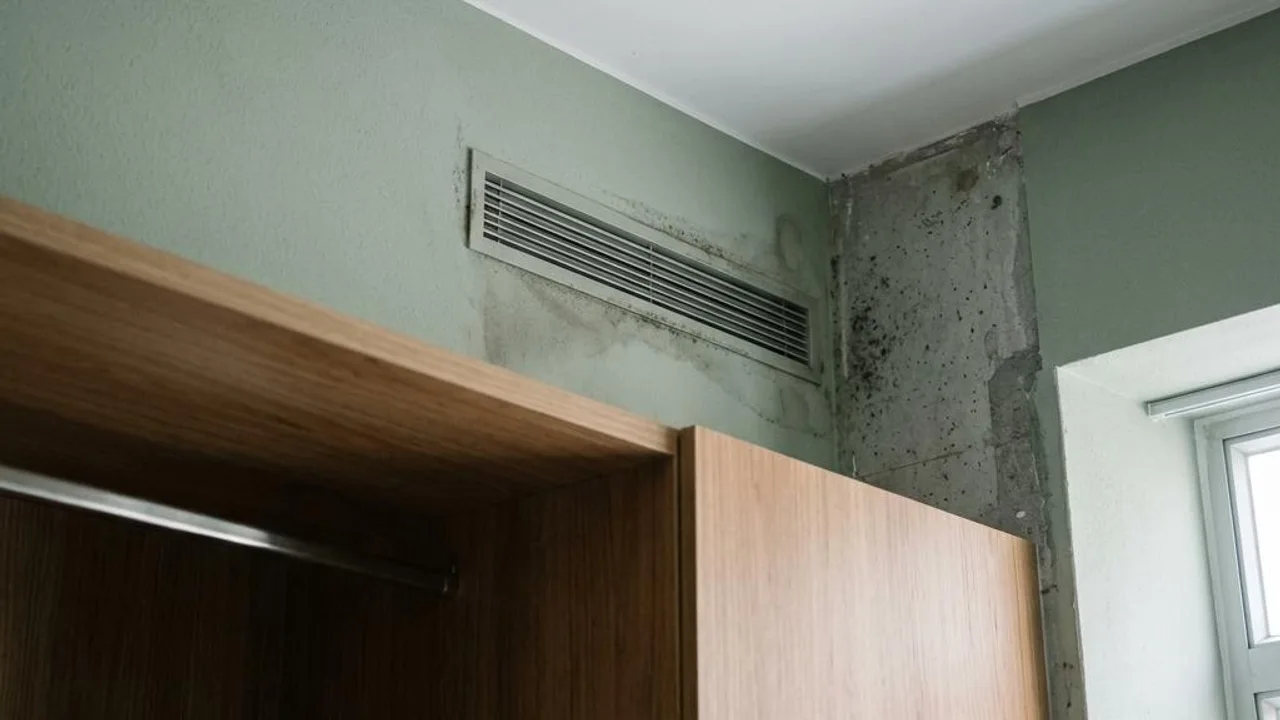
In this high-airtightness environment, moisture is difficult to discharge, especially in corners with slow air movement, such as ceiling corners or cabinet backboards, which remain in a state of saturated humidity for long periods. The stale smell or faint mouldy odour that owners smell upon taking possession often originates from these locally accumulated moisture patches, rather than extensive damage to the building structure. Handling this type of odour requires starting from both strengthening ventilation and dehumidification, and observing whether the situation decreases as ventilation improves.
- Long-term closure of doors and windows leading to internal moisture stagnation
- Building materials and renovation materials releasing volatile components
- Hindered air exchange due to high-airtightness design
- Local dark corners easily forming high-humidity micro-climates
Building aerodynamics and ventilation blind spots
Many modern residential designs adopt single-sided window opening or internal ('black') bathroom layouts, limiting the path of air circulation. In fluid dynamics, air circulation relies on the pressure difference between air inlets and outlets. If all windows face the same side, external airflows cannot form effective cross-ventilation, leading to boundary layer separation of indoor airflow, making it difficult to carry away stagnant moisture in dead zones.
When there is a lack of sufficient pressure gradient between the building's external corridor and the unit's interior, air movement tends towards stillness, especially when the main door is closed and the unit layout is complex; airflow blind spots will be more obvious. This type of problem is common in high-density residential designs, and simply opening windows does not guarantee that fresh air can enter all indoor corners. This is why stuffiness and mouldy odours persist indoors even when windows are open.
- Single-sided window opening leads to an inability to form cross-ventilation
- Building layout limits air convection paths
- Indoor dead zones lack sufficient wind pressure to drive air
- The pressure balance between the corridor and the unit affects replacement efficiency
Owner self-inspection and safe moisture-venting techniques
As an owner, you can execute simple ventilation procedures in the initial handover stage. It is recommended to place circulating fans in the living room or affected areas, using a diagonal placement method to establish artificial convection. One fan should be set to extract air out of the window, and another to blow air towards the indoor dead zone; this move can forcibly drive stagnant air. Supplemented by a high-performance dehumidifier to reduce relative humidity to below 60%, observe for a few days to see if the odour dissipates.
The inspection scope should include under the sink, around bathroom pipes, and air conditioning vents. If local mould spots are discovered, they should be cleaned immediately. It is worth noting that the above methods are only applicable to faint odours caused by poor ventilation; if the source of the odour is hidden water pipe seepage or structural cracks, relying on ventilation alone will not solve the problem thoroughly. If observation reveals that the problem persists, it means there may be engineering defects, and one should not force a DIY handling or ignore it.
- Use circulating fans to establish artificial convection paths
- Switch on a dehumidifier to control humidity below 60%
- Regularly check inside kitchen and bathroom cabinets and around pipes
- Observe if the odour can be completely eliminated after continuous ventilation
Classification and risk assessment of abnormal mouldy odours
The appearance of mouldy odours has many causes, and their severity and handling plans vary. Simple physical poor ventilation can usually be resolved through improving lifestyle habits, but if it involves engineering quality issues, such as broken floor waterproofing or insufficient drainage slopes for air conditioning, one must require the developer to follow up with defect rectification. Accurately judging the cause of the mouldy odour helps owners secure their rights during the handover period.
Odour concentrated near skirting or walls, together with visible mould, may be associated with dampness or a leak; the cause cannot be confirmed from odour or surface appearance alone. Moisture readings and visible evidence can provide an initial record; suspected structural issues require further assessment by an appropriately qualified professional. Do not assume every mouldy odour is a ventilation issue. Record visible signs and seek further assessment by an appropriately qualified professional where needed.
- Air stagnation caused by building airtightness
- Hidden pipes in the kitchen/bathroom and floor waterproofing breakage and leakage
- Rainwater seepage caused by micro-cracks in external walls
- Insufficient drainage slope of air conditioning units leading to standing water
Home environment monitoring and follow-up
Owners should establish a regular environmental observation habit after moving in, paying attention to whether continuous dampness or abnormal odours appear in the home. It is recommended to control indoor relative humidity to below 70% long-term, and check whether all ventilation openings are unobstructed to ensure air exchange efficiency is maintained at normal levels.
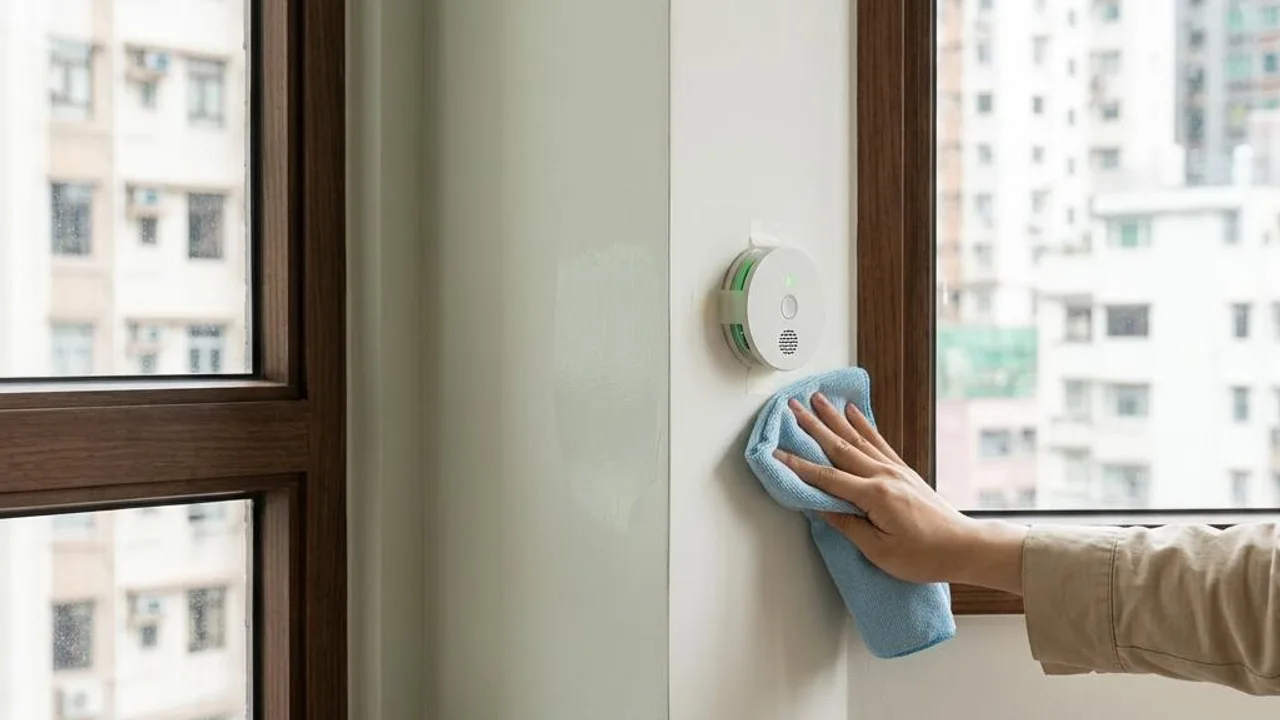
If signs of local mould are discovered, they should first be cleaned with a mild detergent, and air circulation in that area should be strengthened. If mould regrows shortly after cleaning, or obvious water marks on the wall appear, please record this immediately and contact a professional for inspection; do not attempt destructive dismantling.
- Use a hygrometer to monitor corner humidity
- Regularly check under cabinets and around pipes
- Keep the indoor ventilation system operating well
- Record the location and area of suspicious mould spots
FAQs
How can I improve ventilation in a 'black bathroom' (a bathroom without windows)?
It is recommended to turn on the exhaust fan regularly and leave a 1cm gap at the bottom of the bathroom door to maintain air circulation, prevent the formation of dead-air negative pressure zones, and ensure the central exhaust duct is operating correctly to reduce moisture accumulation in the bathroom.
When is the reasonable time for a property inspection?
It is recommended to schedule an inspection within a few days of receiving the handover notice so that the report can be compiled within the developer's defect rectification period, ensuring defects can be followed up and addressed by the developer in a timely manner.
If a musty smell persists, how should the owner proceed with further investigation?
If the musty smell persists after ventilation and dehumidification, and is accompanied by signs of suspected water seepage, owners should avoid dismantling the renovation themselves. Instead, they should contact a professional equipped with relevant testing instruments to conduct a moisture meter test in hidden areas to determine if structural seepage is involved.