
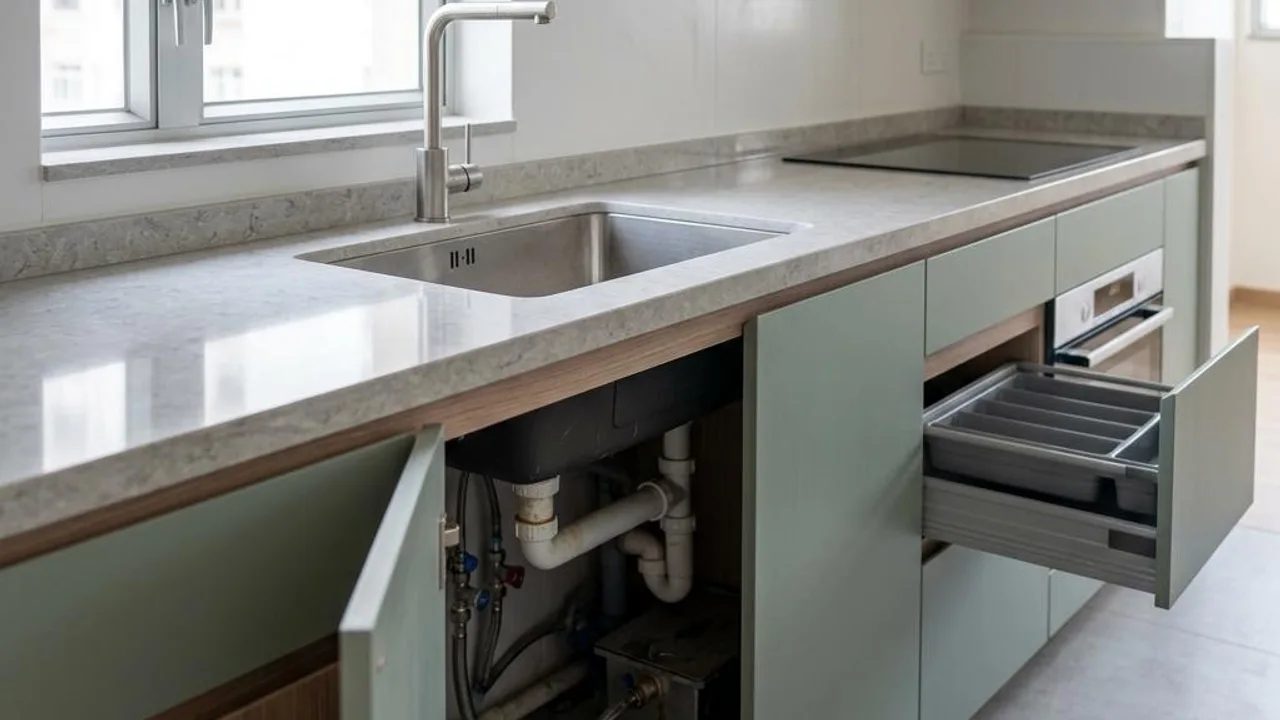
Inspection preparation and confirmation of delivery scope.
Kitchens often contain protective films, packaging materials, or construction debris. Before acceptance, clarify which areas can be contacted, which equipment has been formally delivered, and is in operational condition. Without permission, owners should not tear off protective layers, force the movement of embedded appliances, or attempt to start unfamiliar equipment. If inspection is impossible due to obstruction by construction objects, record 'impossible to inspect' on-site; do not forcefully assume the position is in good condition.
Kitchen equipment operation involves electricity and gas; non-professionals should not dismantle or move them casually. For equipment not yet officially handed over, focus observations on whether there is obvious damage or installation errors. If the equipment model is found inconsistent with the delivery list, retain on-site photos and check with the relevant department. All hidden positions or components that cannot be checked on-site should be explained in detail in the report to ensure the acceptance process is rigorous.
- Confirm the scope of the OPO Inspection and the status of the equipment.
- Do not remove any protective layers that have not yet been handed over without authorisation.
- Any obstructed areas must be clearly listed and recorded in detail.
- Verify the equipment model against the handover checklist.
Observing worktop joints and edge flaws.
When inspecting worktops, focus on edges and corners, areas around sink cut-outs, wall junctions, and worktop joints. Examine closely with the naked eye for chipped corners, cracks, missing sealant, or significant unevenness. As worktops are typically made of artificial or natural stone, the quality of joint finishing directly affects maintenance; therefore, distinguish between surface blemishes and issues arising from normal use, avoiding misidentifying construction marks as wear and tear.
Remember not to climb, kneel, or apply heavy impact to the worktop during the property inspection, nor use sharp objects to test for hardness to avoid causing human-induced damage. Visible joints do not necessarily mean waterproofing failure, and internal structural support cannot be determined by appearance alone. If significant unevenness or edge peeling is found in the silicone sealant at joints, record the exact location with a photograph and note a request for rectification in the report.
- Pay special attention to worktop edges and joints.
- Record locations of chipped corners, cracks, and missing sealant.
- Avoid climbing or scratching worktops with hard objects.
- Categorise records of surface blemishes and damage.
Testing normal opening and closing of every cabinet door and drawer.
Provided that access is safe, operate every kitchen cabinet door and drawer one by one. It is recommended to record from top to bottom, and from left to right, to increase efficiency during reinspection. During the test, carefully observe for friction or collisions between door panels, between door panels and the cabinet frame, and between drawers and the cabinet body. Check that hinges and runners are smooth, with no abnormal noise or sticking.
For complex kitchen cabinet accessories, if the operation is unclear, consult the manual or the person in charge first; do not force the hardware as this may cause damage. Check visible surface scratches, closures, and edge-banding for integrity. When recording, clearly state if sticking or collisions occur during opening, closing, or at a specific stage of movement. It is strictly forbidden to test drawers by applying body weight or forcing them beyond their designed travel range to avoid premature fatigue of runners or the risk of derailing.
- Number one by one from top to bottom, left to right.
- Record specific locations of collisions and sticking.
- Check hardware operation and edge-banding details.
- Do not force or overload.
Checking under-cabinet pipe positions and water usage tests.
Pipe connections under cabinets are a key focus for kitchen property inspection and should be carried out when authorised, with water supply active and pipes accessible. First, observe if there are existing water stains or mould at the bottom of the cabinet and around pipe joints. Then, perform a moderate amount of normal water use, observing for dripping at joints, and whether the drainage is clear and free from backflow. If abnormalities are found, stop using water immediately and notify the person in charge.
During the property inspection, do not intentionally plug the drain or loosen installed pipe joints to test drainage, as this may cause leaks due to improper handling. If you smell an odour or notice obvious looseness at pipe connections, simply record the status; do not attempt to fix it yourself. For leakage issues, professional inspection focuses on changes during the observation process; if the situation persists, it should be repaired by a registered contractor according to the water supply system.
- First, observe if there are old water stains at pipe locations.
- Test for changes at connections after normal water use.
- Watch for backflow or seepage at the drainage point.
- Strictly forbidden to loosen pipe joints without authorisation.
Embedded equipment and gas safety matters.
Embedded appliances in kitchen cabinets, such as washing machines or range hoods, should be checked against the handover list for model consistency and structural stability. However, gas pipe connections, internal wiring, and internal device structures are not within the scope of an owner's personal inspection. If gas pipe installation is found to be unreasonable or inadequately protected, record it objectively, but do not attempt to dismantle protective covers or gas equipment joints.
Gas safety is paramount. If a gas odour is suspected on-site, stop all operations immediately; do not attempt to test for leaks using lighters or electrical switches. Remain calm, leave the affected area, open windows for ventilation (if conditions allow), and report to the authorities or notify relevant personnel according to the supplier's emergency guidelines. For handover inspections of gas equipment, ensure that qualified personnel appointed by the supplier perform the confirmation; owners are only responsible for verifying appearance and position.
- Verify equipment models against the handover list.
- Do not dismantle gas or electrical installations yourself.
- Stop operations immediately if gas leakage is suspected.
- Leave professional work to licensed personnel.
Functional verification after repairs and surrounding checks.
During reinspection, use the original defect numbers to verify the effectiveness of the repairs. Confirm not only that doors and drawers operate smoothly but also that no new damage was caused to adjacent finishes, worktops, or paintwork during the rectification process. For instance, after replacing a hinge, check if door gaps are realigned and if they clash with adjacent panels; these details are frequent areas for secondary damage.
Regarding pipe and waterproofing repairs, the person in charge should clearly notify when it is safe to resume use. After repairs are complete, the owner should confirm on-site and retain 'post-repair' photos to compare with previous records. If an issue recurs within a short period, it must be recorded again and tracked until the performance meets standards. Keep clear communication records to avoid subsequent disputes caused by verbal promises.
- Use original numbers to verify repair effectiveness.
- Carefully inspect adjacent doors and surfaces.
- Verify if new damage was created after repairs.
- Record and retain photos for post-repair comparison.
FAQs
When inspecting kitchen cabinets, what should be done if a cabinet door does not open or close smoothly?
The owner should remain calm, record the exact location of the cabinet door, the defect number, and the nature of the sticking (e.g., collision or abnormal noise), and notify the relevant party for follow-up. Do not force or dismantle hinges, as this may damage hardware or cause additional human-induced damage.
If water stains are found at the base of the cabinet during the property inspection, should the owner attempt to repair it?
It is not recommended for owners to perform repairs. Owners should stop using water, check the status of surrounding pipes, record and photograph the evidence, then contact a registered contractor or management for inspection and handling. Unauthorised loosening of joints may lead to more severe leakage.
During the inspection of worktop blemishes, do visible joint marks indicate poor quality?
Visible joints do not necessarily mean a failure in quality. The inspection focus should be on significant defects such as chipped corners, cracks, missing sealant, or peeling edges. If the silicone sealant is uneven, record it objectively for the report rather than judging its structural or waterproof integrity based on visual inspection alone.