
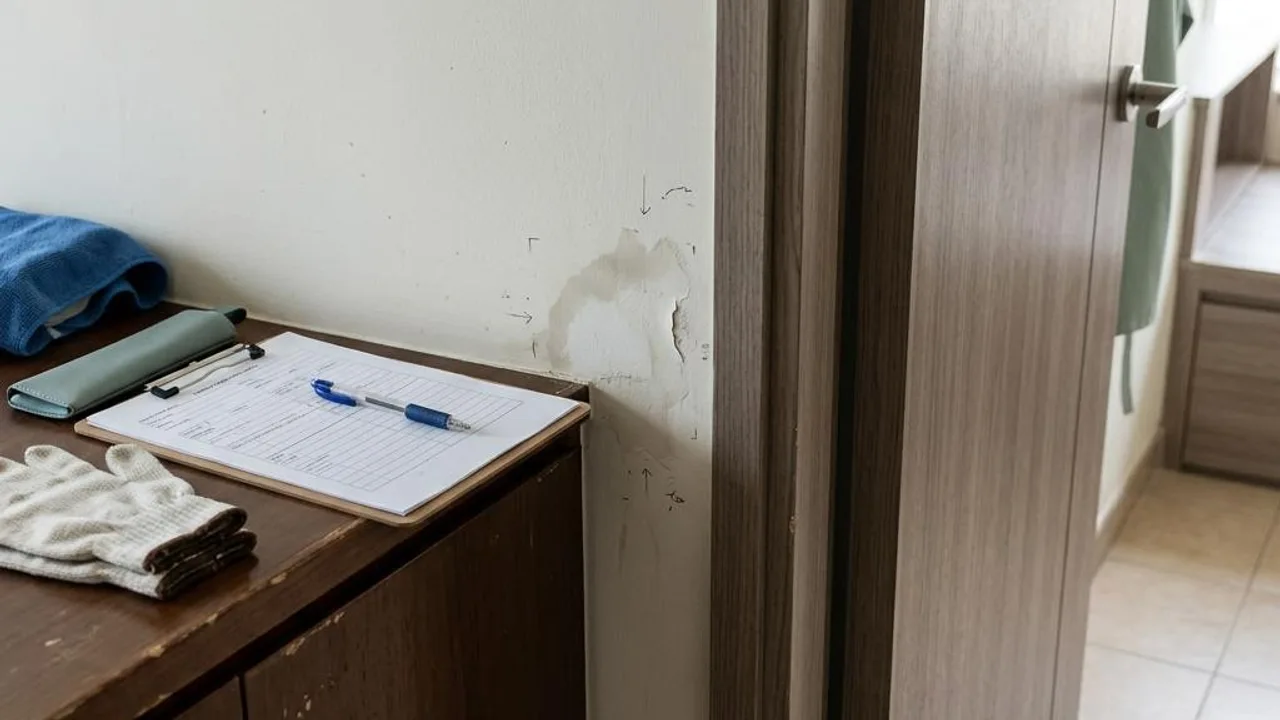
A repair completion notice is not a verified outcome
Obtain the list of completed repairs and an available checking date, then revisit each original location by item number. Receipt, assignment, repair and owner verification are different stages. Improved appearance may not resolve the original functional issue, and adjacent areas may have new damage.
Establish a unified problem record and describe the scene accurately.
After taking possession, you should immediately organise the findings in the property inspection report and avoid using general descriptions. Please assign a fixed number to each problem, cross-reference it with the item location in the report, and ensure that the same number is used when submitting, replying, and re-inspecting, so that the management and engineering teams can identify specific details.
For example: 'Kitchen K01, water pipe connection point inside the washbasin cabinet, water droplets seen after use'; you should only record the actual observation results. Do not diagnose the cause or repair method yourself, and do not add personal judgment regarding liability; just record the observed phenomena.
- Rooms and specific orientation: such as doors and windows, wall orientation, or equipment names.
- Description of the problem phenomenon, date of discovery, and specific environment where it appeared.
- Corresponding property inspection report item number, submission date, and progress status.
- Overall location photos and close-ups taken by the owner, categorised and archived according to numbers.
Arrange follow-up priorities according to safety and functional usage.
Priority should be given to items affecting residential safety or core functional usage, such as electrical abnormalities, loose window sashes, or severe water leakage. This classification is only to clarify communication priorities and does not mean we guarantee repair results, nor does it confirm that the developer has admitted liability. Defect rectification inspections are limited to surface conditions visible to the naked eye and cannot prove structural, electrical, or gas safety, nor can they confirm the condition of hidden pipes or the thickness of waterproofing layers. If you have any professional safety concerns, please consult relevant qualified persons.
If you discover suspected immediate danger, please stop using the relevant electrical appliances or facilities immediately and contact the property management office or developer to arrange for a qualified professional to handle it. Do not attempt to dismantle electrical equipment forcibly on your own, or risk testing it without a safety assessment.
- Severe water leakage: involving seepage through walls or affecting neighbours.
- Damage to electrical installations: such as charring, exposed wiring, or loose sockets.
- Window safety: rusted hinges, damaged rubber seals, or inability to lock tightly.
- Equipment failure: involving essential daily water and electricity switches.
Follow official procedures to submit and retain confirmation proof.
Before submitting the defect rectification list, be sure to check the move-in notification letter or relevant contracts to confirm the designated reporting channels, required documents, and validity period. Do not assume there is a uniform defect rectification period; arrangements vary among different developers. After submitting a complete electronic record, you must ensure that the other party confirms receipt.
When confirming receipt, it is recommended to ask the other party to list the items accepted and the expected repair arrangements. If it involves entering the unit or public space, please verify access rights with the management office. Remember that submitting a report is only to initiate communication and does not mean that every repair request is automatically considered agreed to.
- Record the submission date, channel, and case contact person number.
- Follow up item by item on accepted items, items waiting for supplementary information, and items with differences.
- Any verbal response must be followed up with written confirmation to ensure mutual understanding.
- Keep a full backup of all submitted versions as a record.
Continue to follow up on the status and clarify items with differences.
Whenever you contact the developer or contractor, you must reference the issue number and record their response and the next steps. If they reply stating it is 'arranged', you must further clarify if this means 'not yet started', 'under repair', or 'completed', so as to avoid any confusion regarding the status.
Maintain written evidence of all communications with the other party. Ensure there is a clear follow-up plan for any items in dispute or unresolved, and regularly review deadlines to avoid missing any reporting time limits due to delays.
- Reference the original issue number to prevent any loss of information.
- Distinguish between pending, in-progress, and rectified statuses.
- Request a written explanation for any unresolved disputes.
- Regularly check deadlines to avoid missing reporting time limits.
Re-inspect and record the actual situation item by item after repairs are completed.
Upon receiving notification that rectifications are complete, you should personally bring your original records to the site for verification. Please note that OPO Inspection electronic property inspection reports do not include photos; owners need to take their own before-and-after comparison photos to build their own follow-up evidence. This helps provide strong proof if recurring issues arise.
If a defect rectification is not up to standard or causes damage (such as scratches during construction), it should be listed as a new issue to be followed up, explaining its link to the original item. If a more professional reinspection is required, first collate the list of outstanding items before discussing specific reinspection arrangements with us.
- Check and accept items one by one against the report and follow-up list.
- Verify whether the situation on-site is fully resolved after rectification.
- Record any issues that are not up to standard or have newly emerged damage.
- Collate and update the dates for resolved items.
Make good use of a follow-up table to organise subsequent actions.
It is recommended that owners use a defect rectification follow-up record table to organize the room, location, issue description, and status line by line. It is suggested to save this table on an electronic device for easy reference or communication with the developer. Please note this tool is for support only and will not automatically handle the reporting procedures.
This record table is not only a basis for liaising with the developer, but it also assists owners in efficient self-monitoring during the property inspection cycle to ensure progress is updated for all issue items.
- Use numbers or codes to mark the location of issues.
- Keep communication records updated in sync with the issue list.
- Periodically export the follow-up table for future reference.
- Keep the list as a basis for continuous monitoring.
Preserve the original list when recording follow-up checks
Add the checking date, conditions, observation and reply to each item. Keep the original number for unresolved defects, and create linked new items for new damage. Record why a check is pending if materials are not ready, utilities are unavailable or access is blocked; do not force a test. Confirm scope and fees separately for professional reinspection.
FAQs
The property inspection report does not include photos; how should owners record the state before and after maintenance?
As electronic property inspection reports do not include photos, owners should personally take photos of the issue locations on-site before rectification and take comparison photos from the same angle once rectification is complete. These photos should be stored and categorized by number as personal follow-up evidence.
If the developer disputes a particular defect rectification item, how should I handle it?
If there is a disagreement on the responsibility for repairs, owners should insist that the developer provides a written explanation and their position. At the same time, you should continue to record the date and content of communications with them and retain the original issue number for future consultation.
Do I need to arrange and pay for a separate service for reinspection after defect rectification is complete?
Reinspection is an independent service and is not automatically provided for free. If you find that the issue is not resolved or new damage has occurred after rectification, owners should first collate the relevant situation before discussing specific reinspection arrangements with the property inspection service provider.