
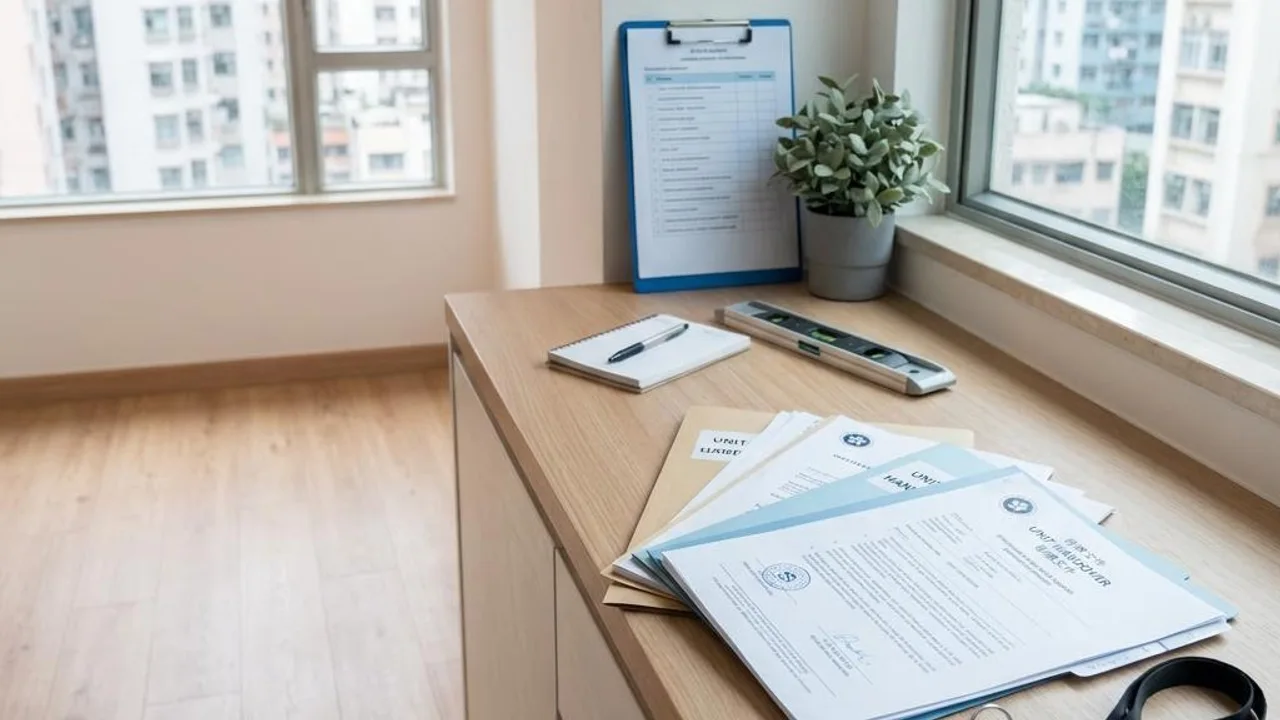
Clarify handover procedures to avoid scheduling conflicts
The procedures for property handover and the actual time for entering the unit are usually not synchronized. Upon receiving the handover notice, you should prioritize confirming with the developer or management office the location for processing the paperwork, conditions for key collection, specific time slots for entry, and whether there are any restrictions on accompanying persons. If there is still uncertainty regarding coordination, do not schedule the property inspector too early to avoid scheduling conflicts for both parties due to procedural delays.
Compile a list of all contact persons, phone numbers, and meeting locations involving the unit, and inquire in advance about the management office's regulations regarding visitor registration, parking for moving vehicles, and building access. Consolidating this information can significantly improve coordination efficiency on the day and avoid wasting time due to procedural misunderstandings on-site.
- Verify with the handover party the exact sequence for key collection and entering the unit
- Inquire with the management office in advance regarding visitor registration and parking arrangements
- Consolidate the contact information of all responsible parties into one list
Prepare personal documents and inspection tools
Before leaving, be sure to organize the required original documents; do not rely solely on mobile phone screenshots. The required contracts, proof of identity, and payment records should be placed in a portable folder, ensuring they are available for inspection at any time. If proxy arrangements are involved, you must ensure that all authorization letters have been formally confirmed by the other party to avoid being unable to collect the keys upon arrival due to insufficient authorization.
At the same time, you should prepare the necessary inspection supplies for the day, including mobile phone power, note-taking tools, and marking supplies for the owner's own use. Organizing the handover notice, the property inspection appointment confirmation, and matters requiring special consultation together will help maintain organization during the inspection process, ensuring that key issues are not missed due to chaotic information.
- Prepare complete originals of proof of identity, property purchase contracts, and payment vouchers
- Keep confirmed property inspection appointment notifications and unit-related materials
- Carry mobile phone chargers, note-taking tools, and simple recording supplies
Verify the condition of the unit and acceptance criteria
After collecting the keys and entering the unit, first verify that the door number, the condition of the unit, and the keys correspond with the notice. When entering the unit, be aware of whether corridors are still occupied by construction materials or personnel, which could affect line of sight and the inspection progress. Observe and confirm whether the indoor water, electricity supply, and lighting are all connected; this is the foundation for conducting subsequent functional testing.
If you discover that water or electricity are not functional, room doors cannot be opened or closed, or decoration personnel are still working, you should immediately record this and contact the responsible party and the property inspector. Do not presume that these areas that could not be inspected are 'problem-free'; you must reflect the problems on-site in a timely manner to protect your own rights.
- Compare door numbers and keys to ensure they match
- Check if there is construction debris obstructing the movement path
- Confirm that water and electricity supply and basic lighting are normal
Reserve space and time for professional inspection
Residential property inspection generally takes 2 to 4 hours, depending on the unit's floor area, complexity of layout, and on-site conditions. It is recommended that owners separate the property inspection from decoration measurements, furniture delivery, or other projects to avoid the unit becoming too crowded, which would prevent the property inspector from observing and performing necessary tests smoothly.
During the property inspection, the owner or representative can first organize a list of the most concerning issues and ask questions in a timely manner during the inspection. Maintain communication with the inspection personnel to ensure that all areas of concern have been reviewed. Sufficient space and time are key factors in obtaining detailed inspection feedback.
- It is recommended to reserve at least 2 to 4 hours on the day of the property inspection
- Avoid scheduling decoration measurements or delivery arrangements at the same time
- Organize key areas of concern for the owner to facilitate questioning
Crucial checklist verification before leaving
Before leaving the site, ensure all items that could not be inspected and their reasons have been recorded. At the same time, you must confirm with the developer or contractor the method for report submission, complaint channels, and deadlines for defect rectification. Properly save all relevant contact information to facilitate follow-up on the progress of issues.
Additionally, photographs taken by the owner should be properly categorized and stored by location. Do not rely solely on the marker stickers posted on-site, as these stickers can easily fall off or be removed during subsequent cleaning or repair processes. Confirming that all discovered problems have been converted into text or image backups is an important step in completing the handover process.
- Record all items that could not be tested on-site and the causes
- Confirm problem reporting channels, delivery requirements, and deadlines
- Properly back up records and photos taken on-site
Organising after returning home and subsequent defect rectification arrangements
After returning home, you should organize the day's observation records, notes, and documents as soon as possible. There is no need to try to resolve all classifications immediately; just use the time while memories are fresh to sort out confusing information. If you discover emergency situations such as safety hazards or persistent water leaks, you should immediately notify the relevant responsible parties to handle them; do not wait for the formal report before taking action.
For general defect rectification issues, you should follow the procedures stipulated by the developer to submit applications and properly retain confirmation of receipt from the other party. Persistent follow-up is the standard procedure after handover; maintaining good communication records is crucial for resolving outstanding issues.
- Sort out notes and photos from the day while memories are fresh
- Notify immediately in case of emergency water leaks or safety issues
- Retain all submission receipts related to maintenance
FAQs
If power supply interruption is discovered on the day of the property inspection, how should it be handled?
You should immediately notify the on-site property management office or developer representative to confirm whether the power has not yet been connected or if there is a circuit failure. Record this situation in the property inspection document and request that a reinspection be arranged after power is restored.
Is it recommended to arrange for a decoration company to take measurements at the same time on the day of the property handover?
It is recommended to avoid arranging it at the same time. The unit needs to be cleared of debris during the property inspection to facilitate checking. If multiple parties enter, the narrow space will hinder inspection, and the process interference may lead to an inability to focus on handling issues discovered during the handover.
After placing marker stickers on-site, why is it still necessary to take photographic records?
Marker stickers placed on-site may fall off during the cleaning or repair process. The owner should take photos and store them in categories by location so that during subsequent follow-ups, they can accurately compare the problem points and ensure no defect rectification is missed.