
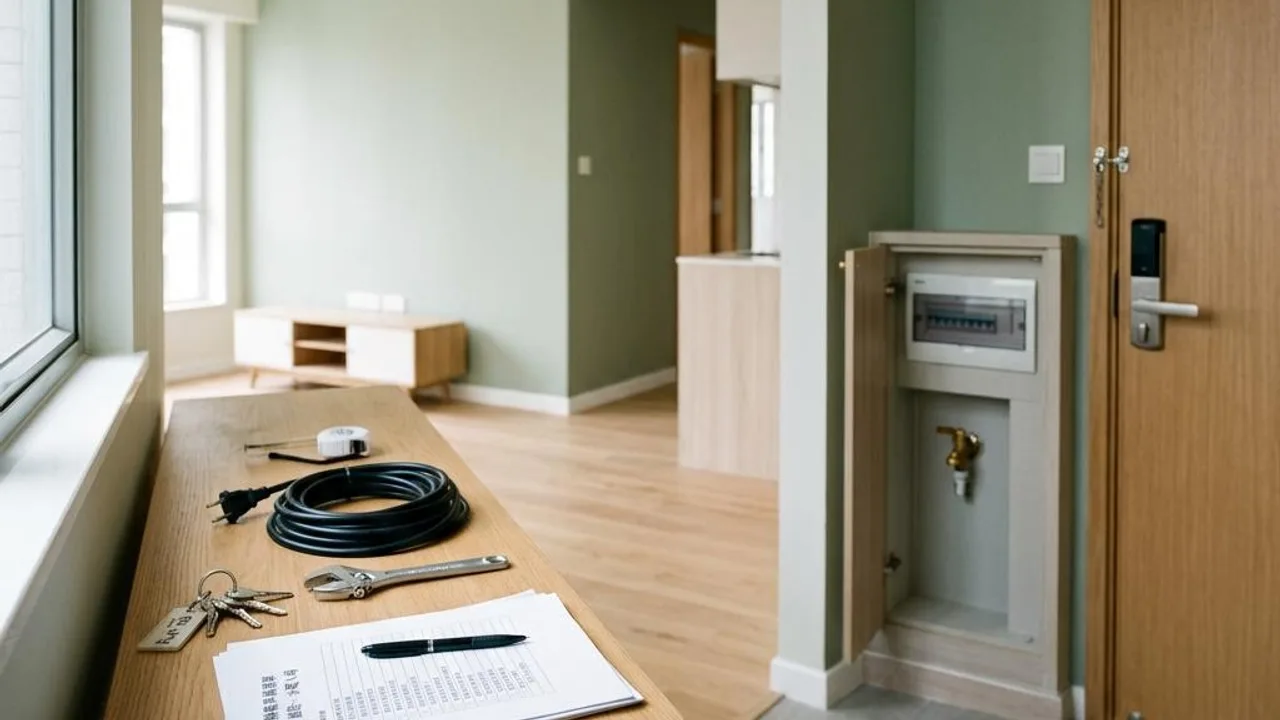
Can every defect be found? Inaccessible does not mean normal
A general inspection covers the agreed scope under conditions on the day. Concealed pipes, wiring, waterproofing, fixed cabinets and furniture may prevent direct observation; missing utilities or undelivered equipment limit functional tests. Different weather or use may reveal later issues, so one inspection is not a permanent guarantee.
Confirming entry rights and contact details
After the property inspection appointment is confirmed, the owner must verify all entry details in advance with the developer, the person in charge of the relevant unit, or the housing estate management office. This includes confirming the exact address of the unit, the block, the floor, as well as the identity and contact details of the person in charge on-site that day.
Be sure to ensure that keys, access cards, or electronic lock passwords required for the day have been entrusted to the appropriate person and can ensure that the inspection personnel can enter the unit on time. If there are visitor registration regulations or restricted entry periods, these also need to be confirmed in advance to avoid affecting the appointment schedule.
- Confirm unit address, block, floor, and on-site person in charge
- Verify keys, access cards, and door opening arrangements
- Confirm visitor registration regulations and permitted entry periods
The importance of utility supply to property inspection
Many core inspection items (such as drainage tests, socket power connection, and equipment operation) need to be conducted with normal utility supply. Therefore, you should ensure that water and electricity are connected in the unit before making an appointment. Do not attempt to open unknown master switches or operate equipment that has not been handed over in order to facilitate inspection, as this may pose safety risks and damage electrical installations.
If you confirm that water or electricity cannot be connected that day, please be sure to inform us in advance. Not having water or electricity does not mean that the inspection work cannot be carried out at all, but the relevant functional tests will not be completed. It is recommended that owners coordinate the inspection scope with professionals based on the actual situation to avoid being unable to meet inspection expectations due to environmental limitations upon arrival.
- Confirm with the developer whether water and electricity are supplied before booking
- Do not operate unknown electrical switches or equipment yourself
- If water or electricity is not connected, please inform us in advance so we can adjust the test items
Principles for access path clearing and obstacle handling
If the inspection area is blocked by furniture, cardboard boxes, or renovation materials, the property inspector will be unable to effectively inspect walls, sockets, or drains. It is suggested that you clear necessary testing space under the premise of safety and permission. Please note: do not dismantle fixed furniture, move heavy appliances, or touch live electrical installations yourself to avoid damage or injury.
If certain positions cannot be cleared due to heavy debris, take photos to keep as a record before the inspection and take the initiative to inform the inspection personnel. Recording restricted positions is also part of the property inspection; there is no need to insist on clearing all debris. Safety is always the first principle; please cooperate with inspection requirements as much as possible within the scope of what can be performed.
- Keep access paths clear to reduce tripping risks
- Clear debris from under washbasins and cabinets
- If you encounter immovable obstacles, please take photos and explain in advance
Dealing with construction environments and already occupied units
If the unit is still in the construction stage, noise, dust, or wet coatings will affect observation. In this case, you should honestly explain the on-site environment to the inspection team, including wet construction work or concurrent construction arrangements. For already occupied units, one should consider personal item placement and usage restrictions, and discuss suitable inspection periods in advance.
Please distinguish whether the unit can be fully or partially inspected upon entry. Facing an environment with frequent construction, it is suggested to negotiate the most effective observation time with the owner to reduce the impact of environmental interference on inspection results. Describing the current situation truthfully allows professional teams to plan the property inspection flow more accurately.
- Truthfully report construction noise, dust, or status of wet coatings
- Already occupied units should pre-negotiate the inspection scope
- Discuss the most suitable time to avoid busy construction periods
Permits and compliance for professional testing
During a property inspection, if a necessary check is not approved by the housing estate management, such as tests involving areas outside windows or specific common areas, please record the limitation truthfully rather than attempting to force the operation yourself.
Adhering to property management regulations is essential for ensuring property safety and preventing unnecessary disputes between owners and developers. For any unauthorized areas, consult on-site management or professionals; do not act impulsively.
- Confirming authorization for tests involving areas outside windows or common areas.
- Record limitations if permission is denied; bypassing regulations is not recommended.
Final checklist before departure
Before departing, double-check the date, address, and the phone number of the contact person at the site. It is recommended to list known limitations (e.g., water/electricity not connected, inaccessible rooms, or obscured positions). This helps the OPO Inspection surveyor quickly grasp the status quo and assists the owner in monitoring progress effectively on the day.
If you need to change the appointment, be sure to follow the confirmed rescheduling policy; do not assume that site restrictions automatically grant a free reschedule. Using a checklist to organize details can reduce on-site communication costs and ensure a smooth inspection process.
- Review property inspection date, unit address, and contact details of the person in charge.
- List the status of water and electricity and any restricted inspection areas.
- Check that all arrangements meet the requirements of the rescheduling policy.
Make limitations actionable
Record the location, reason for the restriction, visible portion and conditions still to be confirmed, such as an accessible front section but blocked rear plumbing under a cabinet. Ask whether improved access requires a separate appointment, further checks or additional charges. Do not dismantle fixed fittings or move dangerous loads to complete a checklist.
FAQs
What action should I take if I find that the unit's water or electricity is not yet connected on the day of the property inspection?
Please inform the OPO Inspection staff immediately and attempt to verify the supply schedule with the developer or estate management office. If it cannot be restored immediately, the owner can discuss with the inspection team which items can be checked first, or evaluate whether to change the inspection date based on the actual situation.
What should I do if the housing estate forbids the OPO Inspection surveyor from performing tests in specific areas (such as external walls or windows)?
Please record truthfully that the test is restricted and inform the OPO Inspection surveyor so they can note the limitation in the inspection report. Do not attempt to force entry or perform unauthorized operations; complying with estate management regulations is key to safeguarding your own liabilities.
Must all miscellaneous items and furniture be cleared from the unit during the property inspection?
To ensure the OPO Inspection surveyor can effectively check walls, sockets, or drainage points, it is recommended to clear miscellaneous items within the inspection range. For heavy furniture or appliances that cannot be moved, do not move them by force; take photos to record them before inspection and inform the surveyor that they could not be checked.