
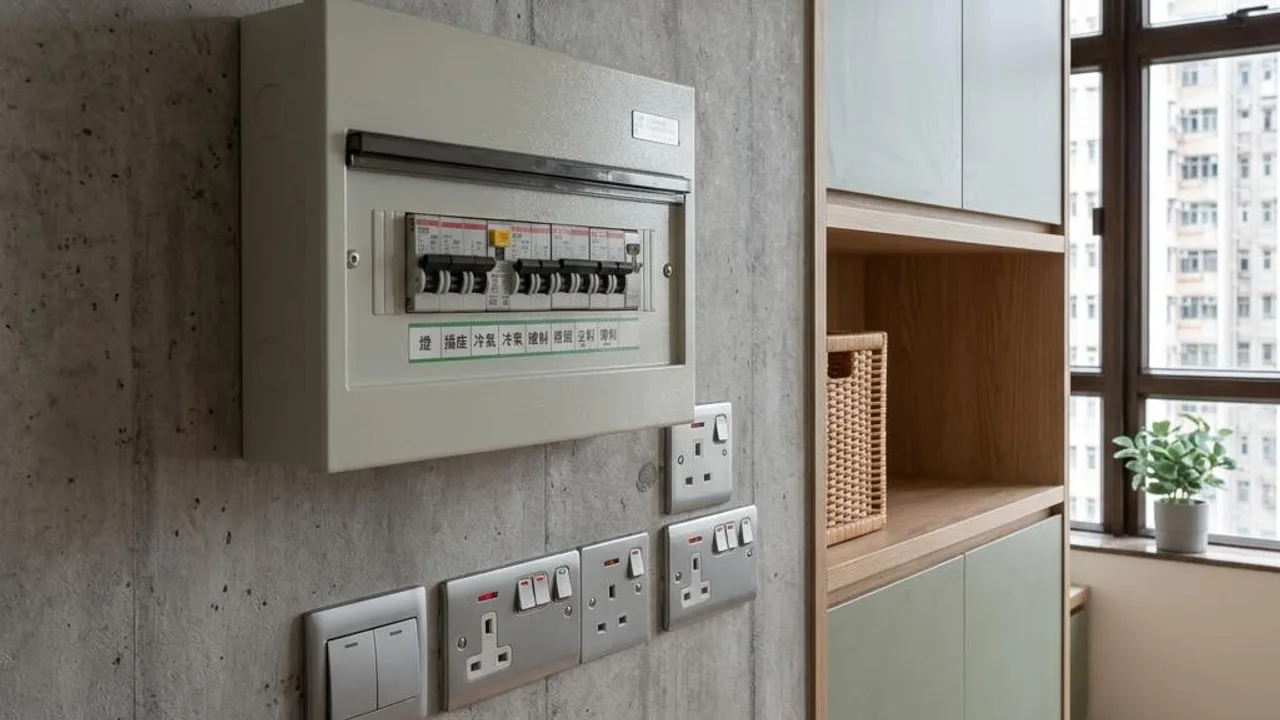
Distinguish between visual observation and professional electrical testing limits.
As an owner, the main purpose of observing electrical installations during the property inspection process is to record visible abnormalities, not to conduct professional testing. You can inspect the integrity of socket, switch, and fuse box casings from a safe distance. However, it must be clear that appearance alone cannot confirm wiring craftsmanship, earthing connections, or the actual protection performance of Residual Current Devices (RCDs).
All items involving the removal of panels, internal inspections, current testing, or repairs should be handled by a licensed registered electrical worker. General visual observation records are not equivalent to professional test reports and cannot be considered a substitute for a certificate of electrical safety compliance. For personal and household safety, do not exceed your capabilities when dealing with electrical equipment.
- Limit records to surface abnormalities within visual range.
- Prohibit private disassembly of any socket or fuse box panel.
- Do not attempt voltage or load testing using non-professional tools.
- Visual inspection only reflects surface status and does not represent compliance.
Safety preparation and environment checks before operation.
Before performing any inspection, you must first confirm the power supply status of the unit and equipment delivery standards with the developer or responsible party. During the inspection, ensure the floor, your hands, and your body are completely dry, and avoid touching any electrical devices in a humid environment. If you find damaged panels, loose sockets, or equipment in damp or leaking locations, do not insert appliances to test for power.
Strictly forbid unauthorized opening of mysterious fuse boxes, forcing a reset of tripped circuit breakers, or attempting to remove any cover plates to peer inside. For equipment with unconfirmed status or unclear delivery conditions, adopt a strategy of leaving it blank and inquiring later to prevent electric shock or short-circuit risks caused by improper operation.
- Check if the environment is dry and away from areas with water leakage.
- Confirm hands and body condition meet safety requirements.
- Refuse to insert plugs when equipment is damp or damaged.
- Do not forcibly operate circuit breakers or mysterious equipment.
Systematic recording of visible problems and locations.
It is recommended to use rooms as units and record the specific location of every switch and socket in detail. Without touching them, check for cracks, obvious detachment, charred marks, or obstructions by debris on the panels. Maintain objectivity while recording, describing only actual phenomena observed, such as 'a small crack on the west-facing living room socket panel,' rather than subjectively judging whether it is compliant.
If the quantity of equipment or installation locations does not match the property handover documents, record the discrepancy to be verified rather than labeling it as a violation of engineering standards. Simultaneously, note any blind spots caused by furniture stacking or fixed decorations that prevent inspection; this is equally important for subsequent checklists.
- Label the room and orientation of damaged sockets in detail.
- Photograph to record surface cracks or discoloration.
- List areas that cannot be visually checked due to renovations.
- Compare location discrepancies with the handover checklist.
Principles for handling burning smells, unusual noises, or tripped circuit breakers.
If you notice a burning smell, unusual noises, sparks, or repeated tripping during daily operation, stop using the equipment and related sockets immediately. Do not force the circuit breaker back on, and do not attempt to confirm the issue by switching to higher-power appliances or other methods, as overload may lead to more serious circuit failure or fire risk.
After discovering abnormalities, keep personnel away from the affected area immediately and notify the management office, developer, or a qualified electrical worker to follow up as soon as possible. If the situation involves immediate danger, prioritize personal safety and call for help according to emergency procedures. Do not obsess over the property inspection progress, as electrical safety is always higher priority than renovation inspections.
- Do not forcibly retry when a breaker trips.
- Power off immediately if burning smells, sparks, or noises are found.
- Ensure no one remains in the affected area.
- Contact the management office or electrical contractor for emergencies.
Record abnormal conditions objectively to avoid repeat risks.
When recording abnormalities, write down the date, specific location, the equipment being used at the time, and the surrounding environment in detail. If information is insufficient, simply note that it is to be verified; do not dismantle equipment yourself to find the cause. Photos should only be taken of the exterior from a safe position; it is strictly forbidden to approach live parts to obtain so-called evidence.
Clear written records can help maintenance personnel evaluate issues more accurately. Avoid adding too many guesses about technical causes in the report, as this is often not only ineffective but may also lead to misjudgment. The property inspection record should serve as a basic communication tool with the responsible party, not as a professional report for electrical diagnostics.
- Record the time and environmental conditions of the abnormality.
- Note the list of appliances running at the time.
- Record the person communicated with and the content of their response.
- Only take appearance photos from a safe distance.
Confirmation after repairs and document preservation.
Restoring the power supply does not mean the problem has been thoroughly eradicated. Property owners should request a detailed explanation from the responsible party regarding what items were addressed and whether the necessary safety tests have been conducted. For any areas that still raise concerns, it is recommended to add them to a follow-up list and request that the other party provide further maintenance records or explanations.
- Request details of maintenance items and relevant records
- Observations regarding electricity during property inspection are only records of surface conditions and cannot serve as proof of the safety of professional electrical installations. Non-professionals must not dismantle sockets, switches, or open consumer units. If you discover any circuit irregularities, please consult a Registered Electrical Worker for a detailed inspection.
- Confirm whether the issue has been properly resolved
- Keep complete records of communication with the responsible party
FAQs
If slight cracks are found on a socket faceplate during property inspection, how should the owner handle it?
The owner should maintain a safe distance, record the location of the cracks in detail, take photographs of the exterior, and include it in the property inspection list. Subsequently, report this to the developer and request that they arrange for professional personnel to assess and replace it; do not attempt to dismantle it for inspection yourself.
If electrical devices in the home emit an unusual smell, is it acceptable to first check behind the socket to see if there are charred wires?
Absolutely not. Any situation involving unusual smells from electrical devices is potentially dangerous. You should immediately stop using the affected socket, evacuate personnel to a safe area, and contact the management office or a licensed electrical worker to come and handle the situation. It is strictly forbidden to dismantle and inspect it yourself.
If a discrepancy between the socket locations and the floor plans is discovered during the visual inspection, how should it be recorded?
You should objectively describe the discrepancy and record it as a document discrepancy pending confirmation, noting the specific location and current status. During the handover discussion, request the responsible party to explain whether this constitutes a design change, rather than deciding for yourself whether it meets safety standards.