
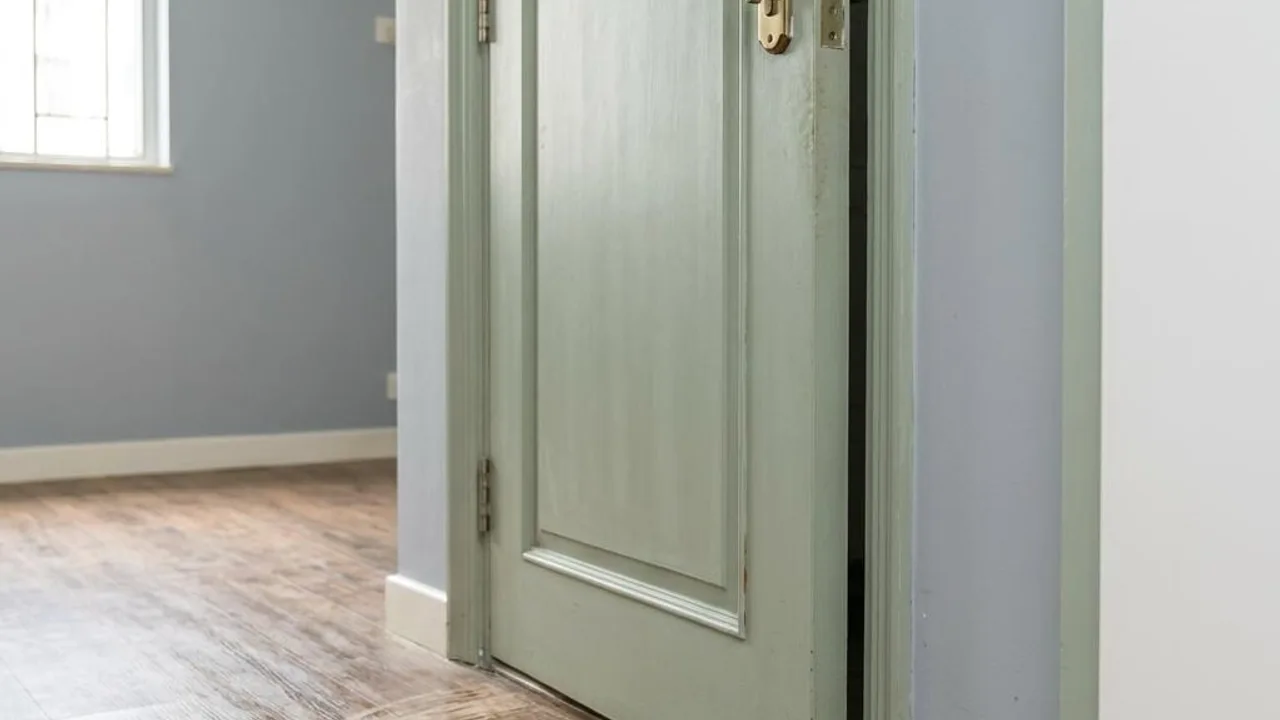
Door numbering and record positioning techniques
Interior configurations are diverse, including main doors, room doors, bathroom doors, kitchen doors, and various storage cabinet doors. When performing an inspection, each door must be numbered independently to avoid confusion in descriptions. It is recommended to use the room name combined with the opening direction as a positioning basis to ensure the uniqueness of records. For example, explicitly label 'Master bedroom door (left-opening)' or 'Corridor end storage room door' and avoid general descriptions like 'that door', which affect follow-up efficiency.
When photographing, maintain a view of the overall space; avoid only photographing local door corners without spatial reference. It is recommended to first take a wide shot to mark the position, then a close-up to show the defect details. Furthermore, whether door locks and panels meet specific fire performance or specifications should be referenced against delivery information provided by the developer, rather than judged by appearance or the naked eye; any issues regarding door lock structure should be further verified by professionals.
- Number every door and register its specific location
- Record the door opening direction and the function of the door panel.
- Photography must include both overall and close-up views of the area.
- Confirm the handover list to verify specifications.
Surface observation of door panels, frames, and floors
Under sufficient lighting, carefully inspect the door surface, door frame edges, and the area near the floor at the bottom of the door. Pay special attention to whether the edges of the wooden door have any chipped corners, peeling finishes, or cracks, and check if the door frame is deformed or the rebate area is misaligned due to poor installation. These details are usually most apparent under indoor and natural light and should be fully recorded during the initial property inspection. Note whether defects are located when the door is closed, open, or during daily use to facilitate comparison with original damage.
Observe whether the gap between the bottom of the door and the floor is uniform. If scratching marks are found, record whether there are abnormal friction sounds, which may reflect a sagging door leaf or floor level issues. Additionally, check every exposed piece of hardware installed on the door frame and door leaf, including hinges, lock faces, and handles, to see if there is any obvious looseness, rust, scratches, or missing screws, and record if there are any issues with the door failing to close tightly.
- Check the door frame rebate and the degree of deformation.
- Observe whether the gap between the bottom of the door and the floor is uniform.
- Record chipped corners, cracks, and surface scratches.
- Look for signs of loose hinges and handles.
Test operation using normal force
Use normal daily force for opening and closing tests, simulating actual usage scenarios. Remember not to repeatedly push or pull with excessive force, perform load-bearing tests, or forcibly insert hard objects to test gaps. If a clear scratching or rubbing sensation occurs when the door is operating, record the position and the angle where contact begins. If the door leaf is visibly sagging, cannot align with the frame, or has abnormal resistance during operation, stop using it immediately and report the situation to the responsible party for handling. Do not force the door open or closed, as this may cause permanent damage to the hardware.
Intermittent issues with door leaves are sometimes difficult to detect on the spot. If you feel inconsistent smoothness during the test—such as abnormal friction or strange noises from the hinges at a certain angle—record these details fully. Do not attempt to dismantle hinges for adjustment or blindly lubricate the hinges without professional guidance, so as not to cover up original manufacturing or installation defects, which would make it difficult to define subsequent repair responsibilities.
- Operate the door opening and closing with normal force.
- Record the angle and position where rubbing occurs.
- Stop testing if sagging or jamming is discovered.
- Avoid pulling or striking the door panel with force.
Inspection of lock operation, latch, and handle
When checking the door lock, first confirm you have the correct key and ensure other members are present to avoid the accident of locking yourself indoors. With the door in the open position, check if the latch (tongue) can extend and retract smoothly, and whether the handle rebounds quickly and firmly when pressed. If the handle droops, is loose, or lacks rebound force, record it promptly as this may affect the precise engagement between the latch and the strike plate.
After closing the door, observe whether the latch can accurately enter the strike plate without jamming or being too tight. Do not disassemble the lock core yourself, use lubricants to treat the interior, or try to grind the keyhole with tools to avoid irreversible damage. If the key is difficult to turn after being inserted, or the latch fails to engage the door frame completely, note the operation step at which this occurred and have professional maintenance staff inspect and adjust it according to original factory specifications.
- Test the operation of the latch and handle when opening the door.
- Check the smoothness of the latch engagement when closing the door.
- Confirm whether the key turns normally and smoothly.
- Pay attention to handle rebound and looseness.
Special specifications for fire doors and public facilities
If the unit involves a fire-rated door leaf, you must understand the specific fire safety codes and certification requirements for such doors. Owners must absolutely not remove door closers, alter the fire-resistant seals on the door edges, or replace hardware accessories with ones that do not meet fire safety standards. During the property inspection, if you find the door closer leaking oil or failing to return to position automatically, notify the responsible party directly; do not attempt to disassemble or adjust the internal structure yourself.
For fire doors in public corridors or other access control facilities in common areas, owners are not qualified to conduct any inspections or repairs. The operation and maintenance of such facilities should be carried out strictly according to the arrangements of the property management company. Do not summarize general open/close observations as "fire performance confirmed" in the report, as this involves legal responsibility. All inspections related to statutory requirements must be performed by qualified professionals.
- Do not remove door closers or seals.
- Do not tamper with fire door hinges without authorization.
- Common facilities are the responsibility of the management office.
- Do not casually determine fire performance metrics.
Acceptance and reinspection process after repairs
When performing a reinspection, use the original defect numbers to ensure continuity of follow-up. Operate the door with the same force to verify if previously recorded problems have been corrected. If the original rubbing issue is resolved, pay special attention to whether new scratches were caused on the door frame paint, skirting, or flooring during the repair process. Such marginal damage is very common in subsequent works and must be checked as well.
Smooth operation in a single instance may only reflect the current situation. If the door leaf still has intermittent issues, such as expansion and rubbing during humid weather, ensure the conditions, date, and specific circumstances are recorded. If the responsible party states that parts have been replaced or repairs have been performed, we recommend that the owner test the door repeatedly on-site several times to confirm its operational stability. Owners should keep their own image records of the condition before and after repairs for comparison if the same issue recurs in the future.
- Reinspect issues item by item according to original numbering.
- Confirm whether new damage was caused after repairs.
- Test the long-term stability of the repaired location.
- Compare images before and after to verify effectiveness.
FAQs
If I find the door leaf rubbing against the floor, can I perform micro-adjustments myself?
No. Discovering the door leaf rubbing against the floor may involve hinge sagging, floor levels, or door leaf deformation. Adjusting the hinges or planing the bottom of the door yourself may lead to structural damage. Record the location and request professional maintenance.
If I find the door lock does not turn smoothly during the property inspection, should I use lubricating spray?
Not recommended. Spraying lubricant yourself may hide manufacturing defects or assembly issues inside the lock core, affecting the judgment of the warranty scope. Record the non-smooth operation of the lock and request an inspection.
Does a fire door closer failing to return automatically indicate damage?
If the door closer is leaking oil or failing to return automatically, this is a functional abnormality. The owner should not disassemble or adjust it themselves but should immediately notify the developer or property management office so that qualified personnel can handle it to ensure compliance with fire safety specifications.