Open-plan kitchen and fire safety requirements
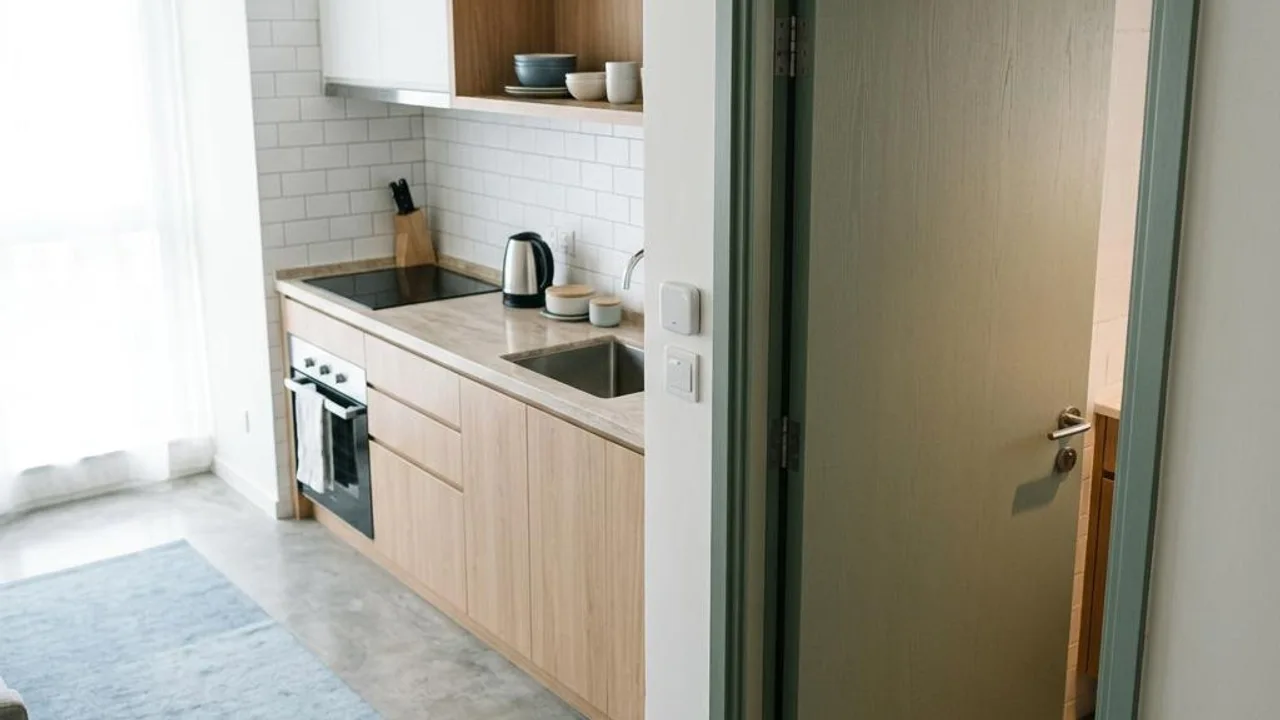
Thanks to their sense of spaciousness, open-plan kitchens have become the mainstream in new Hong Kong property designs. However, according to fire and building-related ordinances, if a unit converts a traditional kitchen into an open-plan design, it must install a fire door with an automatic closing function to comply with fire safety regulation requirements.
Such facilities are not just room dividers; they are vital barriers for safeguarding life in the event of a fire. When accepting these systems, owners should not just focus on appearance; they should understand the complexity of their fire-operating mechanisms to ensure that, in the event of a fire, they can effectively block the spread of fire and smoke.
- Must install an automatic closing fire door that complies with regulations
- Design aims to limit the spread of fire and smoke to the living room and escape routes
- Equipment requires regular maintenance to ensure it can operate immediately in an emergency
- Acceptance covers mechanical door closers and electronic interlocking systems
Re-examination of mechanical and electronic dual interlocking mechanisms
The core of a smart fire door lies in its sensor sensitivity. Normally, the door is kept open by electromagnetic force; once a fire signal is detected, the system must immediately cut off the power and trigger the door closer to automatically shut the door leaf. During the acceptance process, the coordination between the electronic signal and the door closer's operation must be strictly tested.
The testing process requires simulating fire-trigger scenarios in a safe environment, observing whether the door leaf can close automatically without delay. Any stuttering, mid-way stalling, or significant delay in electronic signals when closing the door constitutes a construction flaw and must be flagged to relevant personnel for follow-up adjustments to ensure the system operates reliably.
- Test the trigger linkage between sensors and fire alarm signals
- Confirm the automatic door closing function after power failure
- Monitor whether the door leaf closing process is smooth and unobstructed
- Check the response speed of the electromagnetic magnet and control system
Verification of door airtightness and fire-resistant material workmanship
The sealing performance after the door leaf is closed is the key to preventing the spread of smoke. During the acceptance process, it is necessary to measure the gap between the door leaf and the door frame to ensure it meets standard airtight requirements. Furthermore, checking that the correct heat-expanding fireproof sealing strips have been installed around the door leaf is crucial.
These strips will expand rapidly when exposed to high temperatures, blocking all gaps to obstruct smoke. At the same time, one must verify whether the door leaf glass and structure have legally compliant fire-resistance certification labels to ensure that the system can maintain thermal insulation and fire-resistance timing under extreme conditions, thereby ensuring the safety and defensive capability of the home.
- Check if sealing strips around the door body are fully installed
- Measure door frame gaps to comply with airtight specifications
- Verify the fire-resistance timing label of the door body material
- Confirm that glass and structural components comply with fire safety certifications
Fine-tuning of smooth escape and manual reset functions
The core of fire safety is escape. Even when in the automatically closed state, a fire door must have a function that allows for easy manual opening. When testing, ensure that elderly people or children can push open the door leaf and escape the fire scene without needing extra effort during an emergency.
Additionally, whether the system can smoothly execute a reset and restore daily sensing and magnetic hold states after the alarm is cleared is also part of functional acceptance. This detail, which balances automatic protection with flexible escape, is key to reflecting the advantages of modern fire-fighting equipment and is also the basis for ensuring daily convenience.
- Conduct two-way manual door-push tests
- Test the manual operation resistance after automatic closing
- Verify the accuracy of the system's automatic reset function
- Ensure the door leaf can still be opened even in the event of a power failure
Find a professional to conduct fire-linkage acceptance
The fire safety system of an open-plan kitchen involves multiple areas such as low-voltage control, mechanical power, and material safety. It is generally difficult for ordinary owners to precisely measure sensor delays or the subtle flaws in fireproof materials, so seeking assistance from professionals with relevant qualifications to conduct acceptance is particularly important.
Professionals can use specific tools to scientifically inspect linkage loads and reaction times without damaging the renovation. Through detailed test results, they assist owners in identifying potential compliance hazards, ensuring this home line of defence never fails at a critical moment.
- Use precision instruments to test signal latency and load conditions
- Evaluate the system's reliability in extreme environments
- Provide an objective inspection report to argue for defect rectification
- Ensure compliance with fire safety regulatory requirements to safeguard residential safety
FAQs
Why do fire doors remain open on a daily basis?
This is usually kept open by an electromagnetic magnet, which is convenient for residents to enter and exit daily. When the fire alarm sensor detects smoke or a source of fire, the system will automatically cut off power, allowing the door leaf to shut automatically by the mechanical force of the door closer to isolate the fire.
If the fire door is found to close slowly, does this indicate a malfunction?
Closing too slowly or stalling may involve force adjustment issues with the door closer or hinge resistance, which can affect blocking efficiency during an emergency. It is recommended to seek a qualified person to check whether the door closer settings comply with standards.
Apart from regular testing, how can homeowners daily monitor the condition of fire doors?
Homeowners can regularly check if the fire-resistant seals are damaged or peeling, and ensure the door leaf fits tightly against the frame with no visible gaps when closed to maintain basic smoke-sealing performance.