Potential risks of installing solar panels to waterproofing
Installing solar photovoltaic systems on village house rooftops, while responding to the trend of green energy, involves fixing brackets and drilling bolts during the installation process; if not handled properly, this will cause physical damage to the original rooftop waterproofing layer. Solar brackets require anchor points that go deep into the concrete structure, which are potential gaps for rainwater to penetrate into the floor slab.
The roof is the first line of defense for residences against wind and rain, and any modifications to the roof structure must prioritize waterproof and anti-leakage measures. After the installation works are completed, the owner should not just focus on power generation efficiency, but must strictly verify the integrity of the waterproofing layer to prevent penny-wise, pound-foolish mistakes that could lead to long-term indoor leakage problems.
- Bracket fixing points are prone to leakage risks
- Structural damage to the waterproofing layer during the drilling process
- Hazards of long-term water accumulation and obstructed drainage
- The challenge of sealant aging and weather resistance
Sealing craftsmanship for fasteners and bracket bases
Solar brackets are typically fixed via expansion bolts or chemical anchors, which is the focus of waterproofing acceptance. Qualified construction must involve applying high-quality polyurethane waterproof coating or sealant to the drilling base, around the bolts, and around the base to form an airtight protective layer to block the path of rainwater infiltration.
During acceptance, it is necessary to check all fixing points for uneven application or air bubbles. The sealing coating must perfectly connect with the original waterproofing layer, ensuring there are no cracks in the transition zones. Construction personnel must confirm that the base surface is level and use highly weather-resistant building sealant to cope with Hong Kong's rainy and high-temperature weather environment.
- Check if the sealant around the bolts is smooth
- Verify the connection between the waterproof coating and the original waterproofing layer
- Ensure that the bottoms of all bases are treated seamlessly
- Confirm the use of weather-resistant waterproof materials
Scientific water-injection anti-seepage testing
It is impossible to determine whether the fixing bolts are completely sealed with the naked eye alone; scientific testing methods must be used. After the installation work is completed, it is recommended to conduct continuous water injection and water spraying tests. Technical personnel will block the rooftop rainwater drain and store water on the roof to a specified depth for several hours to simulate the pressure conditions during extreme rainstorms.
In addition to the water injection test, high-pressure water jet tests must be used to continuously spray all bracket bases and wiring conduits from multiple angles. This simulation test can effectively examine the anti-seepage performance at the junctions of the new and old waterproofing layers, ensuring that even in heavy rain, water cannot penetrate into the floor along the gaps of the brackets.
- Block the drainage outlet for water storage testing
- Use high-pressure water jet tests to spray bases from multiple angles
- Detect leakage phenomena and pressure seepage points
- Post-test inspection of the drainage system restoration
Drainage planning after solar installation
Large-scale solar panel installation often alters the original rainwater paths on the rooftop. If the brackets are improperly arranged, obstructing the original rainwater channels, local water accumulation will occur during rainstorms; long-term water accumulation will accelerate the aging of the rooftop waterproofing layer and even damage structural safety.
During acceptance, it is mandatory to verify whether rainwater can flow smoothly towards the drainage pipe opening. Confirm that there is no silt accumulation under the brackets and that the drainage network is unobstructed. Keeping rooftop drainage clear is an important part of property maintenance, as this can significantly reduce the excessive water pressure on the floor slab and extend the service life of the rooftop waterproofing structure.
- Check if solar panels block the drainage outlets
- Clear hidden water accumulation points under the brackets
- Confirm that the drainage slope meets drainage requirements
- Assess the status of rooftop rainwater pipes
Seek professional anti-leakage inspection assistance
Rooftop anti-leakage inspection involves knowledge of building structures and complex drainage fluid mechanics, and it is difficult for general owners to fully discover defects under concealed brackets. To ensure the safety of the project, seeking assistance from recognized professional property inspection and exterior wall waterproofing inspection teams is a necessary choice.
Professional teams are equipped with industrial-grade infrared thermal imaging analysis and electronic leak detection systems, which can assess sealing strength and leakage risks without damaging existing equipment. Having experts conduct quantitative checks and provide detailed reports allows owners to ensure the residential anti-seepage capability is maintained at the highest level while developing renewable energy.
- Infrared thermal imaging analysis to detect seepage points
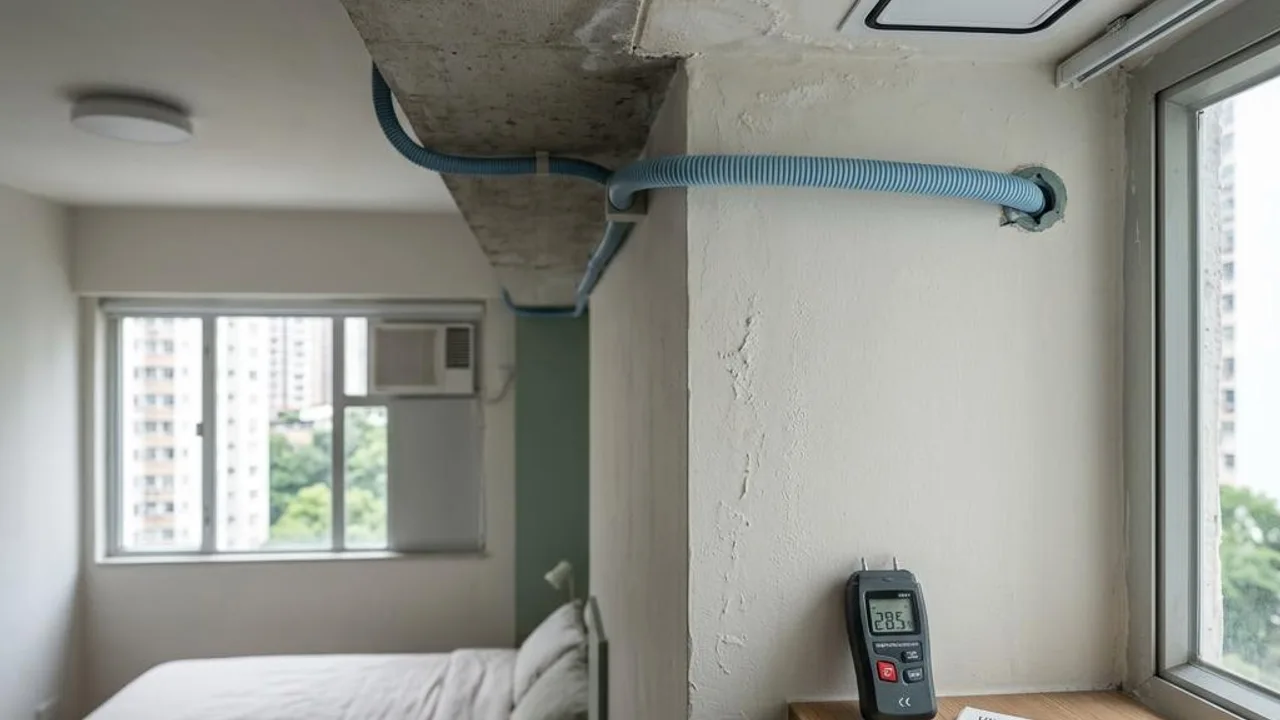
- Electronic induction-style moisture detection check
- Assess overall waterproof sealing strength
- Professional inspection report and reinforcement scheme
FAQs
How often does an anti-leakage check need to be performed after installing solar panels?
It is recommended to conduct the first detailed inspection immediately during the project completion and acceptance stage. Subsequently, combined with Hong Kong's annual rainy season (usually before spring or summer), routine observations should be performed at least once a year, and inspections should be conducted after typhoons or extreme rainstorms to check for water accumulation or damage to the sealant.
If an owner discovers minor cracks near the rooftop brackets, how should it be handled?
The owner should first record the position of the cracks and take photos; do not use commercial sealants to cover them at will, so as to avoid secondary damage or masking the real cause. It is recommended to contact qualified professionals to assess whether the cracks have penetrated the original waterproofing layer and have professional personnel execute the correct repair procedure.
Can infrared thermal imaging directly show where a leak is?
Infrared thermal imaging mainly reflects moisture distribution within materials through temperature differences. Although it can assist inspection personnel in judging damp areas, it requires professionals to combine rich construction experience and other auxiliary tools for cross-verification to accurately infer the source and cause of the leakage point.