Foundation of sliding door structure and safety inspection
Sliding doors in a home are not just space dividers; their structural stability directly concerns daily usage safety. During inspection, the focus should be on whether the door frame is vertical and whether the door leaf is stable during the sliding process. If wobbling or abnormal swaying occurs, it may indicate that the hardware accessories are not securely fixed or that the rails are installed with an offset. If these issues are not addressed, they may lead to the risk of the door coming off its track in the long run.
Beyond structural stability, the safety of the glass cannot be ignored. Owners should check the glass surface for edge chips or fine cracks; these concealed defects may expand due to daily temperature changes or physical impacts. Ensuring there is no obvious gap between the door frame and the wall is also a key step in preventing the door from being damaged by accidental vibrations.
- Confirm that the sliding door structure is firm and shows no signs of wobbling or tilting
- Check glass components for cracks, edge chips, or bubbles
- Observe whether the door frame joints are flat and have no obvious gaps
- Verify the balance of the door's operation to avoid tilting or derailment
Assessment of the smoothness of hardware rails
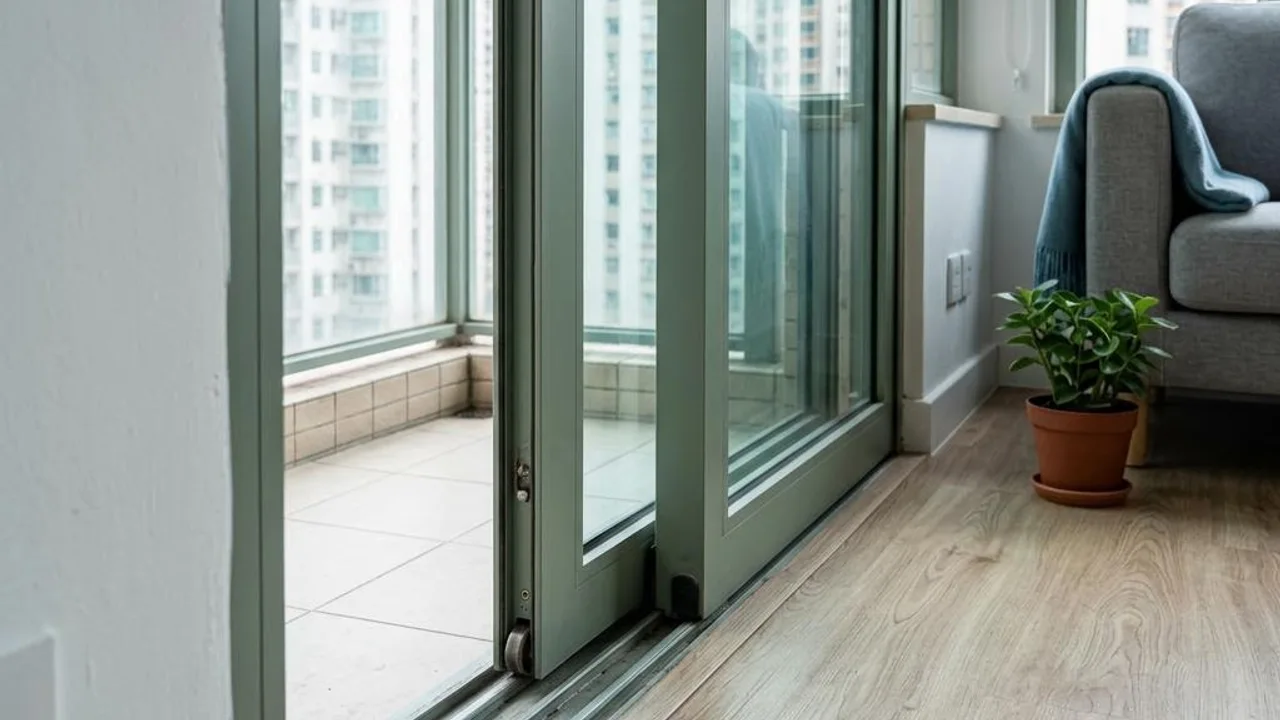
The rail is the soul of a sliding door's operation, and its quality directly affects the feeling of opening and closing. A properly functioning sliding door should provide a light and smooth sliding performance; the process of opening and closing should not produce any unnatural friction sounds or resistance. If pushing or pulling feels difficult, check if there is any residual construction debris or metal burrs inside the rail groove; these foreign objects will accelerate roller wear.
When inspecting roller assemblies, in addition to focusing on whether their movement is smooth, one should also observe whether the wheel sets are rusted, deformed, or if plastic parts are ageing and peeling. If you find metal clashing sounds or a sense of wobbling during the operation of the rollers, it should be recorded. The flatness of the rail has a profound impact on the overall service life; if the rail itself is bent, it must be treated as a potential installation issue.
- Confirm that the track is clean and free of construction debris and blockages
- Test whether the sliding process is smooth and free of abnormal noises
- Check whether the roller assembly is stable and free of wobbling
- Assess whether the rail installation is flat and free of signs of bending
Sealing performance and waterproofing function test
The quality of the sealing strip determines the airtightness and sound insulation performance of the sliding door. Owners need to carefully observe whether the sealing strip is flexible and resilient. If the strip becomes hardened, cracked, or shrunken, its sealing function will be significantly reduced. The strip should be closely attached to the seam of the door frame; if there is a significant gap, it will lead to the loss of indoor air conditioning or a decline in sound insulation performance.
For bathroom sliding doors, waterproofing is particularly important. When performing basic visual inspection, observe whether the bottom of the door frame is flat and properly connected to the floor to avoid water pooling in the seams of the sealing strips. If you suspect there is a risk of leakage, it should be subject to a further professional assessment by qualified personnel; avoid unauthorised waterproofing modifications to the door.
- Check if sealing strips show signs of hardening, brittleness, or peeling
- Verify if the strips can completely adhere to the door frame seams
- Observe if there is any potential for water seepage at the bottom of the bathroom door frame
- Assess the performance of the sliding door in insulating airflow after closing
Operation experience and functional details
Beyond hardware checks, the daily operation experience reflects the overall construction quality. Check whether the lock is aligned and operates smoothly; the bolt and the strike plate should be able to engage precisely. If the lock requires force to turn in order to lock, it indicates that there may be an error in the positional relationship between the door and the frame; long-term use will wear out the lock hardware.
Good sliding door construction should ensure that when fully closed, the door leaf and the frame remain horizontal and vertically aligned. This is not just for visual neatness but is also a prerequisite for ensuring uniform stress. If you feel additional vibration or clashing sounds during operation, you should check whether the door top stopper is working properly to prevent structural hazards caused by door collisions.
- Confirm that the lock and strike plate are aligned and operation is easy
- Listen for any abnormal metal friction sounds during operation
- Check if the door leaf is flush with the frame edges after closing
- Assess the stability and vibration of the door during opening and closing
Safe use and professional maintenance advice
When performing a visual inspection, owners must prioritise personal safety above all else. Attempting to dismantle sliding doors at high levels or on exterior walls yourself is strictly prohibited. Any work involving structural replacement, rail calibration, or major repairs should be entrusted to a qualified registered contractor. The owner's role should be to carefully record abnormal points to provide accurate reference information for professional assessment.
Regarding regular maintenance, do not apply unnecessary gravity or external force to hang things on sliding doors to avoid overloading or deforming the hardware. If you discover any structural changes or persistent sealing issues, do not fill them with inappropriate materials yourself; seek the advice of professionals. Professionals can evaluate the building structure and provide you with safe and feasible repair solutions.
- Strictly prohibited to dismantle any doors or windows in dangerous locations
- Please hire a registered contractor for structural and major repairs
- Avoid applying extra gravity loads to the sliding door
- If serious abnormalities are found, record them and consult a professional
FAQs
When inspecting sliding doors, if I find slight snagging, can I use lubricant to deal with it myself?
It is recommended to clarify the cause of the snagging first. If it is because of foreign objects in the track, it can be improved after cleaning; if it is because the hardware mechanical structure is damaged or the installation is not level, using lubricant yourself may not solve the problem, and improper use may affect the roller assembly. It is recommended to record the phenomenon and consult a registered contractor to assess whether an installation adjustment is needed.
How do you judge whether the sealing performance of a sliding door is up to standard?
Owners can observe whether the contact between the strip and the door frame is tight after closing, and whether there is obvious light leakage or airflow passing through. If you find the strip has hardened or broken, it has lost its necessary barrier effect. If there are specific requirements for sealing performance, consult a professional for testing; it is not recommended for owners to perform pressure tests themselves.
If the sliding door wobbles slightly, does this mean the structure is unsafe?
Any structural abnormality needs to be treated with caution. Slight wobbling may be caused by loose hardware components or door positioning offset. Please do not attempt to dismantle and check it yourself; it should be assessed by a qualified professional contractor to determine the cause and confirm whether it involves structural stability and if there is a risk of derailment.