Network Wiring Planning and Transmission Stability
A gaming room has extremely high requirements for the network, and the key lies in the physical wiring craftsmanship. During the renovation inspection phase, it is essential to check whether the physical materials of the network cables and the connector terminations are up to standard. This is the foundation for ensuring a high-bandwidth transmission environment and directly reduces the risk of data packet loss.
Excellent low-voltage layout should take anti-interference capabilities into account, especially the isolation between network cables and high-voltage power lines. Checking the performance of lines under multi-path transmission using professional instruments ensures network stability, allowing equipment to exert its best conductivity performance and constructing a solid high-speed 'highway' for gaming or streaming environments.
- Verify line transmission materials and connector specifications
- Evaluate interference shielding between network and high-voltage power lines
- Test signal strength under multi-path data transmission
- Verify the physical stability of the overall wiring
Load Testing and Limit Stress Simulation
This test can instantly identify potential bottlenecks such as unstable network packets and uneven bandwidth distribution. Ensuring that the system maintains low latency even under limit operation is a vital means for gaming users who require stable connections for long periods to avoid network faults after moving in.
By simulating high-concurrency scenarios, we test the stability of the gateway when continuously transmitting large amounts of data. If the test shows abnormal fluctuations in connection latency, it is recommended to further check the compatibility between network equipment or whether there are concerns regarding line signal attenuation.
- Simulate high-load scenarios with multiple devices running in parallel
- Test the data throughput capability of the central gateway
- Monitor latency and packet stability of network connections
- Troubleshoot technical gaps in uneven bandwidth distribution
Optimising Network Configuration to Enhance Living Performance
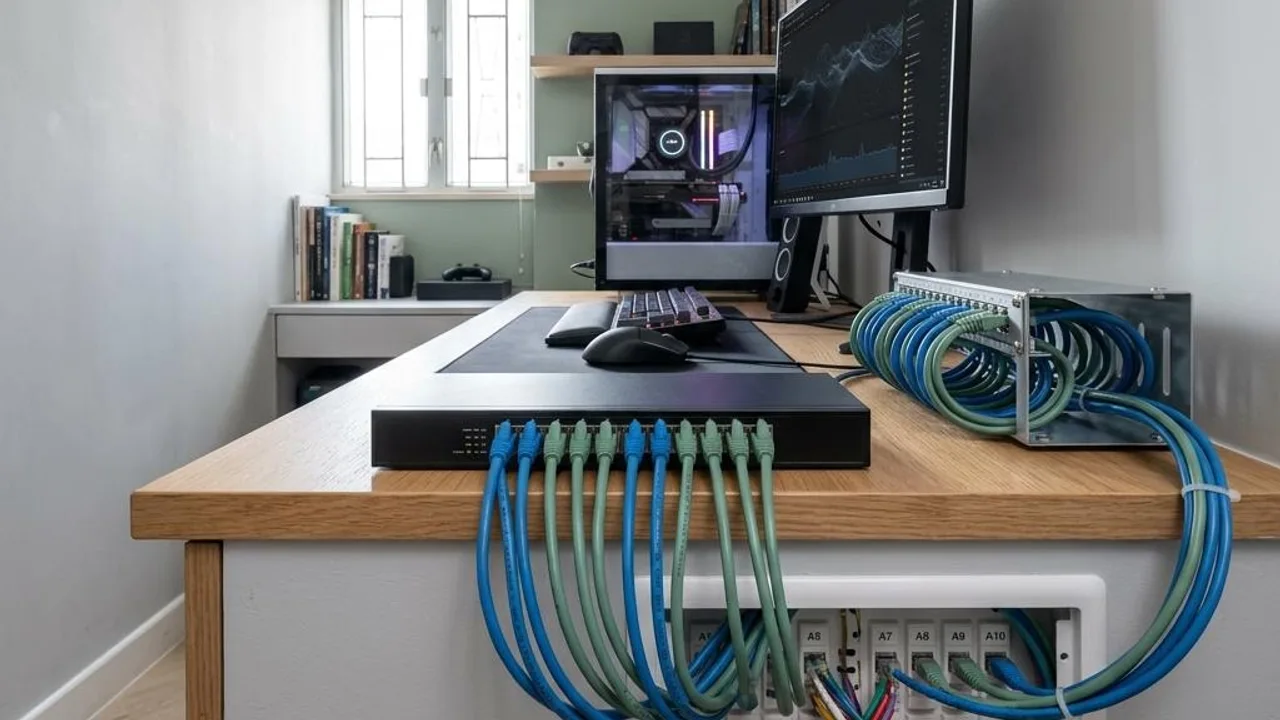
Including low-voltage network testing in the inspection process not only checks the current status but also enhances performance through professional fine-tuning. Before soft furnishings are brought into the renovation, if the line status can be confirmed, a network engineer can precisely adjust the router and switch parameters, optimising the wiring inside the cabinet.
This systematic, forward-looking planning not only makes existing equipment run more smoothly but also reserves expansion space for future upgrades to higher-specification network equipment. A high-quality gaming environment is inseparable from this precise adjustment, thereby achieving a smart digital lifestyle that is truly modern and scalable.
- Precisely adjust router and switch parameters
- Optimise the neatness of wiring inside the cabinet
- Reserve network headroom for future equipment upgrades
- Enhance the connection quality of the overall digital space
Seeking Professional Low-Voltage Testing Services
Low-voltage testing involves complex network protocol analysis and industrial-grade equipment operation, which cannot be compared with ordinary speed testing software. To ensure the health of the entire home's low-voltage system, seeking assistance from a team equipped with professional instruments is an essential step, allowing for assessment without damaging walls.
Professional teams use tools such as network analysers and time-domain reflectometers to provide specific quantitative data reports. This report can assist owners in precisely eliminating network hazards, establishing a solid technical barrier for high-intensity gaming and entertainment lifestyles, and ensuring every bit of network resource can function efficiently.
- Use professional analytical instruments for non-destructive testing
- Obtain a system health report with quantitative data
- Expert assistance in troubleshooting various hidden network bottlenecks
- Ensure technical standards for a high-quality digital lifestyle are met
Home Network and High-Voltage Electrical Safety Notice
When using network equipment daily, users also need to pay attention to home electrical safety. Never touch electrical appliances in humid environments or when the body is wet, and avoid plugging too many high-power appliances (such as air conditioners or dehumidifiers) into a power strip to prevent overloading.
If you need to modify or install fixed electrical installations (such as ceiling lights or equipment that does not use a socket), you must hire a registered electrical contractor. Upon completion, request that the contractor issues a Work Completion Certificate (WR1) to ensure the electrical work meets safety standards.
- High-power appliances should occupy a dedicated fixed socket
- Check whether electrical plugs are scorched or damaged
- Indoor electrical modifications must involve hiring registered professionals
- Obtain a WR1 certificate upon completing electrical work
FAQs
Why do gaming rooms require independent low-voltage system testing?
Gaming environments have extremely high requirements for the immediacy and stability of network transmission. Through professional low-voltage inspection, noise interference in physical wiring, poor connector quality, and bandwidth limitations can be excluded, ensuring that latency during data transmission is kept to the lowest level.
If a network connection is frequently dropped or speeds are abnormal, what can the owner check themselves?
The owner can first observe whether the network equipment indicator lights are flashing abnormally and attempt to restart the equipment. If the problem persists, the specific context of the fault (e.g., specific time or equipment) should be recorded, and a technician equipped with professional network analytical instruments should be contacted for assistance in testing; do not dismantle in-wall low-voltage lines yourself.
When performing home network wiring, how can one avoid interference between low-voltage and high-voltage lines?
During the wiring planning phase, high-voltage (power) and low-voltage (network, communication) lines should maintain a certain physical distance to avoid them being too close or bundled in parallel. If space is limited, consider using shielded network cables or separating them through shielded conduits to reduce the impact of electromagnetic waves on data transmission signals.