Hygroscopic expansion characteristics of solid wood flooring
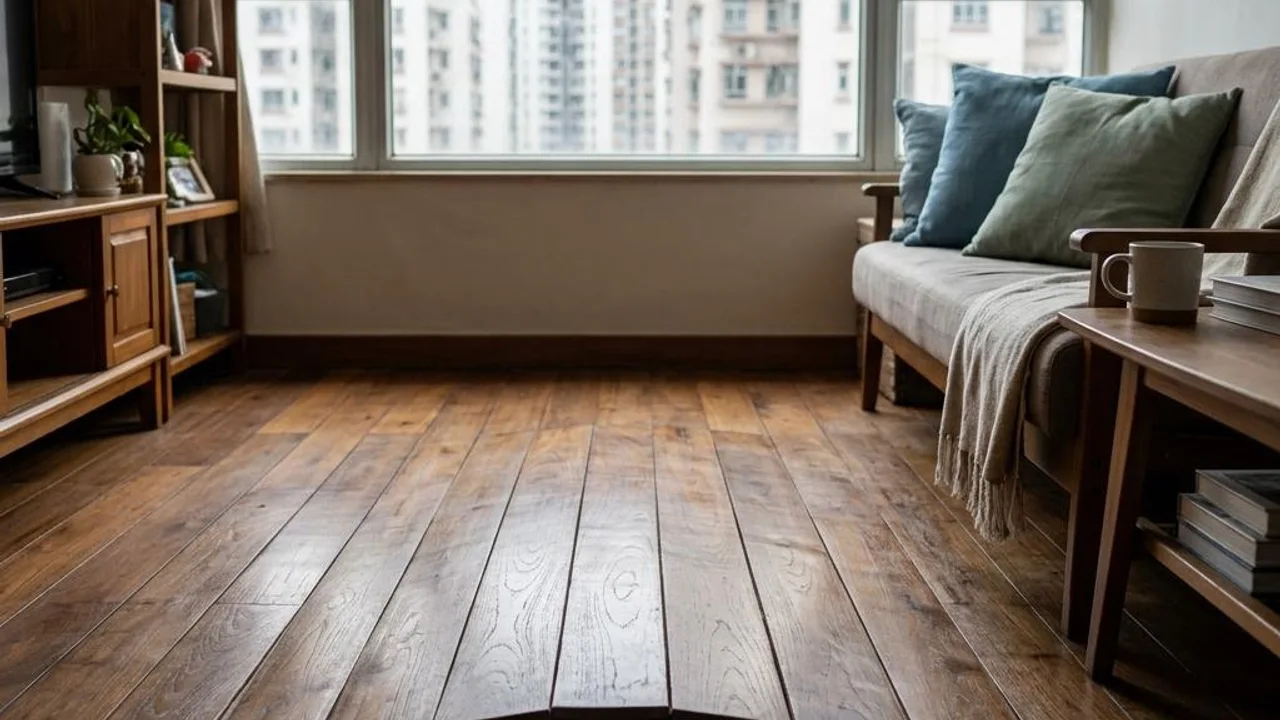
As a natural wood product, solid wood flooring has inherent breathing and moisture-absorbing properties. In Hong Kong's high-humidity summer environment, if insufficient expansion gaps were left during installation, the boards can easily buckle or deform when multiple planks absorb moisture and expand, exerting pressure on each other.
During handover inspections, carefully pay attention to the levelness of the flooring throughout the house, observing any local slight bulging or warping at the board edges; these are clear signals that the bond between the wooden floor and the underlying structure has been compromised.
- Check whether there is obvious bulging on the wood floor surface.
- Watch for signs of compression at the board joints.
- Assess whether the floor levelness is consistent across all rooms.
- Confirm whether the expansion gap positions are blocked by debris.
Assessment of hollow feeling and unusual sounds
Long-term moisture exposure not only affects the surface but also leads to glue failure at the base or rotting of the wooden battens. New owners should remain calm while walking and carefully feel the touch and feedback of their feet on different areas, observing whether the wooden planks feel sunken or loose.
If walking is accompanied by obvious creaking, it suggests that the back of the wooden floor has lost its proper tight fit with the floor base, forming local delamination or 'hollow' spots, which must be added to the rectification list.
- Slow down your pace to test the floor's rebound feel.
- Be mindful of any unusual noises made when walking.
- Test whether there is a feeling of suspension at the board edges.
- Distinguish between wood elasticity and looseness.
Inspection of skirting boards and edge gaps
Skirting boards are usually installed where the wood floor meets the wall. Use a bright torch to inspect under the skirting boards, checking if the wood flooring has been completely pushed against the wall, losing its room to move; this is often the main cause of large-scale buckling.
Simultaneously observe whether the skirting board itself shows signs of moisture-induced swelling, paint peeling, or separation from the wall. If there is absolutely no gap at the edges and a lack of moisture-proof edging, the wood will lose its buffering space when it expands.
- Use a torch to inspect the gaps at the base of the skirting boards.
- Confirm whether there is sufficient expansion space at the edges.
- Check if the skirting boards have deformed due to moisture.
- View the tightness of the joint between the skirting board and the wall.
Relationship between hidden moisture and wall base seepage
Wood flooring deformation is often not just caused by humid air, but may result from seepage in the substrate. In locations near kitchen or bathroom doors or external window sills, water vapour can easily seep through the floor screed and erode the bottom of the wood.
Carefully inspect the floor surface near these water sources for signs of discoloration, blackening, rotting, or local blistering. Even if it feels dry now, it does not mean there is no risk of long-term leakage in the underlying structure.
- Focus inspections on areas near bathrooms and kitchens.
- Watch for signs of water accumulation at the base of walls below window sills.
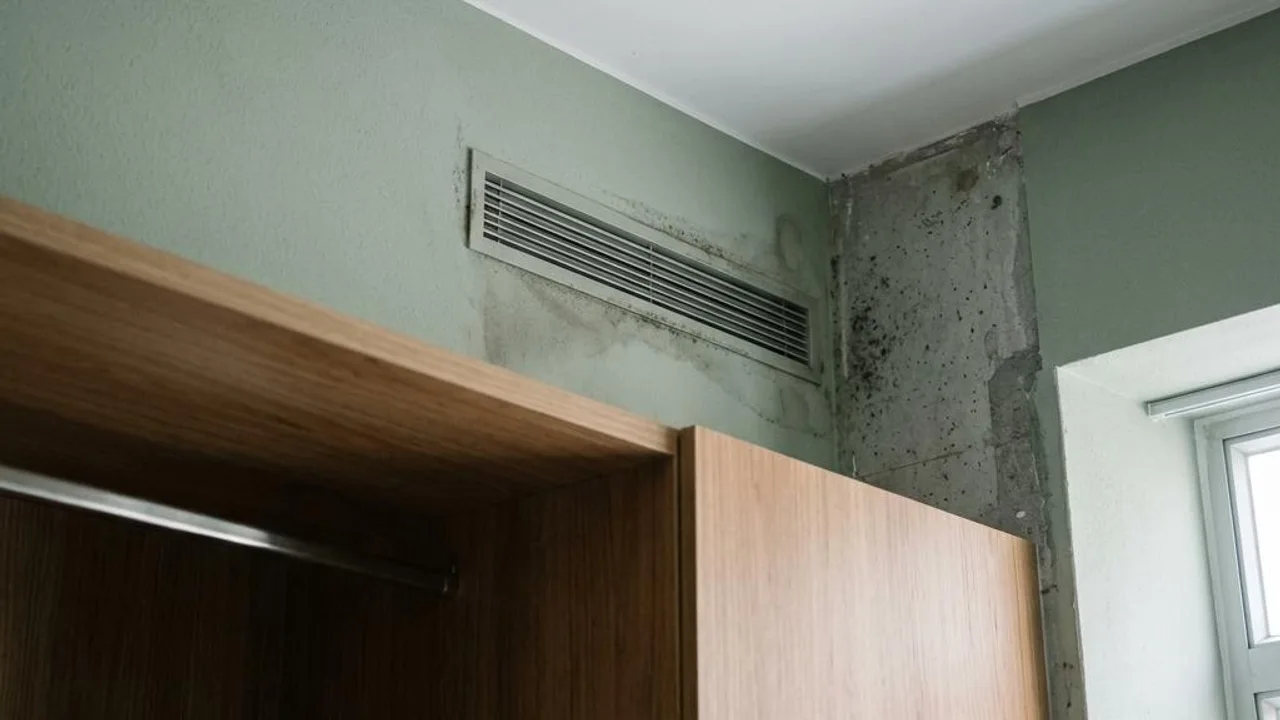
- Observe if there is any colour difference or mould on the boards.
- Check the integrity of the junction between the floor and the wall.
The necessity of professional inspection and evaluation
Self-remedies like hammering or wax filling usually treat the symptoms rather than the root cause and cannot address deep-seated moisture rot. In the absence of a professional moisture meter, it is difficult to evaluate the internal moisture content and the depth of structural damage based on naked-eye observation alone.
If the flooring situation in a second-hand property is complex or involves intentions for large-scale alterations, it is recommended to leave it to professional inspectors. Experts can provide test results based on professional equipment, assisting owners in making more precise judgements during interior design.
- Utilise professional measurement instruments to more accurately assess moisture content.
- Precisely locate hidden seepage risks under the floor.
- Avoid repeated renovations caused by incorrect judgements.
- Provide scientific and objective foundations for renovation plans.
FAQs
Does finding buckled wood flooring mean there is definitely a leak under the floor?
Not necessarily. Wood flooring buckling can be caused by the thermal expansion and contraction resulting from insufficient expansion gaps left during installation, but it could also be due to long-term dampness or substrate seepage leading to moisture expansion. If accompanied by mould or rot, it is recommended to hire a professional to use a moisture meter to measure the condition of the substrate to confirm the cause.
If there is an unusual sound when stepping on the floor, can I buy glue to inject and fix it myself?
Self-repair is not recommended. Unusual sounds usually indicate that the subfloor and the floorboards have separated or the wooden battens are damaged. If you inject glue without finding the primary cause, you may fail to resolve the structural looseness and instead mask potential rot or leakage hazards.
If the floor surface is dry during handover, do I still need to worry about seepage at the bottom?
Yes. Surface dryness may be a temporary phenomenon. If the floor screed layer has been water-damaged or the waterproof layer has failed, water vapour will remain at the bottom of the wood boards for a long time, leading to internal deformation. Observing whether there is discolouration at the wall corners, mould, or the fit between the skirting boards and the wall helps to assess hidden risks.