Basic inspection of the kitchen drainage system.
The kitchen handles a large volume of water daily, and the efficiency of the drainage system is directly linked to the quality of home living. Simply confirming the sink looks clean is insufficient during a property inspection; physical testing is mandatory. The most basic test is to observe the drainage speed when releasing water from the sink. If drainage is sluggish, or if there is backflow, air bubbles, or strange noises, these could be early warning signs of pipe misalignment, insufficient gradient, or debris trapped inside.
When testing, it is recommended to store a certain amount of water and release it all at once to simulate a high-volume drainage scenario. This method effectively tests the system's capacity while checking the sealing of pipe joints under load. If leakage or foul odours occur, record them immediately; these issues are usually related to improper installation or poor connection of the anti-syphon trap.
- Observe if the drainage speed is smooth after releasing the water.
- Check for any backflow, air bubbles, or abnormal noises.
- Perform a one-time high-volume water release test to assess load capacity.
- Note whether any foul odours arise during the drainage process.
In-depth inspection of concealed positions under cupboards.
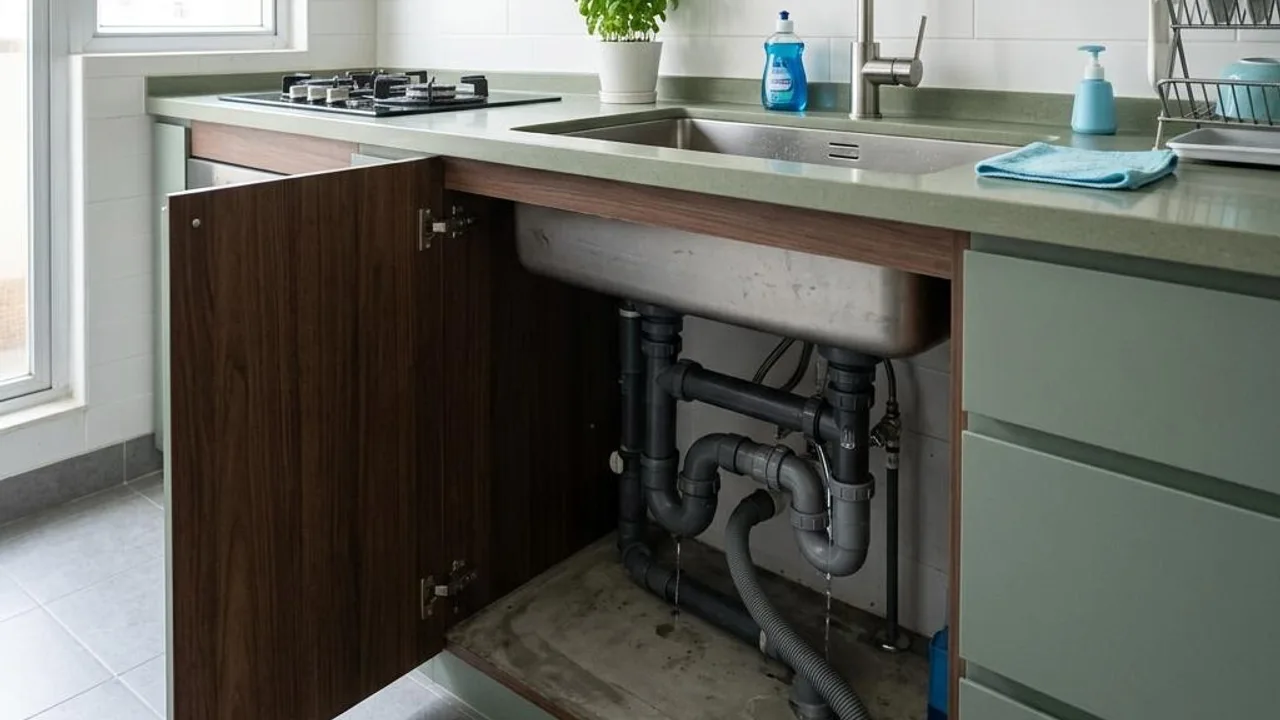
The space under the kitchen cabinet is usually hard to reach, yet it is where drainage pipes, anti-syphon traps, and connections are concentrated. During inspection, you must open the cabinet doors and use a light source to carefully check pipe joints for water droplets, damp marks, or crystalline deposits. Many hidden leaks only appear under high water volume, so maintaining observation throughout the test is critical.
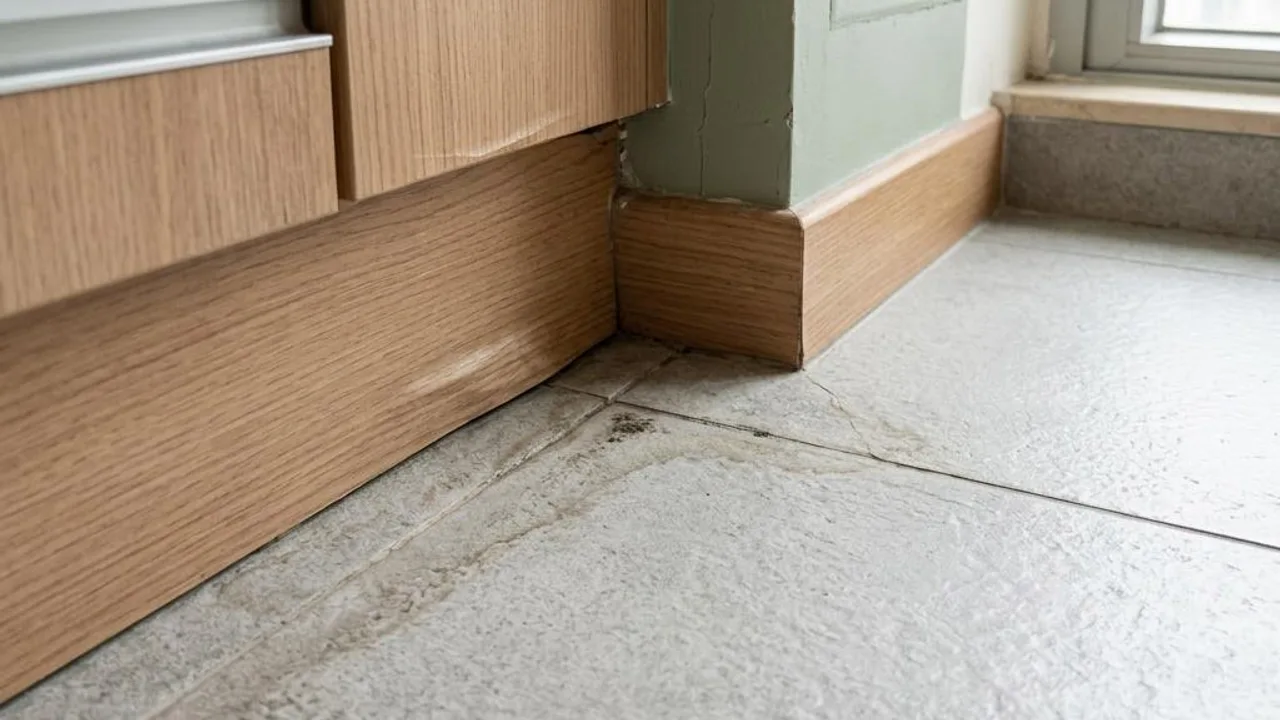
At the same time, check the bottom of the cabinet for issues caused by water seepage, such as warped wood panels, mould spots, discolouration, or peeling edge banding. These marks are often more informative than current drips, as they reflect past water infiltration, which is crucial for assessing long-term durability after moving in.
- Check pipe joints for water droplets and water stains.
- Check if the wooden cabinet base is warped or shows obvious water stains.
- Observe if there are any mould spots or a musty smell.
- Check that the anti-syphon trap assembly is secure and leak-free.
Analysis of drainage pipe routing and design.
Kitchen drainage performance is directly related to the pipe layout design. If drainage pipes are too long, have too many bends, or an unreasonable gradient, drainage speed will be significantly hampered. In renovated units, changes to cabinet layouts often lead to pipes being crushed, excessively bent, or lacking proper support, which significantly increases the risk of long-term blockages.
During inspection, visually check if the pipe layout is reasonable to ensure the drainage route is clear. If pipes are found to be physically compressed or twisted, problems are highly likely to occur in the future even if drainage is currently acceptable. For reserved drainage points for dishwashers or washing machines, check the interfaces and ensure there is sufficient surrounding space to avoid installation difficulties later.
- Observe if pipes are crushed by the cabinet structure.
- Examine the drainage route for excessive bends.
- Check if the pipes have sufficient installation brackets.
- Confirm that the dishwasher drainage interface is properly reserved.
Sealing details and finishing treatments.
The junction between the sink and the kitchen countertop is another inspection point that cannot be ignored. If the silicone sealant has cracks, is uneven, or is peeling, wash water can easily seep into the cabinet interior during use. If such details are not handled properly, long-term accumulated moisture will directly cause the cabinet wood to rot, so it must be inspected carefully.
During inspection, use your fingers to touch the joints to check for residual glue, looseness, or obvious gaps. A uniform and aesthetically pleasing seal can effectively prevent external accumulated water from flowing into the cabinet. For units with wooden or plywood kitchen cabinets, the seal check is particularly important; ensure every inch of the joint is properly sealed.
- Check the silicone sealing condition between the sink and the countertop.
- Look for any gaps or cracks in the sealant edge.
- Confirm if the interface finish is flat and aesthetically pleasing.
- Touch to check for any looseness or unfilled areas.
Common problem consultation and treatment suggestions.
If potential hazards are discovered during inspection, owners should calmly record and photograph them for subsequent communication with the contractor. Regarding rectifications for the drainage system, avoid attempting major modifications yourself, especially those involving anti-syphon odour protection or the critical gradient of the pipes.
If you encounter a leak source that is difficult to determine, it is recommended to record the specific observed phenomena and entrust a professional to conduct an inspection. Through detailed records and communication, improvement plans can be coordinated more effectively to ensure the kitchen drainage system meets daily usage needs.
- Take photos to record all observed signs of leakage.
- Engage a professional to inspect suspected sources of leakage.
FAQs
If slow sink drainage is discovered during inspection, does this mean the pipes must be replaced?
Not necessarily. Slow drainage may result from debris left over from construction in the pipes, excessive pipe bends increasing resistance, or an insufficient gradient. It is recommended to first communicate with the contractor and have a professional inspect the interior or layout of the pipes for improvement potential, rather than rushing to replace them.
If water stains are found on the wooden bottom of the kitchen cabinet, how do you determine if it is an active leak or an old stain?
After wiping the area clean, you can place a dry tissue there during the drainage test to observe. If the tissue gets damp after the drainage test, it proves there is an active leak; if no water stains reappear some time after wiping, it might be an old mark left during the construction process, but it is still recommended to monitor it closely.
Can I repair cracked silicone sealant between the kitchen sink and the countertop with glue myself?
It is not recommended to apply glue randomly yourself, as this may result in an uneven surface, which in turn makes it easier for water to accumulate. If cracks are found in the sealant edge, it is recommended to record the issue and require the contractor to use the correct anti-mould silicone to properly reseal it, ensuring the integrity of the seal.