Physical operating mechanism of anti-slip microcrystalline coating.
Anti-slip micro-crystal coating is a common method for improving safety in indoor bathrooms or slippery areas. Its core technology involves chemically forming microscopic crystal structures on existing tile surfaces that are difficult to detect with the naked eye. These structures effectively increase ground friction, significantly reducing the risk of slipping due to moisture.
In dry conditions, the micro-crystal layer is almost imperceptible to the touch and maintains floor flatness; when the floor comes into contact with water, these micro-crystal structures disrupt the continuity of the water film, generating sufficient frictional effect when the sole of the foot applies pressure. Understanding this physical mechanism provides a key reference for property owners in accepting engineering quality and performing daily safety inspections.
- Physically disrupting the continuity of surface water films
- Increasing grip friction on wet floor surfaces
- Maintaining the original physical strength of flooring materials
- Improving the safety coefficient of daily indoor living
Scientific Acceptance and Professional Inspection Procedures
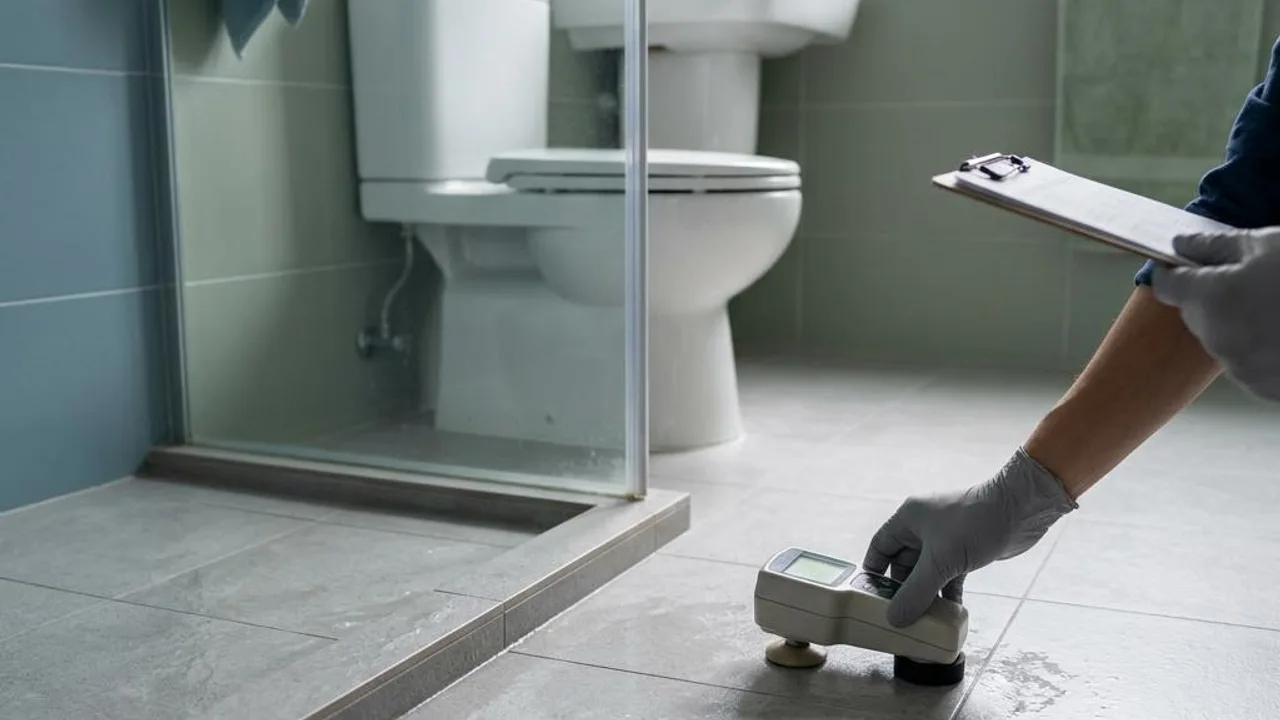
The anti-slip effect of bathroom floor tiles should not be judged solely by personal sensation but must rely on scientific data support. Acceptance after engineering completion should involve dynamic and static friction tests, using professional slip friction testing instruments to collect objective data to determine whether the coating application has met expected safety standards.
Professional inspectors will conduct multi-point sampling tests in both dry environments and simulated post-shower wet environments. Through quantified friction coefficient data, it is possible to precisely identify whether there are missed spots, uneven application, or blind spots in the construction. This objective inspection method is a necessary means to ensure that the floor's safety reaches an all-round balance.
- Using professional slip friction testing instruments
- Conducting dual sampling for dry and wet floor surfaces
- Ensuring uniform coverage of the coating on the floor surface
- Providing quantified scientific acceptance results
Systematic Bathroom Safety Maintenance Strategy
Integrating friction inspections into the post-renovation acceptance process is an important part of safeguarding modern home safety. This not only ensures that the project meets high-level safety requirements upon delivery but also accumulates important data for future property management, facilitating ongoing monitoring of the home floor's safety status by owners.
High-quality anti-slip micro-crystal coatings are not only highly safe but their dense surface structure also resists the accumulation of dirt and mould, helping to reduce cleaning difficulty. Rational maintenance of home flooring not only extends the service life of renovation materials but also eliminates hidden safety hazards and protects overall property value.
- Establishing a long-term anti-slip monitoring mechanism
- Reducing the accumulation of surface dirt and mould
- Enhancing the overall hygiene quality of the bathroom
- Optimising daily home cleaning procedures
Anti-slip Performance Evaluation and Professional Support
The actual effectiveness of bathroom anti-slip projects involves surface physics and precision testing; it is difficult for general owners to perform accurate assessments themselves. If a noticeable slippery feeling persists on the floor when wet, it is recommended to engage a third party with professional expertise to conduct an inspection and evaluate floor safety using professional instruments.
When seeking professional assistance, one should request a non-destructive testing plan from the inspector and perform anti-slip performance acceptance on details such as bathroom corners and slopes. Providing repair suggestions based on professional scientific data can effectively avoid long-term safety risks resulting from construction defects.
- Utilising professional testing equipment for evaluation
- Providing non-destructive testing plans for floors
- Performing anti-slip performance acceptance on detailed areas
- Proposing repair suggestions based on professional data
Common Issues in Anti-slip Engineering Inspection
When conducting anti-slip project acceptance or evaluation, owners should focus on actual physical data and the scope of work. The following three key questions have been compiled to assist owners in mastering the focus of the inspection.
By clarifying these issues, owners can more clearly understand the testing standards for anti-slip coatings and the logic for subsequent maintenance, thereby ensuring the safety of family members in the bathroom environment.
- How do you determine if the application scope of a bathroom anti-slip coating is sufficient?
- Why is it impossible to confirm the quality of the anti-slip effect using the naked eye alone?
- What is the safety significance represented by friction coefficient test values?
FAQs
How do you determine if the application scope of a bathroom anti-slip coating is sufficient?
The scope of application should cover all areas in the bathroom susceptible to moisture, including the shower area, around skirting boards, and under the washbasin. Owners can observe whether there is a noticeable difference in anti-slip tactile feel between dry and wet states after the coating is applied, and confirm whether the sampling points in the inspection report include these high-risk areas.
Why is it impossible to confirm the quality of the anti-slip effect using the naked eye alone?
Anti-slip micro-crystal coatings increase friction by altering the chemical structure at the microscopic level. These crystal structures cannot be directly detected by the naked eye, nor can their distribution density or durability be judged visually. Therefore, one must use dedicated friction testing instruments to quantify the friction coefficient to objectively confirm the anti-slip performance.
What is the safety significance represented by friction coefficient test values?
The friction coefficient is an indicator used to quantify the degree of anti-slip on a floor. A higher value indicates stronger anti-slip capability in a wet environment. The test results provide a quantified baseline, allowing owners to understand the change in friction before and after treatment and judge whether the expected home safety level has been reached.