
Clarifying the scope of renovation works and construction records.
Renovation works for second-hand properties vary, such as repainting, replacing floor tiles, altering partition walls, or replacing kitchen cabinetry; the depth and scope involved differ significantly. Before inspection, buyers should ask the seller or estate agent for the approximate completion time of the renovations, specific areas worked on, and any relevant engineering records available.
Buyers must remain objective and not assume internal structures or water/electrical facilities have been fully updated just because the renovation looks fresh. If a detailed list cannot be obtained, list it as an item to be confirmed to avoid ignoring potential aging hazards based purely on visual impressions, and request to cross-reference relevant information during the subsequent handover.
- Specific start/end dates of renovation works and contractor background.
- List of replaced facilities and relevant maintenance documents.
- Whether changes were made to partitions, water pipes, or electrical systems.
- Whether the property has past leakage or repair records.
- Covered areas where no renovations have been carried out.
Examining the junctions of new and old materials and surface defects.
When renovations involve partial alterations, the junctions between new and old materials are often high-risk areas for problems. When observing skirting boards, door frames, cabinet edges, and wall-floor joints, check for cracks, warping, scratches, or rough finishing. These surface details reflect workmanship quality but cannot directly prove the safety of the structure hidden within.
If the seller permits, conduct standard open/close tests. Observe whether doors and cabinets make abnormal sounds, fail to close properly, or are misaligned during use. Record these observations in detail and photograph them; these phenomena are crucial for evaluating renovation quality and determining if follow-up defect rectification is needed.
- Quality of sealant at junctions of different materials.
- Resistance and fit when opening/closing door frames or cabinets.
- Whether wall paint shows signs of cracking or bubbling.
- Whether joints between floor tiles and skirting boards are level.
- Gaps between newly renovated components and existing walls.
Water seepage marks and ambient humidity management.
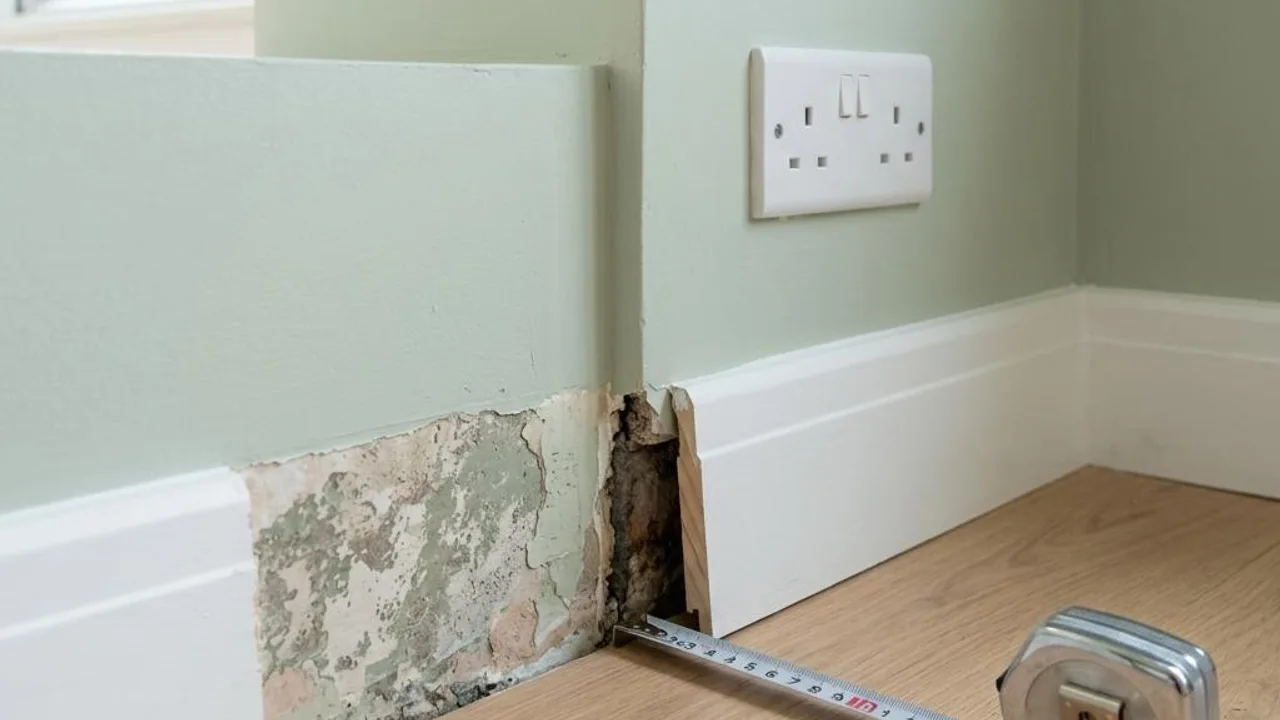
Freshly painted or renovated wall surfaces do not mean original water seepage problems have been resolved. Relying solely on visual observation of odor, color, or wall smoothness cannot serve as conclusive evidence to judge the dryness of the internal layers of a wall. If local odors, water stains, bubbling, or peeling are discovered, record them in detail based on their specific location and appearance date.
If water seepage is suspected, ask the seller about past repair records and methods of handling. Do not remove paint or chisel walls without obtaining confirmation, so as not to destroy evidence. If the problem persists, it is recommended to seek further investigation by a surveyor or relevant technical professional equipped with specialized tools.
- Whether walls or ceilings have obvious water stains or signs of mold.
- Whether paint surfaces show irregular bubbling or peeling.
- Lingering damp odors or musty smells after renovation.
- Records of previously repaired waterproofed areas.
- Dry/wet contrast on walls adjacent to toilets or kitchens.
Observational limitations of covered areas.
Renovations often involve installing new flooring, false ceilings, wall panels, and custom-made cabinets; these facilities can make the original structure inaccessible, significantly limiting the scope of inspection. As a general property inspection, work can only be carried out on visible and accessible areas, which does not imply that the condition under all coverings has been verified.
Do not lift floors, chisel walls, or forcibly pull out built-in heavy equipment, as this may cause unnecessary damage or danger. If specific hidden areas must be inspected, first confirm authorization with the owner and appoint suitable professionals to investigate using correct methods to protect yourself and the property.
- Visible structural state inside false ceiling spaces.
- Signs of water seepage on walls behind fixed cabinets.
- Original floor slab condition under newly laid flooring.
- Inaccessible structural access holes or maintenance hatches.
- Covered electrical wiring or water pipe routes.
Identifying new/old equipment and safety usage advice.
Equipment housings within the unit may look new, but this does not mean internal components or power connections have been updated. First, record the equipment model, usage status, and brand information, and ask whether there are original manufacturer warranty or repair records. For gas, built-in wiring, or electrical installations, owners should not dismantle them for testing, nor should they confuse daily operations with professional equipment maintenance.
Electrical installations must comply with home safety requirements. If fixed electrical appliances require modification, hire a registered electrical contractor and obtain a WR1 work completion certificate. General property inspection does not include long-term guarantees for equipment maintenance or performance; buyers should require the seller to hand over valid original factory warranty vouchers.
- Brand/model and usage status of electrical equipment.
- Whether fixed electrical appliances have standard independent sockets.
- Whether there are odors or rust at gas stove connections.
- Transfer of equipment maintenance services and validity periods.
- Whether original manuals for related equipment are available.
Verifying the handover status and handling of responsibilities.
At the time of transaction and official handover, you must comprehensively cross-check the current status against previous inspection records. Distinguish which are newly added damages, which were existing problems already discovered, and which areas remain obstructed after renovation. This is a critical step in ensuring the property condition meets contractual agreements and the best practice for protecting buyer interests.
If delivery content inconsistent with contractual promises is discovered, preserve evidence immediately and verify in writing with the seller through contractual arrangements. Do not proceed with any dismantling or alterations before confirming responsibility and follow-up handling plans to prevent the dispute from escalating. Remember, there is no uniform defect rectification period for second-hand property renovations; everything is subject to contractual details.
- Check delivered equipment and accessories against the contract list.
- Check if renovation defects show signs of worsening.
- Compare property damage status before and after handover.
- Confirm whether all agreed repair items have been implemented.
- Organize and preserve relevant records and photos taken at the time of property handover.
FAQs
If I find new paint covering walls after renovation, can I chisel it open myself for inspection?
No. Removing paint or chiselling walls yourself will damage property evidence, which may impact future legal clarifications. If you suspect an issue with the inner layers, you should record the location in detail and commission a professional to conduct an investigation.
In a second-hand unit, does the fact that all electrical appliances and equipment look new mean they are safe?
No. A new appearance does not mean the internal wiring, connections, or components have been replaced. Any modifications involving electrical installations should be verified to see if they were carried out by a registered electrical contractor and that a relevant work completion certificate was provided.
During the property inspection, I found that renovation works have obstructed the walls; can I request that these cabinets be removed for inspection?
A property inspection can only target visible and accessible areas. If concealed inspections, such as removing fixed cabinets, are involved, you must first negotiate with the owner and obtain authorization. Please do not force equipment out yourself to avoid causing damage.