
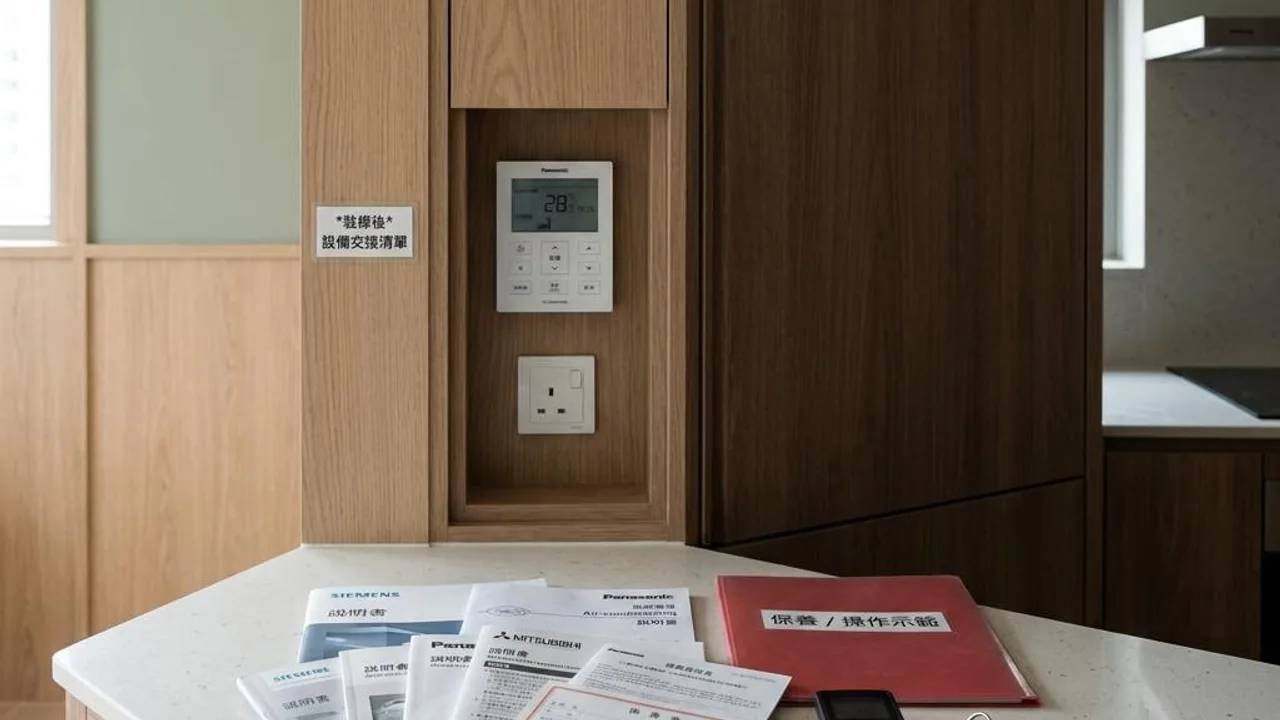
Systematically inventory equipment and components within the scope of work.
Upon handover of renovation works, please ensure you check the equipment names, installation locations, and included accessories one by one against the project list confirmed by both parties in advance. Do not assume that all items on-site are correctly installed or in working order; you must create a specific handover checklist that records the appearance and model of each piece of equipment in detail.
During the handover, record both the observed condition of the equipment surface and any missing details item by item. If certain built-in appliances or concealed installations do not clearly show their model or specifications, do not force panels open or move the equipment for inspection to avoid causing damage; instead, request that the responsible renovation contractor provide the relevant documentation.
- Mapping equipment lists to rooms and specific installation locations
- Make, model, and quantity of installed equipment
- Verification of remotes, cables, and accessories included
- Observed exterior condition and model labels of equipment
Clarify activation conditions and operational responsibilities.
The initial startup, system configuration, and functional testing of home equipment often require professional technicians to perform. Do not switch on power, ignite, or attempt to operate these items until the responsible party has provided a demonstration and confirmed that the water, electricity, and exhaust systems are functioning correctly, in order to prevent danger or equipment damage.
Work involving gas safety, complex electrical circuit connections, or tasks requiring disassembly must be entrusted to suitable registered professionals or designated personnel; home-owner trials cannot replace professional operational guidance. You must insist that the renovation contractor or supplier be present during inspection to confirm that all equipment has reached a standard safe operating state.
- Confirm status of water and electricity supply and connections
- Require professional personnel to demonstrate initial startup steps
- Verify the safety of electrical circuit and pipe connections
- Avoid operating gas appliances without guidance
Keep operational instructions and daily cleaning limitations
During the handover, proactively request all available instruction manuals, maintenance handbooks, and cleaning advice from the responsible party, and meticulously record the demonstration contents and any operational queries. Please strictly follow the equipment instructions for daily operation; do not force simulated extreme failures or conduct overload tests for the sake of inspection, as this may affect subsequent product warranty rights.
It is recommended to systematically file all received operational information by equipment category or room for future reference. If you discover missing manuals or unclear operating procedures, record them on-site immediately and require the relevant parties to follow up by providing replacements or further written explanations, ensuring all equipment has clear maintenance guidelines.
- Normal operating steps and emergency stop guidance
- Equipment cleaning frequency and list of prohibited chemicals
- Daily maintenance and common troubleshooting methods
- Outstanding configuration information or demonstration requirements
Verify maintenance documentation to ensure rights are implemented
The warranty period is a vital part of equipment protection. Please inquire with the renovation contractor or supplier in detail regarding the start date of the warranty, the scope of coverage, online registration procedures, and official customer contact channels. Do not confuse equipment warranty registration and handover arrangements with OPO Inspection services; ensure all terms are based on the official contract issued by the supplier.
OPO Inspection services do not include equipment warranty registration and will not replace the supplier's official guarantee. The owner must personally confirm that warranty documents have been properly registered to ensure that legal repairs and after-sales support can be obtained if issues arise later, avoiding liability disputes caused by unclear records.
- Confirm warranty effective date and expiry deadline
- Check warranty registration proof documents
- Obtain official after-sales maintenance contact details
- Confirm the difference between manufacturer's warranty and contractor's maintenance warranty
Thoroughly organise records of works and equipment handovers
All invoices, instruction documents, safety test reports, and warranty papers delivered during the works should be stored safely. Items for which complete documentation has not been received should be clearly noted, and the responsible person should be asked for an expected response time. Do not treat on-site surface observations as verification of the entire project file; these are two independent dimensions of inspection.
If this concerns an Electrical Work Completion Certificate (WR1) or safety confirmation for a gas system, it must be verified by a relevant registered licensed professional and cannot be presumed solely through on-site observation or general clauses. Maintaining a transparent communication record is crucial for handling maintenance and repairs in the future; it is recommended to keep all documents filed in sequential order.
- Equipment purchase invoices and warranty certificates. During inspection, please confirm that relevant instruction manuals, warranty documents, and operating guides are complete. The aforementioned equipment status is based only on visual inspection and does not guarantee electrical circuits, gas safety, concealed works, or the remaining service life of equipment. If professional functional faults or safety testing are involved, please entrust a licensed professional. Do not disassemble equipment or perform electrical circuit tests yourself.
- Installation testing and compliance inspection records
- List of outstanding documentation and expected delivery dates
- Contact records for relevant licensed professionals
Establish a clear to-do list and snagging checklist
During handover, please note the equipment delivery status item by item in the checklist, such as "Properly installed", "Outstanding configuration data needed", or "Operational abnormality", and require the responsible party to confirm the next steps for outstanding items. If any equipment cannot be operated temporarily, you must record the specific reason and the agreed-upon conditions for reinspection to ensure both parties reach a consensus on the inspection conclusion.
All collected documents and device serial numbers are for your maintenance follow-up only. Please be reminded that before sharing this information online or in public, you must mask any details identifying personal privacy, unit addresses, or sensitive equipment to protect your household safety and personal data privacy.
- List of equipment explicitly confirmed as delivered
- Specific items pending demonstration or outstanding documentation
- Follow-up plans and deadlines for defective items
- Reminder on masking private information
FAQs
I noticed the model label of an integrated appliance is covered during the property inspection; should I dismantle it myself to check?
Do not dismantle it yourself. If the device label does not clearly display the specifications, you should directly request the renovation contractor or supplier to confirm and provide the relevant information to avoid damaging it and affecting your warranty rights.
Does the property inspection service provided by the renovation company already include appliance manufacturer warranty registration?
Property inspection services generally do not include appliance warranty registration. The owner must personally contact the supplier to register, ensure all warranty terms are based on the supplier's official contract, and verify the warranty start date.
How should I handle abnormal noises when a device is started to ensure it is safe?
Please stop operating the device immediately and record the anomaly; do not attempt any repairs yourself. You should contact a qualified registered professional or the supplier to conduct an investigation and request a written explanation of the condition and follow-up plan.