
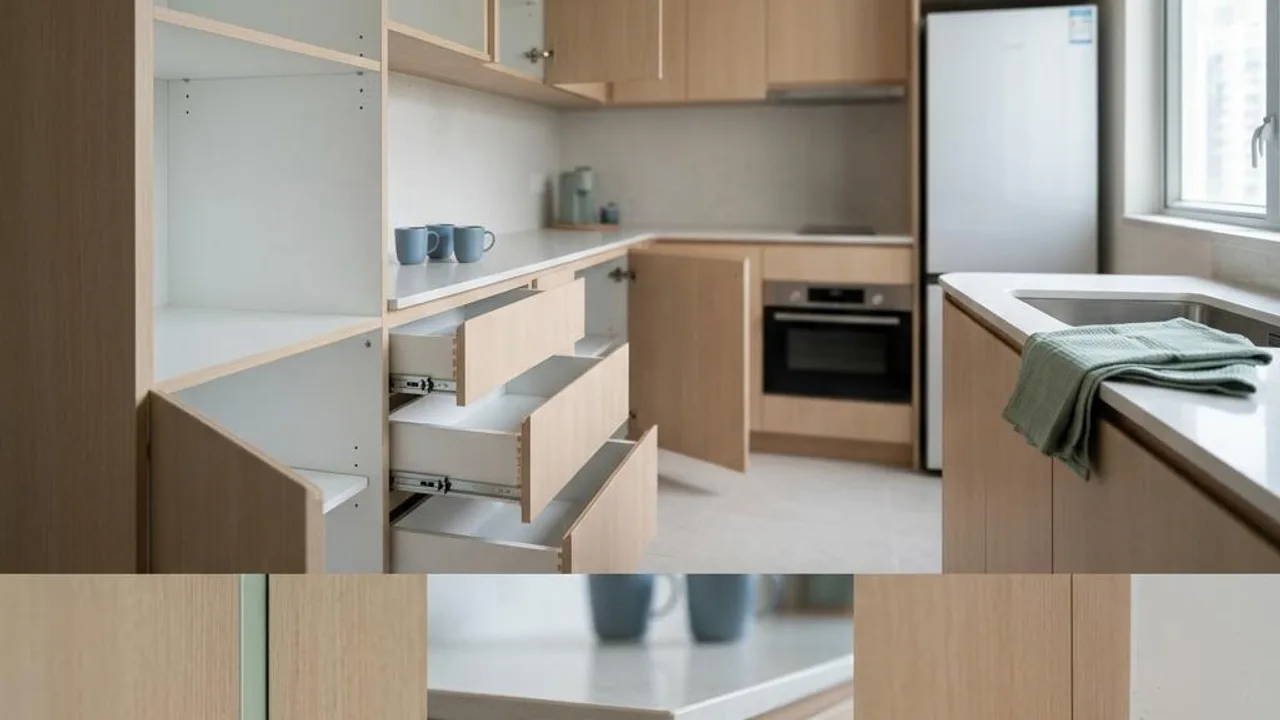
Check design blueprints and scope of work.
Before inspecting cabinetry, ensure you have the design blueprints, material list, and various modification records ready. Clearly distinguish what belongs to 'not yet completed' versus 'craftsmanship defects' or 'abnormal usage'. If the actual dimensions of the finished product or hardware components do not match expectations, you should refer to contract information to consult the contractor, rather than judging based on personal impressions.
Absolutely do not modify furniture yourself to verify its stability. Furniture design involves overall structural calculations; any unauthorised changes may affect safety. The core of inspection is to verify whether the finished product complies with the original contract and to record obvious craftsmanship flaws, ensuring all changes have clear communication records.
- Prepare to compare with design blueprints.
- Verify materials used and specifications.
- Distinguish between pending items and defect issues.
Systematise numbering for convenient follow-up on recurring issues.
For large wardrobes, kitchen cabinets, and shoe cabinets, it is recommended to use unified numbering by room, cabinet unit, drawer, and door panel to facilitate precise positioning during the inspection. Overall photos help identify locations, while close-ups record specific craftsmanship issues; photos are only auxiliary tools and can never replace text descriptions.
Record exterior damage, missing parts, and operation issues separately. Specifically, for areas obscured by construction protective film, debris, or cover panels, if integrity cannot be confirmed, it should be specially noted in the report to avoid omissions in the inspection. A systematic record method can significantly improve communication efficiency with the construction party.
- Numbering records for each cabinet unit and door.
- Categorise and record appearance and operation issues.
- Note obscured positions that could not be inspected.
Inspect edge-banding and surface craftsmanship in detail.
When inspecting, you should maintain a horizontal line of sight to observe if there are damages at edges, overflow of edge-banding glue, detachment, or uneven joints. For surface scratches, verify if they are within the scope of normal usage. Never tear off protective films that the construction party has not approved for removal, or use sharp metal objects to scratch and test surfaces.
Different wood and surface materials have varying characteristics; texture and colour should be verified against samples and cannot be judged as material errors based on a single photo under one light source. If edge damage is found, ensure it is photographed and marked with the corresponding number to facilitate subsequent requirements for the construction party to perform repairs.
- Closely inspect edge-banding and interface flatness.
- Compare with samples to confirm materials.
- Check for surface scratches and chipped corners.
Test cabinet door, drawer, and hardware operation.
Provided it is safe and permitted, operate cabinet doors and drawers one by one. Pay attention to whether they collide with adjacent door panels, walls, ceilings, or floors during the opening process. Do not force drawers or apply pressure to cabinet hinges; if these parts make strange noises, record the abnormal state rather than attempting adjustments yourself.
If a certain type of hardware component (such as soft-close hinges or concealed sliding doors) requires a specific method of operation, ask the responsible personnel to demonstrate it first. Only with an understanding of correct operation can you accurately judge whether the component is faulty; otherwise, it should not be randomly judged as damaged.
- Trial each cabinet door and drawer one by one.
- Record collision positions and interference.
- Confirm hardware component operation is smooth.
Confirm safety stability and provide risk avoidance suggestions.
If the cabinet shows signs of obvious wobbling, tilting, or instability, immediately stop using it and contact the construction party. Please note that climbing, hanging heavy items, or strongly shaking the cabinet body during inspection is strictly prohibited; these carry high risks to both the human body and the furniture structure and are by no means inspection items.
If the installation status cannot be confirmed because walls or concealed fixing structures are not visible, it should be listed as an 'observation limitation', and the relevant personnel should be requested to provide an installation report or confirmation letter. Safety is always the first consideration; any structural doubts must be assessed by registered professionals.
- Stop using unstable cabinets.
- Do not climb or hang heavy items.
- Record limitations for concealed installations.
Re-inspect repair results and consequential damage.
After the construction party completes repairs or adjustments, use the original numbering to conduct a second re-inspection. Focus on confirming whether original damage has improved, and observe in detail whether the surface, edge-banding, and adjacent door panels around the repair position have suffered consequential scratching or damage.
Categorise inspection status into 'pending', 're-inspection completed', and 'inoperable', avoiding vague terms like 'visited' as a case closure. The resolution of every item should be confirmed and compared with the original damage list one by one to ensure the furniture reaches a stable state when handed over.
- Check repair effectiveness of the original problem.
- Observe damage caused by the repair process.
- Categorise and label the inspection status of each part.
FAQs
If slight glue overflow is found at the edge-banding during inspection, is this considered unqualified?
You should first compare it against the craftsmanship standards in the contract. If the glue overflow significantly affects visuals or tactile feel, it should be photographed, recorded, and marked in the inspection checklist, requesting the contractor to explain the handling plan, rather than the homeowner defining whether it is qualified or not.
If the cabinet wobbles slightly after installation, how should I handle it?
Do not attempt to reinforce or climb-test it yourself. Immediately stop using it, record the wobbling part, and take photos, while requesting the construction party to explain the installation and fixing method. If necessary, have a professional check whether the fixing structure is solid.
Does noise occurring during hardware operation mean the components are damaged?
Not necessarily. The sound might be caused by a lack of adjustment or unfamiliarity with the correct operation method. Please first ask the construction personnel to demonstrate the correct usage; if there is still strange noise under standard operation, you should request further inspection rather than casually judging it as damaged.