
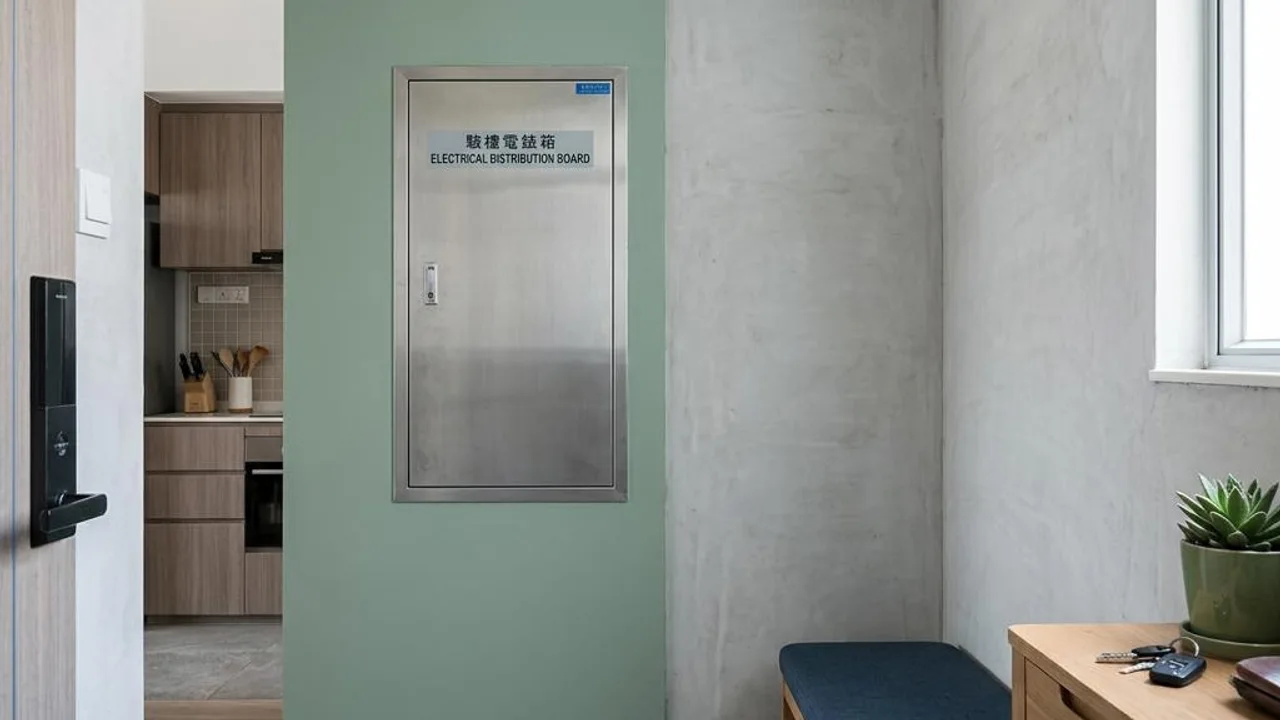
The core status of the meter box in property inspection.
The meter box is the central hub of a residential electrical system, primarily responsible for monitoring electricity usage data and centrally managing the distribution of household wiring and safety protective devices. During handover and property inspection, a detailed check of the meter box is a key step to ensure living safety and electrical performance; it must not be overlooked because its structure is concealed.
A healthy meter box condition can effectively prevent overloads and electrical failures, ensuring smooth daily operation. If the meter box is poorly designed or installed, it could lead to electrical tripping, circuit loss, or even more serious risks of electrical fire; therefore, when conducting a professional property inspection, it is a priority to confirm the meter box's installation compliance and operational stability.
- Monitor overall electricity consumption of the home.
- Centrally manage the distribution of all indoor circuits.
- Provide necessary circuit breaking and residual current protection.
- Prevent fires caused by circuit failures.
Key points for visual inspection of the meter box.
During the visual inspection stage, owners can observe the integrity of the meter box casing. The casing must be fire-resistant and insulating, and have no cracks or deformation caused by construction impacts. If you notice signs of charring or strange odors on the casing, it usually indicates severe internal overload or poor terminal contact, which must be recorded immediately and scheduled for inspection.
At the same time, the environment surrounding the meter box should also be observed, including signs of dampness or water seepage risks. Electrical systems are extremely sensitive to moisture; if the meter box is near high humidity or walls with seepage, the risk of short-circuiting is greatly increased. All external checks are non-invasive; confirming the stability of the box environment while ensuring safety is within the scope of what owners can observe.
- Confirm if the casing shows signs of charring or heat damage.
- Check if the box door hinges and latches are functioning normally.
- Observe if there are risks of water seepage around the meter box.
- Ensure labels and indicators are clear for emergency power disconnection.
Internal wiring and electrical component evaluation.
Internal electrical component inspection must be performed by a qualified Registered Electrical Contractor to confirm the functionality of the Miniature Circuit Breakers (MCB) and Residual Current Devices (RCD). The inspection focus is on whether all connection terminals are tight, as loose wiring can easily generate high heat during current operation, leading to plastic casing melting, which is one of the common causes of domestic fires.
In addition to the stability of the wiring, whether the cable specifications meet the load requirements of the circuit is also a key point. If you discover wires that are too thin or disorganized connections, they must be rectified by a Registered Electrical Contractor to comply with the Electrical and Mechanical Services Department's regulations on electrical installations, ensuring that electricity loads do not cause excessive loss or overheating.
- Check if terminal connection points show oxidation or looseness.
- Confirm if circuit breaker labels correctly correspond to the load.
- Confirm that internal wiring is neat and meets insulation standards.
- Test if residual current protective devices can trip correctly.
Professional standards for meter box upgrades and installation.
If the property inspection reveals that the meter box needs to be replaced or upgraded, choosing products that meet Electrical and Mechanical Services Department standards is a basic safety requirement. Compared to old fuse boxes, modern circuit breaker boxes have sensitive overload and residual current protection functions, can improve the speed of power cut-off responses, and facilitate domestic power management. Checking the meter box is limited to visual status and basic operation; it does not mean a professional electrical safety test or statutory certification under the Electricity Ordinance has been performed. If any circuit inspection, installation, or repair is needed, you must hire a Registered Electrical Contractor; do not disassemble or touch internal components yourself.
Regardless of the model chosen, you must ensure the product complies with local electrical installation safety standards and has relevant product certifications. Meter box installation belongs to professional electrical work; according to the law, you must hire a Registered Electrical Contractor for installation, and a WR1 Work Completion Certificate must be issued upon completion to prove compliance with safety regulations.
- Prioritize choosing modern circuit breaker boxes with certifications.
- Plan based on the unit's total electricity load capacity.
- Must be installed by a Registered Electrical Contractor.
- Always request a WR1 Work Completion Certificate upon completion.
Common electrical issues during the inspection process.
In daily property inspections or checks, the most common issues are often related to circuit tripping and equipment aging. If you find specific circuits tripping frequently, do not try to force the switch up; this is usually a warning of circuit overload or leakage. At this time, record the circuit breaker number that tripped and ask a professional to inspect it.
Additionally, if the indicator labels inside the meter box have faded or fallen off due to time, they should be replaced as soon as possible. Clear labels are crucial for emergencies, allowing residents to quickly identify and cut off relevant power supplies during power anomalies, thereby reducing the scope of the incident.
- Frequent tripping may be a sign of circuit shorting or overload.
- Faded labels will increase the difficulty of emergency power disconnection.
- Damp environments easily lead to internal contact corrosion.
- Assess whether old fuses need to be upgraded to circuit breakers.
FAQs
If you discover burnt odors or signs of charring inside the meter box during a property inspection, how should it be handled?
This is a serious potential electrical failure. Owners should not touch or try to repair it; record the location immediately and take photos as evidence, then contact the property management office or a Registered Electrical Contractor immediately to arrange for professional technicians to conduct a thorough inspection and assess whether it involves overload, damage to wire insulation, or terminal overheating.
If there is water seepage on the wall around the meter box, what impact will it have on electrical safety?
Electrical systems are very sensitive to moisture; seepage will reduce the insulation performance of the circuit, increasing the risk of leakage and short circuits. When owners observe seepage, they should record the area and commission qualified personnel to check if there are signs of moisture corrosion inside the meter box. Before repairing the seepage issue, try to avoid placing flammable items in the area.
Why is it mandatory to hire a Registered Electrical Contractor to inspect or repair the meter box?
According to Hong Kong law, work involving fixed electrical installations must be performed by Registered Electrical Workers or Contractors. They possess the necessary testing equipment to accurately measure insulation resistance and earth continuity, ensuring that repairs meet the Electrical and Mechanical Services Department's safety standards, and are able to legally issue WR1 certificates to prove the installation is safe.


