
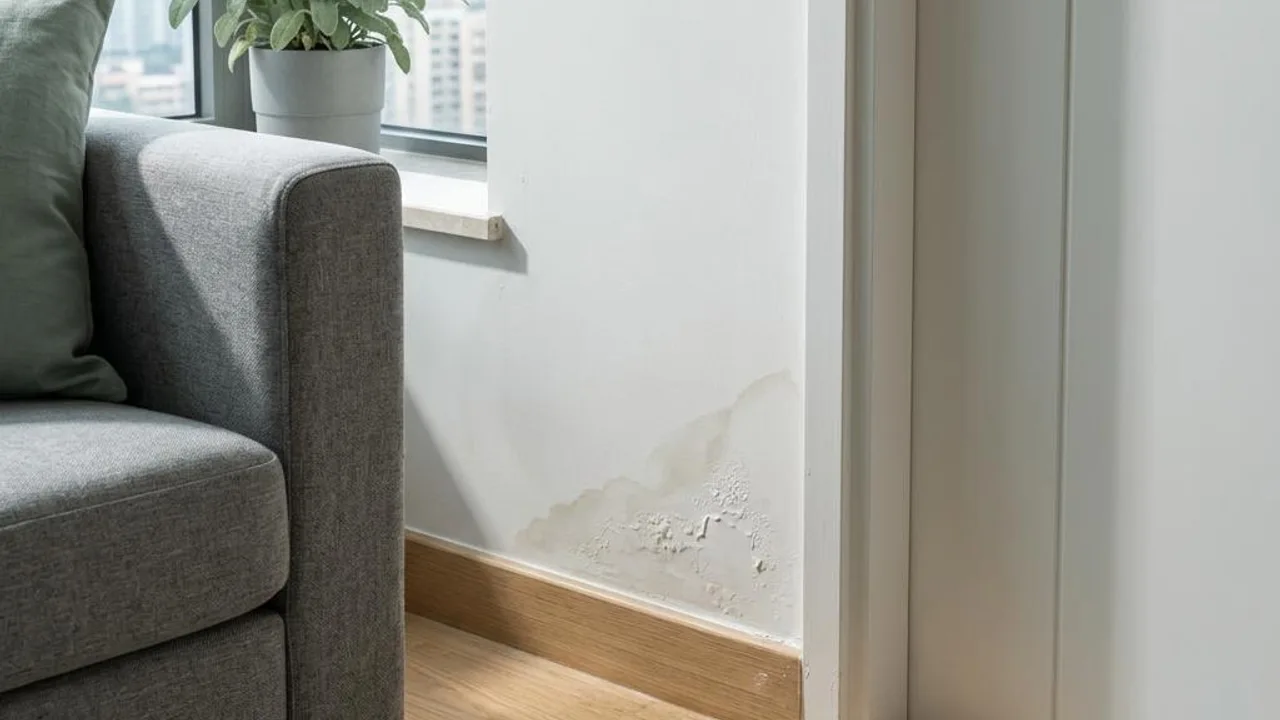
Potential hazards of being urged to sign documents at the handover site
On the day of handover, owners are easily distracted by the excitement of moving in and the pressure from management office staff, causing them to overlook inspection details. Staff often urge owners to sign to complete the handover process as quickly as possible, shifting the responsibility for daily management and maintenance of the property to the owner.
If an owner signs blindly without inspection, it may be legally considered as confirming the unit's condition is perfect. Such haste in the process could lead to developers using this as an excuse to refuse defect rectification when hollow wall tiles or water leakage are discovered later, leading to the owner having to bear extra costs themselves.
- Insist on property inspection first, then sign any documents confirming handover.
- Do not promise handover status to representatives before detailed inspection.
- Stay calm and avoid giving up inspection time due to staff pressure.
Legal consequences and impact of signing documents
Signing a handover confirmation letter has legal force, meaning the owner officially accepts and approves the current state. This implies that floor and wall finishes meet standards, making it difficult to define the attribution of defects later, and even harder to prove it was a construction issue rather than human damage.
If problems are found after signing, owners are often diverted into long warranty programmes rather than defect rectification programmes. This significantly increases communication costs; owners move from proactive inspection to passive pursuit, and often find themselves at a disadvantage when facing lengthy correspondence and complaint processes.
- Signing as confirmation is equivalent to admitting the unit's quality meets handover standards.
- It is difficult to define specific responsibility for surface defects after signing.
- The distinction between the warranty period and the defect rectification period affects repair efficiency.
Common hidden defects and the necessity of professional testing
Visual inspection has its limitations. For instance, wall plaster hollows may seem flat on the surface but often contain voids underneath the paint or tiles. Without instrument-based testing, issues such as tile detachment or cracks, or even concealed water leakage risks, are likely to emerge later.
Drainage gradients and window frame airtightness are also common hidden hazards. Insufficient gradients lead to bathroom clogs and backflow, while poor window sealing causes water seepage. These problems are difficult to detect by sight alone and require professional diagnostic methods.
- Wall hollow inspection: Identifying structural issues beneath the plaster and paint layers.
- Drainage system inspection: Evaluating drainage gradients and checking for construction debris.
- Window frame seal assessment: A critical step in preventing rainwater seepage.
- Electrical installation inspection: Preliminary verification of whether circuits are operating correctly.
Practical self-protection strategies at the handover site
When pressured, owners should adopt a scientific and systematic strategy. Be sure to uphold the 'inspect before signing' principle, ensuring enough time is set aside to check the details. Record all discovered defects in detail, take photographs or videos as evidence, and establish a complete chain of evidence for defect rectification.
Clearly list the defects found to create a written checklist. Even if the owner chooses to inspect the property themselves, they must ensure the content of the list is specific and accurate, and require the developer's representative to sign a copy to prevent future disputes over the issues.
- Refuse to sign off on the property hastily before the inspection is complete.
- Use tools such as a tapping hammer for basic checks.
- Take photographs of defects and create a written checklist.
- Request the developer's representative to sign and acknowledge the copy of the defect rectification list.
Seeking the involvement of a professional property inspection team
Given the complexity of new property handovers, if owners lack professional knowledge or equipment, seeking support from a professional property inspection team usually leads to better rectification outcomes. The team can provide comprehensive inspections of the unit to ferret out hidden defects and protect your interests.
Professional inspection not only uncovers surface flaws but also assists owners in arranging more efficient repairs with the developer during the rectification period, avoiding unnecessary costs and time spent due to negligence.
- Comprehensive inspection, covering hidden areas that are difficult to reach with the naked eye.
- Assisting owners in securing reasonable repair arrangements during the defect rectification period.
- Providing clear inspection reports through professional technical assessment.
FAQs
If wall hollows are discovered during a property inspection, does this mean I must demand the developer perform repairs?
Whether to request rectification depends on the location and area of the hollows. It is generally recommended to consult a professional to assess the risk; if the hollow is in a high position or a damp area, it should be included in the defect list to avoid future tile detachment or seepage.
If the developer insists that I sign the confirmation letter before allowing the property inspection, how should I handle it?
You should resolutely refuse and reiterate the handover contract terms or handover procedures. Signing implies acceptance of the current condition. If forced to sign before inspection, consider recording the staff member's name and the date, and report your request to the relevant property management department.
When performing a self-inspection, which window details are most easily overlooked and lead to water seepage?
In addition to the joints between the window frame and the wall, pay attention to whether the rubber seals are aged or misaligned after opening the window, and whether drainage holes are blocked by mud or sand. If you have doubts about the airtightness of the windows, ask a property inspection professional to help check for seepage risks.


