
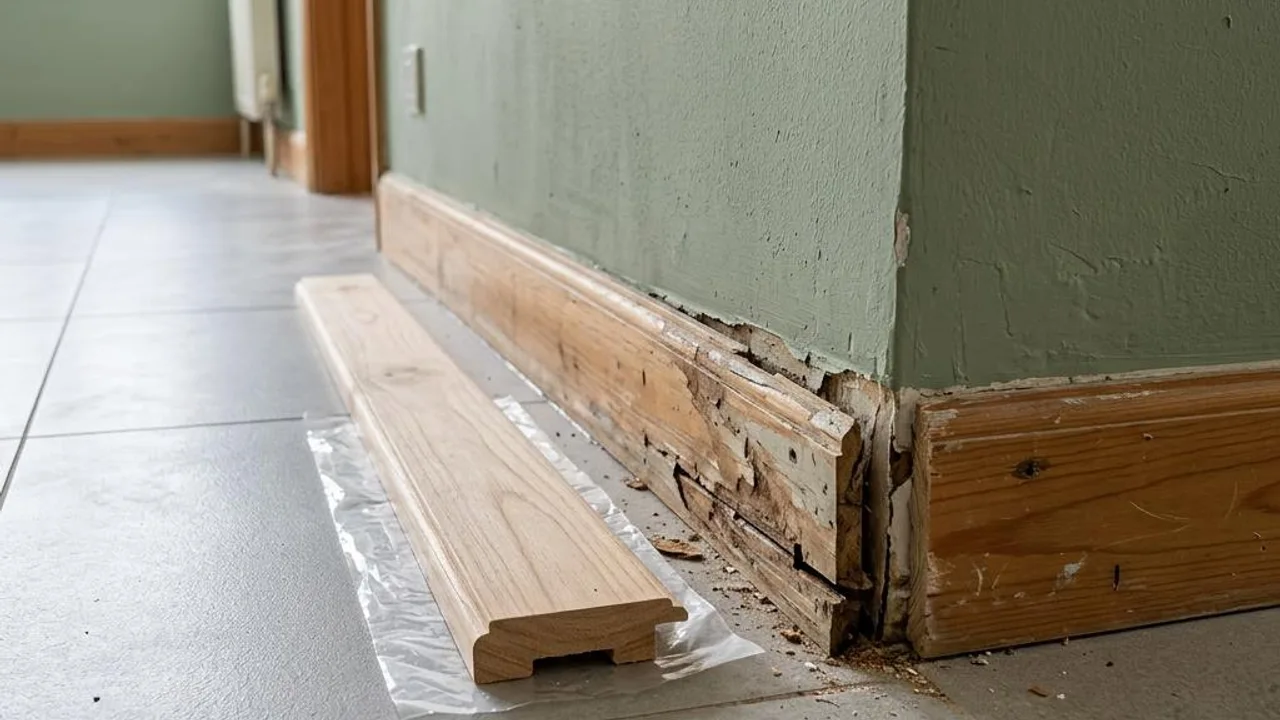
Structural protection and aesthetic functions of skirting boards
Skirting boards are strip components installed at the junction of the bottom of the wall and the floor. In actual living, they serve as a physical barrier to effectively cover expansion joints between the wall and the floor, while protecting the fragile bottom of the wall to avoid accidental impacts or scratches during daily cleaning such as vacuuming and mopping.
Besides functional protection, the material and design style of skirting boards have a direct impact on the overall atmosphere of the home. A set of skirting boards that are installed finely and whose colour coordinates with the interior style can optimise the interior edge lines and enhance the spatial hierarchy. Therefore, when conducting a home inspection, one should not ignore the inspection work because of its hidden position.
- Cushion impact damage when moving furniture
- Cover construction gaps between the wall base and the floor
- Provide the visual line beauty of interior design
- Isolate dust accumulation in wall corner gaps
Focus areas for skirting board inspection during property inspection
When inspecting a property, focus on the installation quality of the skirting boards. It is recommended to carefully observe with the naked eye whether the connection points are level, and check whether they are tightly attached to the wall and floor, without any obvious gaps or warping, otherwise it will not only affect the look but may also accumulate dirt due to residual gaps.
During the inspection, one must also pay attention to the physical performance of different materials. For example, check wooden skirting boards for dampness, mould, or hollow drums; for metal or plastic materials, check for deformation or coating peeling. If they feel loose when tapped lightly, it means that the fixing screws or adhesive have failed, and they should be added to the repair list.
- Whether the connection point is smooth and without excessive gaps
- Whether there are obvious gaps with the wall and floor
- Whether the surface coating is even and free of scratches
- Check for expansion or mould caused by moisture
- Tap lightly to confirm if there is a feeling of hollow drums or looseness
Common problem handling and repair recommendations
Once damage to the skirting board is discovered, targeted measures should be taken according to the severity. For subtle surface scratches or slight gaps, they can usually be repaired by filling with appropriately coloured sealant or re-sanding and painting. This treatment method is low cost and high efficiency, effectively restoring the neat appearance of the skirting board.
If the skirting board shows more serious structural damage, such as large-scale damp rot, severe distortion, or the base is completely destroyed, and simple filling cannot meet the usage needs, it is recommended to partially dismantle and replace it with brand new material. When performing the replacement work, ensure that the length is cut accurately and the connection angles match to maintain the overall consistent beauty.
- Repair slight gaps with appropriate colour sealant
- Repair surface wear through re-sanding and oiling
- It is recommended to dismantle and replace in case of severe moisture or rot
- Ensure tight attachment to the wall and floor edges when replacing
Hire professionals for verification and repair
Although the repair of skirting boards seems simple, it actually involves details of wall damp-proofing and floor connection. If the repair is improper, such as choosing materials unsuitable for the environment or lacking waterproof treatment, it may trigger mould growth at the wall base or lead to secondary damage.
For structural damage or situations where the cause of damage is uncertain, entrusting decoration masters with professional technical backgrounds or interior architectural professionals to conduct the check is a wise move. They have the right tools and damp-proofing experience to ensure the repair work meets engineering standards, thereby extending the service life of home facilities.
- Possess the right tools and damp-proofing knowledge
- Avoid subsequent problems caused by incorrect material selection
- Ensure connection points are handled finely and structures are solid
Daily maintenance and long-term observation
In addition to the inspection during property inspection, good daily maintenance can also extend the service life of skirting boards. Homeowners should avoid using excessive water when cleaning the floor daily and ensure that the area around the skirting boards remains dry. If you find slight dust on the surface of the skirting board, simply wipe it gently with a soft, slightly damp cloth, and avoid using hard brushes to scrub the surface coating.
When living there for a long time, observe periodically whether the skirting boards show abnormal deformation or worsening gaps. Especially during seasonal changes or wet weather, observe whether the skirting boards have mould spots due to humidity changes. If abnormalities are found, they should be recorded in time and professional advice should be sought to assess the treatment plan to prevent the problem from expanding.
- Daily cleaning should avoid excessive moisture seeping into wall corners
- Use a soft cloth to wipe gently to avoid scratching the surface
- Periodically observe for abnormal mould spots or deformation
- Record the situation in time when encountering seasonal problems
FAQs
Is it necessary to replace the skirting board immediately if a small gap is found between it and the floor during property inspection?
Not necessarily. If it is a slight gap, it can usually be closed with sealant that matches the colour of the wall or floor. This approach can effectively prevent dust accumulation and improve the appearance without requiring large-scale dismantling work.
If mould spots are found at the bottom of the wooden skirting board, does this imply that there is a problem with the internal structure of the wall?
The appearance of mould is usually related to environmental humidity or surface dampness; homeowners should observe if the mould is near a water source or shows signs of obvious water seepage. It is recommended to document the condition of the area and take photos, and consult a renovation contractor with waterproofing expertise to check for external water ingress or simple surface dampness.
What principles should be followed regarding tools or materials when self-repairing skirting boards?
When performing self-repairs, avoid using highly corrosive cleaning agents or overly coarse sanding tools to prevent damaging the coating of the skirting boards or the surrounding wall paint. If you need to fill gaps, select a professional sealant suitable for the specific material (such as wood or plastic) and follow the operational guidelines in the product manual to ensure effective bonding.


