
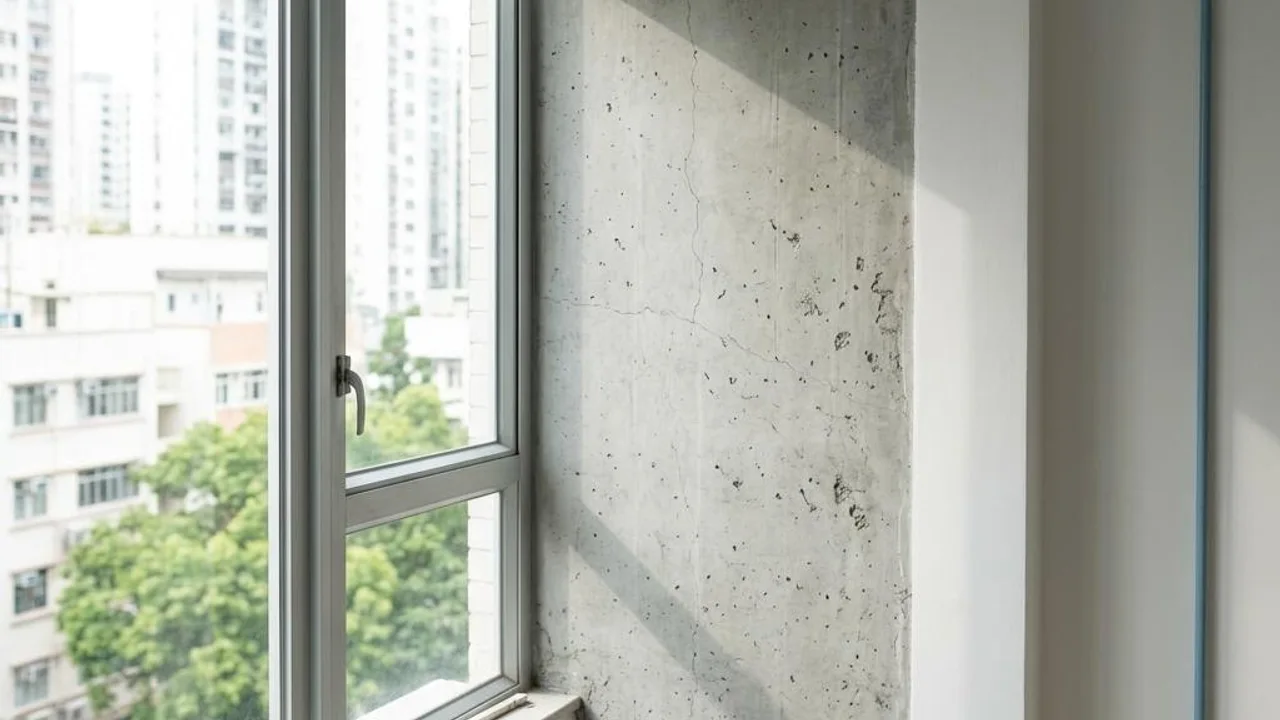
Limitations of observing natural light.
Although there is sufficient light on clear days, intense direct sunlight often creates deep shadows at wall corners, cabinet edges, and windows, which obscures potential surface details. These high-contrast areas often become visual blind spots during inspections, making it easy to overlook plastering or trimming details on walls.
On overcast days or at dusk, indoor light is softer; while it reduces harsh shadows, if the brightness is insufficient, fine pinholes on the wall, paint color discrepancies, or uneven flooring are extremely difficult to identify. Owners need to be aware that lighting conditions at different times will significantly affect observation and judgment with the naked eye.
- Direct sunlight creates shadows that obscure vision.
- Overcast environments affect the visibility of minor flaws.
- Light intensity directly affects the observation of surface textures.
- Relying solely on natural light has objective limitations.
Side-lighting techniques using high-intensity flashlights.
Making good use of a portable high-intensity flashlight can effectively solve the light blind spot problem. When checking wall paint or ceiling plaster, illuminate the wall closely with the flashlight using side-lighting or back-lighting techniques; otherwise inconspicuous wave patterns, chipped corners, or repair marks on the wall will appear three-dimensional due to enhanced light and shadow contrast.
This technique is also applicable to dark corners, such as the bottom of kitchen cabinets or dead corners in storage rooms. By changing the angle of incidence of light, owners can more clearly observe the smoothness of installation craftsmanship, which is an effective auxiliary method to compensate for insufficient ambient light.
- Use side-lighting technology to highlight wall flaws.
- Use a flashlight to check installation details in dark areas.
- Enhance light and shadow contrast to identify repair marks.
- Adjust the irradiation angle to observe three-dimensionality.
Contrast tests with light switches.
Making good use of indoor lighting contrast can uncover surface conditions under different lights. Owners can try to observe kitchen countertops, bathroom tile joints, and flooring separately under two scenarios: with all indoor lights on and with natural light as the main source.
Changes in color temperature and projection angle can sometimes make scratches or installation deviations, which were originally hidden under uniform light, become visible. Switching light environments through multiple dimensions can help owners establish a deeper preliminary understanding of the property's surface craftsmanship.
- Compare wall conditions under different lighting environments.
- Pay attention to the changes in kitchen and bathroom joints under different light intensities.
- Switch indoor lights to look for installation deviations.
- Observe the details and layers of surface craftsmanship.
Dealing with visual interference from high-reflective materials.
Large floor-to-ceiling windows, stainless steel kitchenware, and mirror decorations common in modern homes easily create strong glare under sunlight, directly interfering with vision. When checking these areas, owners should constantly change their standing position and observation angle, avoiding pointing their eyes directly at the reflection center.
In addition, one can use their body or personal belongings to appropriately block direct light. In the relatively softer shadows, it is easier to objectively check whether there are micro-scratches on the glass surface, or whether there are installation details such as uneven joining or overflowing glue at metal edges.
- Change observation angle to avoid glare.
- Use light-blocking techniques to check glass surfaces.
- Objectively inspect the joining quality of metal edges.
- Dealing with visual interference on high-reflective surfaces.
Inspection timing and psychological expectations.
Due to the short duration of the property inspection, the state of the unit seen by the owner only represents the lighting environment at that specific moment. The movement of the sun's position changes the illuminated surfaces in the room, meaning that some flaws may appear differently at dusk or during early morning light. Maintaining alertness to changes in the lighting environment helps owners face inspection results rationally.
Understanding the subjectivity and limitations of self-inspections can assist owners in avoiding overreacting or missing necessary details due to misjudgments of light and shadow illusions, thereby establishing a more solid psychological expectation of the property's condition.
- Be alert to the fact that lighting changes with time.
- Understand the misleading nature of ambient light on vision.
- Maintain an objective and rational observation attitude.
- Avoid excessive psychological expectations caused by illusions.
Seeking support from a professional property inspection team.
Although the surface of a unit can be preliminarily observed by adjusting lighting techniques, the subjective experience under changing light and shadows can never replace professional measurement. Many deep-seated hidden dangers regarding structural seepage, electrical safety, and drainage efficiency cannot be fully seen by the naked eye and a flashlight.
If visible abnormalities are found, it is recommended to record the specific locations and consult a qualified professional property inspector for an in-depth assessment to ensure that the property's condition receives analysis and records that meet industry standards.
- General residential property inspection is an observational review: it cannot serve as a guarantee for structural, electrical, gas safety, regulatory compliance, concealed piping conditions, waterproofing thickness, remaining service life, or repair effectiveness. Infrared thermography only reflects surface temperature distribution and cannot directly prove the cause of water leakage or hidden structural problems. Do not exaggerate the functions of inspection tools, nor provide any guarantees or fabricated inspection licenses. Mandatory window inspection is an independent legal procedure that must be executed by a qualified person registered with the Buildings Department and is not within the scope of general property inspection services. When professional engineering is involved, it should be referred to qualified persons for handling; do not imply the ability to confirm all safety conditions. Owners should not perform electrical tests, disassemble devices, adjust water pressure valves, climb onto roofs, or operate external wall windows themselves. Please retain actual observation records and subsequent follow-up recommendations; avoid using absolute guarantee statements or promotional-style descriptions.
- Help establish objective grounds for defect rectification.
- Provide more comprehensive practical inspection procedures.
- Reduce risks and disputes after moving in.
FAQs
Why is it easier to ignore flaws in strong light?
Intense direct light causes high-contrast shadows, especially at wall corners or window edges. These dark areas obscure details, causing minor flaws in surface plastering or gaps to be treated as shadows and ignored.
When observing walls, how to use a flashlight for side-lighting inspection?
Shine the high-intensity flashlight closely along the wall. This side-lighting technique will magnify tiny wave patterns or slight vertical drops in repair areas, revealing unevenness that is otherwise difficult to see with the naked eye.
If suspicious problems are found during self-inspection, what should be done next?
Owners should first use a mobile phone or camera to record them under different light angles and clearly mark the locations. If it is suspected to involve deep-seated hidden dangers such as structural, water leakage, or electrical installation safety, one should commission a professional to perform a compliant inspection to obtain an objective assessment report.


