
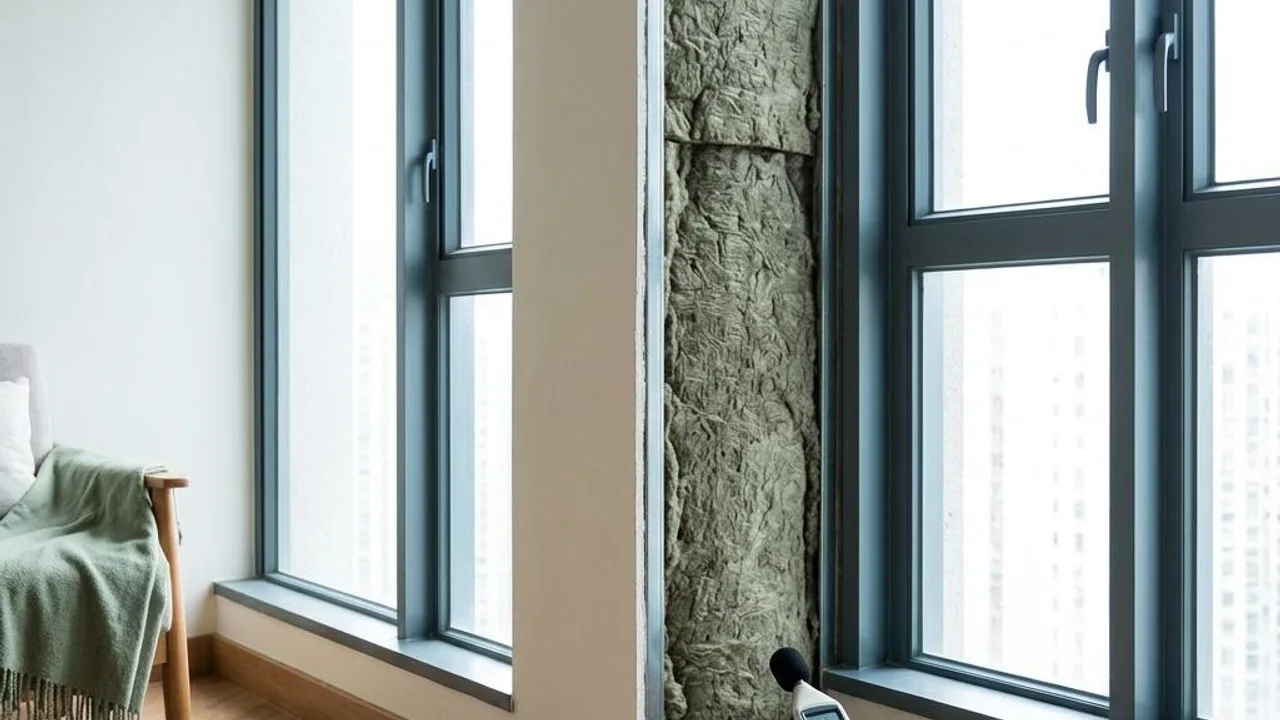
The practical value of home sound insulation assessment
Home sound insulation performance directly impacts living quality; a good sound insulation environment not only blocks disturbances from neighbors' activities, conversations in public corridors, or traffic, but more importantly, ensures the privacy of family members when resting. Through professional inspection, one can determine whether the property structure and facilities meet expected sound insulation functions, avoiding the discovery of serious acoustic loopholes after moving in.
The focus of the property inspection assessment is to check the integrity of the building structure, rather than mandating industrial recording studio levels. We mainly confirm whether the installation workmanship of walls, floors, and windows meets design specifications and check for acoustic transmission paths caused by construction negligence, allowing the owner to clearly understand the unit's true acoustic environment.
- Reduce noise interference from external streets and neighbors
- Protect the privacy of family conversations and private rest time
- Enhance overall living comfort and sense of tranquility
- Check construction details for defects that reduce sound insulation
Acoustic inspection of wall and floor slab structures
Walls are the primary barrier against airborne sound, and a solid structure is the foundation of sound insulation. During the property inspection, observe whether there are obvious cracks or hollows on the wall surface, as these physical gaps often act as bridges for sound transmission. In addition, the sealing of the joints between the wall and the floor slab is equally critical; if filler material is insufficient during installation, sound can easily leak through these gaps.
Sound insulation for floors focuses on impact sound transmission; the key inspection point is the degree of integration between floor materials and the floor screed. Insufficient flatness or loosely installed flooring may produce extra vibration noise when walking. If you find the floor has a noticeable hollow sound, it is recommended to record it and inquire with the relevant engineering personnel to confirm whether it meets building standard requirements.
- Lightly tap the walls to check for large areas of hollows
- Examine wall, floor slab, and pillar joints for unfilled gaps
- Evaluate the flatness and solidity of floor tiles or wooden flooring after installation
- Observe the thickness of partition wall materials and the solidity of the structure
The key to door and window component sealing
Doors and windows are the weakest link in the building envelope, and the elasticity and integrity of their sealing gaskets directly determine sound insulation effectiveness. Owners should check that windows fit tightly against the frame after being closed and ensure gaskets are not aged, deformed, or detached. Any minute gap will allow external noise to enter, affecting the indoor quiet environment.
Front doors also need to be checked for door leaf weight and bottom sealing effectiveness. If the gap at the bottom of the door is too large, or if the soundproof strips at the door frame edges are improperly installed, it is easy for both light and sound to penetrate. During the inspection, ensure that after locking the door, the door leaf edge and frame achieve a uniform, tight closure; the absence of light-leaking gaps indicates a good sealing foundation.
- Check all window gaskets for aging or damage
- Test whether the tightness after locking the window is sufficient to block airflow
- Confirm that the light-blocking strip or seal at the bottom of the front door is present and intact
- Observe if there is unstable looseness between the door leaf and frame when locked
Surrounding environment and orientation analysis
The unit's location and orientation have a significant impact on actual noise interference. Low-level units often face more street vehicle and pedestrian noise, while high-level units may be troubled by wind noise or the operating sounds of rooftop mechanical equipment. It is recommended to include environmental factors in the property inspection and record potential noise sources around the unit, using window orientation to judge the primary direction of noise entry.
Conducting field observations at different times allows for an accurate assessment of whether the surrounding environment has periodic noise from construction, railway operations, or busy traffic. After understanding this objective environmental information, the owner can rationally analyze current sound insulation needs, and if necessary, consult a professional interior designer to select appropriate layouts or optimization solutions to mitigate noise issues.
- Evaluate the physical distance of the unit from major busy roads or railways
- Consider potential wind noise impacts brought by the floor level
- Note whether there is periodic large-scale construction or factory operation in the vicinity
- Analyze the relationship between window opening orientation and the location of major noise sources
Home sound insulation improvements and professional remediation
If existing sound insulation fails to meet requirements, owners can adopt soft furnishing configurations to optimize the space. Adding heavy fabric curtains can absorb some reflected sound entering through the glass, while laying thick carpets can effectively alleviate impact noise from footsteps and reduce indoor reverberation. Although these physical interception methods are not structural reinforcements, they are significantly helpful in improving daily acoustic comfort.
Regarding sound insulation schemes involving modifications to walls, proceed with caution. Any structural addition, such as adding insulation layers or extra partitions, should be assessed and executed by a qualified registered minor works contractor, ensuring materials comply with residential fire regulations and fire safety clearance requirements. Do not compromise the unit's overall safety ordinance for the sake of blindly pursuing tranquility.
- Install heavy curtains with good light-blocking and sound insulation effects
- Lay carpets in frequently used areas to absorb impact sounds
- Use bookcases or storage cabinets against walls as acoustic barrier aids
- Contact professional contractors to handle structural sound insulation modifications
FAQs
How does the property inspector determine if wall sound insulation is up to standard?
The property inspector mainly checks for unsealed gaps or structural hollows on the wall surface through visual and tapping inspections, rather than measuring decibel data. If obvious joint gaps are found, it is recommended that the owner contact the contractor to perform sealing or caulking work.
If window sound insulation is poor, can I request to have the gaskets replaced?
If the inspection reveals that window gaskets are aged or deformed, leading to reduced sealing, this is a common construction or installation quality issue. Owners can record the situation and notify the developer or contractor to request repair or replacement to ensure the windows return to their normal sealing function.
I hear noises from upstairs within my unit, does this count as a sound insulation problem?
Sound transmission between floors is mainly influenced by the building's floor slab structure and construction workmanship. If the sound is abnormally frequent or loud, the owner can reflect this to the management office to check if the neighbor has construction activities, and simultaneously consult a professional to check whether there are sound-leaking loopholes caused by poor construction materials at the interface between the ceiling and walls.


