
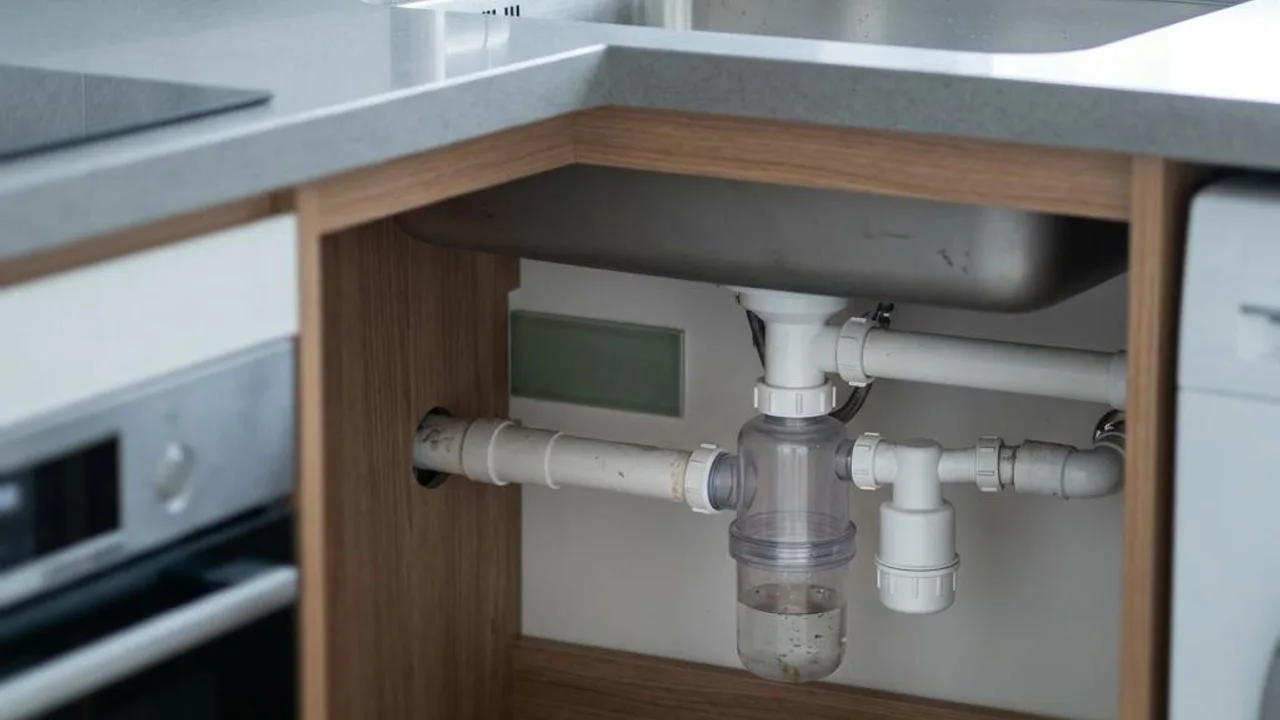
The defensive principle of the bottle trap.
The bottle trap, also known in engineering as a U-trap or water seal, is a critical component installed on drainage pipework. Its core design principle is to use a water seal mechanism to maintain an appropriate water level within the trap, forming an effective gas barrier that blocks odours and gases within the drainage system from entering indoor spaces.
Apart from odour blocking, the bottle trap also plays an important role in maintaining home hygiene. A correctly designed and installed trap can block bacteria, pathogens, and pests such as cockroaches in the drainage pipes from entering the home, ensuring that indoor air quality and home hygiene standards reach basic safety requirements.
- Use the water seal principle to prevent odours from entering the home.
- Block the spread of bacteria and potential microorganisms within the drainage pipes.
- Prevent pests such as cockroaches from crawling into the room via pipes.
- Ensure indoor air is not polluted by the drainage system.
Initial observation of the trap during property inspection.
Many owners often overlook the hidden trap system when accepting a new home. If the installation location is inappropriate, if it lacks a water seal design, or if debris gets mixed in during construction causing blockages, the drainage system will completely lose its protective efficacy. For drains that have been left unused for a long time, the water in the seal may evaporate naturally, leading to backflow of odours.
Owners should pay attention to observing the functionality of all drainage outlets during the property inspection. If a noticeable odour is detected indoors, especially from bathroom or kitchen drainage points, this may be a direct sign that the water seal has failed. At this point, one should observe whether it is caused by poor ventilation or poor installation craftsmanship, record the situation, and consult professionals for an in-depth investigation if necessary.
- Check the trap design of kitchen and bathroom floor drains.
- Confirm that all drainage outlets are connected to the appropriate drainage system.
- Check whether there are gaps or looseness in the installation craftsmanship.
- Ensure the drainage pipe design meets ventilation requirements to prevent siphon action.
Common tests and judgment of abnormalities.
Performance tests for the trap mainly involve checking the smoothness of drainage and the air tightness of the pipes. During the water injection test, if the drainage speed is found to be abnormally slow, it may be due to sand or construction debris accumulated inside the trap. Owners can note whether the sound of drainage is accompanied by abnormal airflow, which is an important diagnostic clue.
If a gurgling sound occurs during drainage, it usually indicates a defect in the ventilation pipe design, causing an imbalance in pipe pressure, creating a vacuum state, and siphoning the water out of the trap. When such a situation is discovered, the location and frequency of the abnormality should be recorded in detail, and it is recommended to consult a registered engineering professional to check the air pressure balance design of the drainage system; do not force repairs yourself or assume that the hazard has been resolved.
- Perform water injection test to check flow smoothness.
- Listen for abnormal airflow sounds during the drainage process.
- Check if there are signs of water seepage at the connection points of the pipes.
- Ensure that the installation of drainage outlets complies with regulations and is structurally sound.
The connection between indoor environment and drainage system.
Indoor air quality is closely related to the hygiene status of drainage pipes. When humidity is too high, mould easily grows around pipes or in damp environments. If unexplained mould patches appear around drainage pipes, this often implies that the location has long-term moisture or is at risk of leakage, and it should be treated as a signal that inspection is needed, rather than simply handling it through air purification methods.
Owners should regularly check the humidity levels in the home; it is recommended to keep it below 70% to reduce the chance of mould growth. If an odour is observed in the drainage pipe area, do not dismantle the pipes casually; keep the environment ventilated first and record the specific location and time of the odour's occurrence in detail so that experts can conduct an on-site investigation.
- Keep an eye on whether mould patches appear around the drainage pipes.
- Monitor indoor environmental humidity to control mould growth.
- Observe whether the source of the odour is related to a specific drainage outlet.
- Maintain space ventilation to reduce environmental odour pressure.
Correct maintenance and response process.
Regarding discovered problems, owners should take scientific and reasonable countermeasures. Professional investigation usually involves inspecting the pipe installation structure and precisely diagnosing the flow smoothness of the drainage. If a system failure is suspected, please be sure to seek qualified professionals for on-site troubleshooting rather than performing destructive tests or disassembly inspections yourself.
In daily use, good protective habits also help protect the trap function. Avoid pouring large amounts of debris or chemicals into the drainage outlet to avoid damaging the inner wall of the pipe or causing trap blockages. If trap function abnormalities are discovered during property inspection or daily life, organize the details observed so that maintenance personnel can be accurately described regarding the location of the problem.
- Compile a problem list for professional reference.
- Avoid attempting to disassemble the drainage system.
- Record the frequency of odours or drainage abnormalities.
- Ensure repair works comply with current building hygiene regulations.
FAQs
Why do I hear a gurgling sound when draining, and does this mean there is a problem with the U-trap?
A gurgling sound during drainage usually indicates insufficient ventilation in the drainage system, which can cause a vacuum suction effect in the pipes. This may draw the water seal out of the U-trap, causing the barrier against gases to fail. It is recommended to seek a qualified person to inspect the vent pipe design. This inspection procedure cannot guarantee the airtightness, connection status, or compliance of concealed work within the pipes. If the problem persists, please consult a licensed plumber for a professional assessment.
If I discover foul odours coming from the U-trap area, can I dismantle it myself for inspection?
Self-dismantling is not recommended because the U-trap structure involves rigorous leak-proof installation. Dismantling it yourself may lead to seal failure and cause leakage. You should first observe the source of the odour, record it, and leave it to a professional for inspection.
How should I prevent odours in a drain that has not been used for a long time?
For drains that have not been used for a long time, the water seal may evaporate. It is recommended to pour a suitable amount of clean water into the drain weekly to ensure the water level inside the U-trap is maintained to uphold the water seal efficiency.


