
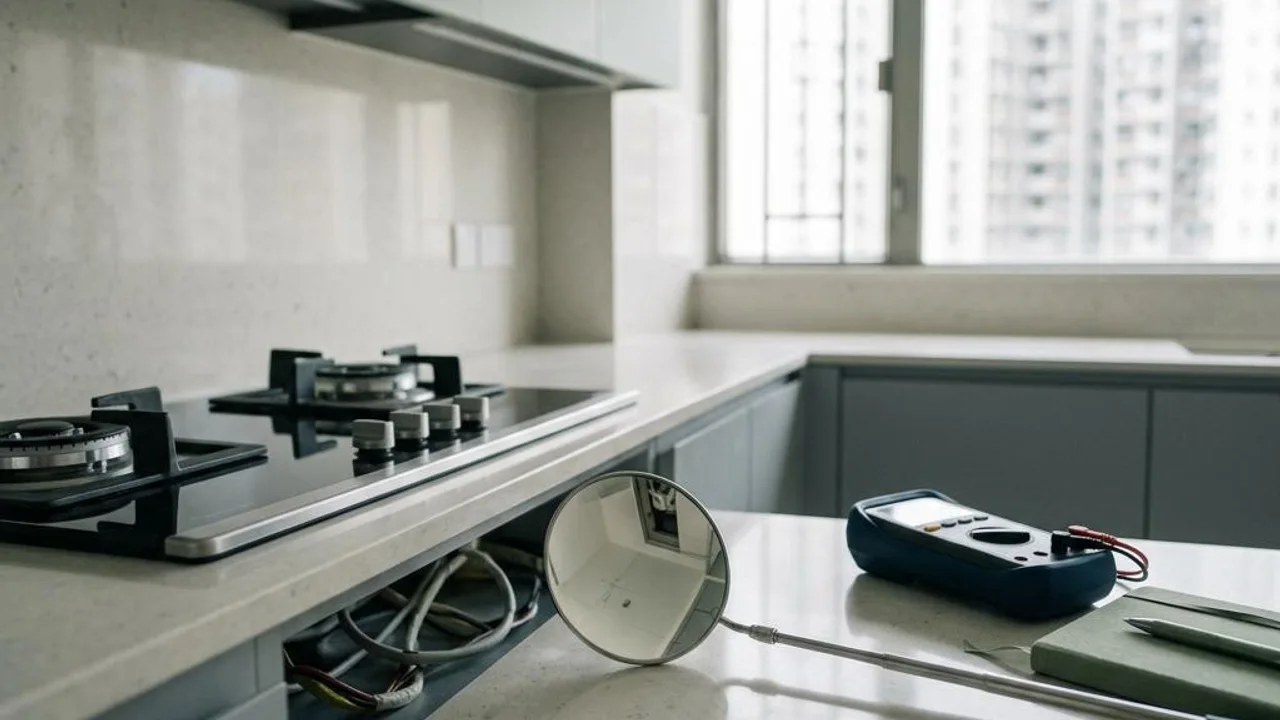
Confirming the Appliance List and Models
Before handover, you must request a complete appliance list from the developer; this is the foundation of inspection work. This list should clearly specify the brand, model, place of origin, and exact quantity of each piece of equipment to ensure that the delivered appliances strictly match the specifications promised in the contract or promotional leaflets.
During on-site verification, you should cross-check each appliance against the nameplate label on the unit. If you discover that the developer has replaced them with models that are of lower specification, inconsistent brand, or unauthorized alternatives, be sure to record it immediately and demand a reasonable explanation or rectification from them.
- Verify if the appliance brand, model, and contract specifications match
- Check the packing list and the property handover equipment list
- Confirm that all appliances that should be provided are fully present
Detailed Inspection of Appliance Exteriors
The exterior inspection of appliances involves not only aesthetics but also reflects whether collisions or rough construction occurred during the installation process. Under sufficient lighting, you should thoroughly examine the appliance's housing, screen, display panel, and corner positions to check for any obvious scratches, dents, deformations, or peeling paint.
During the inspection process, please be sure to peel off part of the protective film (if the developer permits) to ensure that the paint beneath the housing is intact. If significant damage is found, you should immediately photograph it for evidence as a defect note on the handover checklist to prevent it from being treated as human-caused damage later.
- Check the metal or plastic housing for dents and scratches
- Check the display screen for bright spots, dark spots, or cracks
- Check the glass surface of the stove for chipped edges and coating integrity
- Confirm if installation gaps are uniform and stable
On-site Verification of Appliance Functionality
Appliance functional testing is the focus of handover inspection. For example, for a refrigerator, you need to confirm the lighting operation, freezing capability, and whether the door seal is airtight; for a washing machine, you need to confirm if there are leaks in the drain hose, if the water intake function is normal, and the operational status of different wash programs; for televisions, check the display quality and sound clarity.
All electrical operations must be performed rigorously and safely, confirming that the plugs make good contact. If the appliance needs to be connected to a fixed electrical installation, ensure there are no signs of overheating such as scorching or deformation. Any functional abnormalities should be immediately reported in the report; do not force start or attempt repairs yourself.
- Refrigerator Freezing and Chilling Performance Test
- Washing Machine Water Intake, Spin-dry, and Operational Vibration Test
- Television Picture and Sound Quality Test
- Confirm all remote controls and dedicated accessories are complete
Documentation and Warranty Arrangements
Every appliance should be equipped with a Traditional Chinese user manual and a warranty card. At handover, these documents should be counted face-to-face, and you should take note of the effective date of the warranty card. Some developers or agents handle warranty registration collectively; please ensure these administrative procedures have been duly executed and keep relevant receipts.
If an appliance is missing a manual or warranty card, you should request the developer to provide them or supply an electronic version. Additionally, record the serial number of the appliance for future use when inquiring about the warranty period or requesting repairs from the manufacturer.
- Collect all original appliance instruction manuals
- Check warranty cards and confirm registration channels
- Record the appliance serial number for future maintenance reference
Reporting Defects and Professional Assistance
If functional faults or exterior defects are found during inspection, they must be immediately recorded on the handover confirmation form and the developer notified. Developers are usually responsible for replacing damaged appliances; do not accept the item before confirming the issues.
If it involves in-depth disassembly or electrical circuit inspection, owners should seek qualified professionals to investigate. Owners should detail the observed abnormalities in writing and take photographs as evidence to serve as the basis for requesting the developer to make corrections.
- Record all found defects on the handover form
- Photograph for evidence and notify the developer in writing
- Professional inspection to confirm installation safety
FAQs
If the appliance model is found to be inconsistent with the contract, how should I handle it?
You should immediately record the discrepancy and photograph it for evidence, then notify the developer requesting a written explanation. Do not sign the handover form to confirm receipt until both parties have reached an agreement or replacement to the contract specifications is confirmed.
Should I record minor scratches on appliances found during inspection?
Yes. Any exterior damage should be noted as a defect on the handover list face-to-face. If not recorded, should more serious damage appear later, the owner might be mistakenly identified as causing it, leading to the shifting of repair responsibilities.
Who is responsible if the appliance warranty card is missing?
Both the warranty card and instruction manual are part of the handover equipment. If missing, the owner should immediately request the developer to provide them or supply official proof from the agent to ensure the appliance can successfully enjoy original manufacturer warranty services.


