
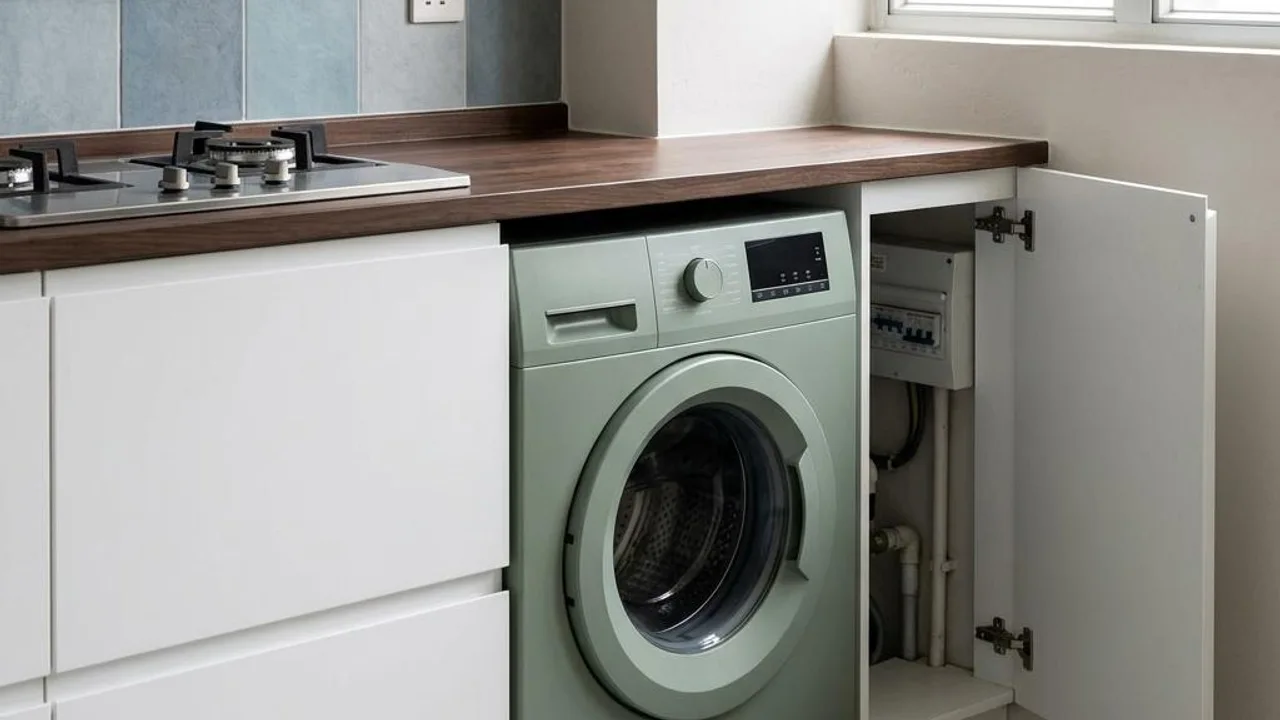
Key steps for appliance testing during property inspection.
During the handover stage, it is essential for owners to conduct comprehensive tests on appliances provided with the property to ensure quality of life and safety after moving in. It is recommended to prepare a simple socket tester to perform power-on checks on all fixed sockets and auxiliary appliances in the home to avoid discovering potential mechanical problems only when they are officially put to use.
During the testing process, be sure to observe the operating status of the appliance after it has been started. Allow equipment to run for a few minutes and watch for unusual noises, excessive vibration, or slow reactions from the control panel. Any error codes on the display or abnormal flickering of indicator lights should be recorded in detail as important data for subsequent follow-up.
- Activate appliances one by one to confirm that all function switching is smooth.
- Check if the power supply to all electrical sockets is normal.
- Observe whether there are any abnormalities on display panels and status indicator lights.
- Watch for burning smells or unusual vibrations when appliances are running.
- Record the brand and model of all appliances found to be abnormal.
Appliance usage and electricity safety protocols.
Electrical safety is an aspect of the home environment that cannot be overlooked. Never use mobile extension leads in damp or near-water locations, and avoid touching switches when your body is wet. For high-consumption equipment such as air conditioners, dehumidifiers, and electric heaters, ensure they are connected to independent fixed sockets to avoid overheating risks caused by excessive loads.
For fixed appliances that do not use plug-type connections, such as ceiling lights or electric water heaters, they must be connected by a qualified Registered Electrical Contractor in accordance with the Electricity Ordinance. After the work is completed, the owner should verify that there is a relevant completion certificate to ensure the circuit connection complies with technical safety specifications.
- High-power appliances must be connected to dedicated fixed sockets.
- Avoid touching power switches in damp environments.
- Periodically check plugs and cables for any damage.
- Fixed electrical installations must be handled by a professional electrician.
- Ensure appliance connections comply with safety specifications.
Professional procedures for handling appliance failure.
When appliance function failure or abnormalities are discovered, the owner should not rush to disassemble or repair them personally, to avoid voiding the product warranty. The correct approach is to keep a complete record of the failure, including taking photos or recording error codes, and submit a written repair request to the developer in a timely manner, demanding repairs according to contract standards.
If the developer refuses to handle the matter or the cause of the failure is complex, the owner should retain all communication records, repair assessment advice, and any related documents. If necessary, seek an independent assessment from a third-party professional technician to establish the responsibility for repairs, ensuring the owner's legitimate rights are protected.
- Submit a written repair request to the developer.
- Keep all fault records and correspondence.
- Avoid DIY repairs to prevent affecting warranty rights.
- Seek independent professional assessment advice when necessary.
Long-term maintenance guide after property inspection.
Initial management after moving in is crucial. It is recommended that owners establish an appliance inspection log to regularly monitor the condition of various equipment. Early identification of subtle signs, such as ageing parts or body deformation, not only extends the lifespan of appliances but can also effectively prevent electrical dangers caused by long-term overload.
If persistent electrical instability is discovered, please do not take a chance; immediately contact a Registered Electrical Contractor for a comprehensive inspection. Furthermore, keeping the space around appliances well-ventilated to ensure heat dissipation performance can significantly reduce the risk of electrical fires caused by accumulated heat, thereby safeguarding home property.
- Establish a regular home appliance inspection log.
- Check if appliance casings have any charred marks or deformation.
- Maintain ventilation around appliances for heat dissipation.
- Ensure circuit loads do not exceed safe limits.
- In the event of persistent power instability, contact an electrician immediately.
Key points for power load management.
Home electrical systems have safety load limits. When adding appliances or replacing equipment, the rated current the circuit can withstand must be considered. Over-reliance on extension sockets for power supply can easily cause circuit heating, especially for high-power appliances; it is essential to provide circuits with appropriate wire diameters.
Daily care of appliance sockets is equally important. Checking socket casings for charred marks or plastic deformation is a simple method to prevent accidents. If you find a socket has poor contact or makes it difficult to insert appliance plugs, it is recommended to hire a professional to replace the parts immediately, so as to avoid arc effects caused by long-term poor contact.
- Avoid operating multiple high-consumption appliances simultaneously.
- Check socket panels for any deformation or yellowing.
- Regularly clean appliance heat dissipation vents to avoid dust accumulation.
- Confirm that the home distribution board circuit breakers are operating normally.
FAQs
Does smelling an unusual odour from an appliance during a property inspection mean it is an electrical hazard?
A burning smell when electrical equipment is operating is a danger signal; it usually indicates that internal circuits or components are overheating, which could even involve the melting of insulation layers. Owners should immediately cut off the power supply to prevent accidents and entrust a Registered Electrical Contractor to carry out a detailed inspection. This inspection explanation is based solely on visible conditions and cannot guarantee the safety of the electrical system or the remaining service life of components; nor does it involve an assessment of hidden works. Do not disassemble appliances or perform electrical tests yourself. If equipment is found to be abnormal, it should be handled by a qualified professional.
If an appliance cannot be switched on, can the owner remove the casing to check it themselves?
It is strongly advised not to dismantle or modify household appliances yourself, especially while under warranty. DIY repairs will not only void your product warranty but also pose a risk of electric shock or electrical accidents if you accidentally touch live internal components. Problems should be recorded and referred to professional technicians.
How can you determine if the installation of fixed electrical appliances meets safety requirements?
The installation of fixed electrical appliances (such as electric water heaters and ceiling lights) must comply with the Electricity Ordinance. Owners should confirm whether the installation was performed by a Registered Electrical Contractor and verify if a Work Completion Certificate (WR1) was issued. If you have concerns about installation safety, you should engage a Registered Electrical Contractor to conduct an on-site assessment of the circuit connections.


