
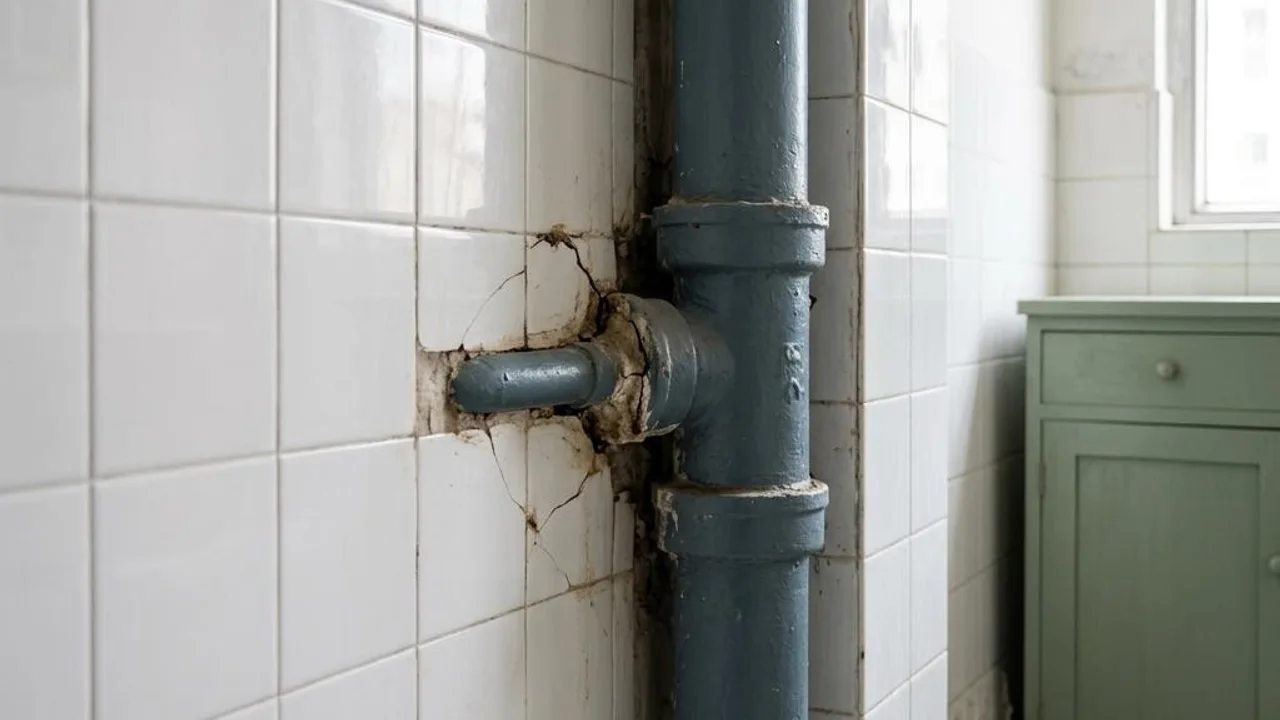
Relationship between common building pipes and structural settlement
Due to long-term settlement and thermal expansion/contraction, Hong Kong building structures cause the connections between the main drainage pipes and the lateral branch pipes within a unit to bear physical stress. If the sealing rings at these interfaces age or shift, sewage may leak through gaps in the wall; owners should watch for unexplained damp patches on walls near pipe ducts.
Observing wall dampness cannot rely solely on the naked eye; it should be combined with building maintenance records and building age to assess the risk. Such issues involve public area responsibilities; owners should identify the nature of the pipe and must not dismantle walls or pipe seals themselves to avoid affecting the building's structural safety.
- Observe if there are signs of water seepage on the wall surfaces around pipe ducts
- Understand the boundary between building common pipes and private pipes
- Take note of the periodic maintenance plans announced by the Owners' Corporation
Effects of negative pressure in vent pipes and trap water seals
Common vent pipes on the building's roof are responsible for air pressure balance. If they are blocked or affected by strong winds, the trap water seals in the unit may be sucked dry. Once the water seal loses its function, odours or gases from the building's main sewer may flow back into the unit, a common hidden cause for unexplained odours.
If an owner finds that a floor drain trap has dried up, they can attempt to refill it with water. If the problem persists, it may be due to the design or blockage of the roof vent pipe; it is recommended to contact the management office for follow-up rather than assuming it is an odour emitted from interior renovation materials.
- Regularly check and refill water to maintain trap water seals for all drainage outlets
- Check if there is abnormal odour backflow in the balcony or kitchen
- Confirm the operational status of the roof drainage system with the management office
Defining responsibilities: Private space versus public areas
Before handling any suspected leakage involving common pipes, be sure to cross-reference the building plans and the Deed of Mutual Covenant. Private owner responsibility usually ends at the connection point within the unit; all maintenance belonging to the building's main trunk system falls under the responsibility of the management office or the Owners' Corporation.
It is recommended that owners photograph and keep evidence of any leakage and note the affected area. If the source of the leakage is clearly located in a public wall in the corridor, the management office should be notified immediately to arrange for professionals to conduct a preliminary observation; do not perform irreversible, destructive testing yourself.
- Review the Deed of Mutual Covenant to clarify the boundary between private and public pipes
- Take photos to record the location and changes in the water seepage
- Proactively register the issue with the management office and obtain a repair reference number
Assessment of maintenance efficiency and time costs
Dealing with leaks in common pipes requires balancing time and cost; dwelling on it excessively may worsen the problem and cause increased internal damage to the unit. Once the situation becomes severe, repairs often involve scaffolding and complex coordination, which are costly and time-consuming.
Owners should stay calm and clarify the source of the problem through professional inspection. If it is assessed to be the responsibility of the building's maintenance, communicating with the Owners' Corporation early can reduce the difficulty of future repairs and prevent the issue from spreading to the unit's interior decoration before it is properly addressed.
- Evaluate the benefits of handling it yourself versus requesting repairs from the Owners' Corporation
- Reserve sufficient time for various communication and coordination tasks
- Avoid unauthorized alterations to the pipe structure in common areas
Limitations and scope of professional inspections
Professional property inspections by OPO Inspection mainly focus on the indoor condition of the unit. For complex leaks involving areas behind walls or deep within common pipes, inspectors are usually limited to providing observational conclusions due to the principle of non-destructive testing. The professional team can assist in assessing the situation and offering suggestions for improvement, but cannot handle legal liabilities on your behalf.
- Property inspection service covers visible and testable areas indoors
- Contact the company for enquiries on arranging a professional report
- Please book an on-site inspection between 09:00–18:00 daily
FAQs
If a leak is suspected to originate from the building's common pipes, how should the owner handle it?
Owners should first conduct non-destructive observations, take photos to record the affected areas and wall marks, and check the Deed of Mutual Covenant to confirm if the area belongs to common property. You should immediately report the issue to the management office and obtain a maintenance reference number, allowing the management office to arrange for professional personnel to handle it. Never dismantle walls or make alterations yourself.
Does an unexplained odour in the unit necessarily mean there is a pipe leak?
Not necessarily. An unexplained odour may also be caused by blockages or negative pressure in the rooftop common vent pipe, which can suck dry the trap water seal in the unit. Owners can first check if the U-trap is dry and refill it with water. If the odour persists, you should contact the management office to check the operational status of the rooftop drainage system.
Can a property inspector prove that the source of a leak is the responsibility of the unit upstairs?
The inspection by property inspectors is mainly based on indoor non-destructive assessment. They can provide an analysis and recommendations based on their observations, but this cannot replace formal legal rulings. If there is a dispute regarding rights and responsibilities between private units, the specific source and attribution of liability must be clarified through professional testing and legal channels.


