
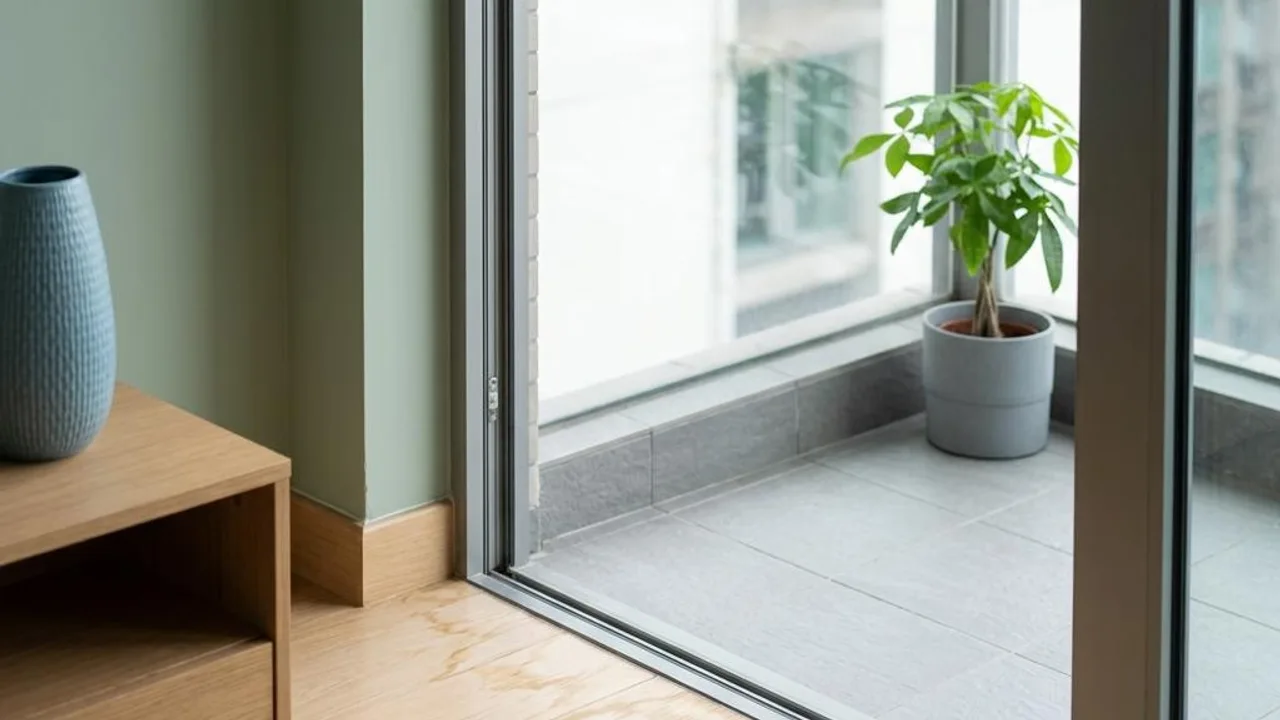
Quality inspection of structure and plastering layers.
Structural inspection is the cornerstone of ensuring home safety. Professionals usually use antenna rods to conduct large-scale tapping tests on walls, ceilings, and floors, judging by sound whether the plastering layer has developed voids or detached from the base. Voids are not rare in units; if not addressed in time, they may lead to cracks or even falling plaster over time.
In addition to plastering, the inspection will cover the main beams, columns, and load-bearing walls in the unit, observing for obvious signs of structural cracks or deformation. Although daily visual inspections cannot confirm the structural safety of the building, these observations provide owners with important environmental indicators to ensure the unit's internal state meets basic residential requirements.
- Tapping test for walls and ceilings throughout the house.
- Marking of void locations on floor tiles.
- Observation of surface cracks on beams and columns.
- Visual assessment of structural surface flatness.
Leakage testing and window inspection.
External wall water leakage is a common residential hazard. The focus of the inspection is to observe whether the window frame seals are intact and whether there is ageing or detachment, as well as checking whether the joints between the window frame and the external wall are tight. During the rainy season, good airtightness and watertightness are crucial for protecting interior decorations from water damage.
In addition, the window's hardware components must also be inspected carefully. By testing the smoothness of the hinges, locks, and handles, owners can identify whether the window has deformation or loose components. If there are concerns, a professional should be requested to conduct a high-pressure water jet test to more accurately simulate anti-leakage performance under rainfall.
- Inspection of window frame seal integrity.
- Window operation smoothness test.
- Observation of external wall and window frame joints.
- High-pressure water jet simulation test.
Floor flatness and surface workmanship.
Floor flatness not only affects the aesthetic of decorations but is also directly related to the stability of subsequent furniture installation. Professionals will use a spirit level or laser level to measure the flatness of the floor and skirting boards. If significant tilting or unevenness is found, it is recommended that owners record it in the report to arrange appropriate rectification work.
Void inspection for tile and marble floors is also indispensable. Large-area voids will affect the service life of the tile materials and cause risks of cracking after thermal expansion and contraction. Identifying these locations through the tapping method allows owners to request adjustments from the contractor before renovation or during the handover stage, ensuring a solid floor base.
- Measurement of floor level deviation.
- Floor tile and wall tile void inspection.
- Review of wall flatness and verticality.
- Surface construction quality assessment.
Water and electricity system functional testing.
Water and electrical facilities are the guarantee of daily life. Water supply inspections include hot and cold water supply from taps, toilet flushing speed, and the smoothness of the drainage system, with a focus on observing any signs of leakage at drainage pipe connections and whether drainage pipes have anti-odour functions.
Regarding electricity, the detection focus is on whether the sockets are powered and checking whether the wiring layout in the consumer unit is tidy. Owners should be aware that if any electrical anomalies are found during the inspection, a registered electrical contractor must be hired to handle them legally; do not attempt electrical modifications or repairs yourself.
- Hot and cold water tap test.
- Drainage system flow and anti-odour inspection.
- Power socket voltage functional test.
- Inspection of consumer unit wiring conditions.
Property inspection reports and professional assessment.
A comprehensive property inspection report is a vital document for owners to follow up on defect rectification works. The report should detail every finding within the unit and provide objective assessments regarding the nature of the issues, assisting owners in understanding the severity and priority of various defects.
Professional assessment reports will also provide rectification recommendations and guidance for follow-up actions. Upon receiving the report, owners should use the provided list to communicate specific rectification details with contractors or renovation companies, ensuring all identified issues are appropriately addressed.
- Digital Defect Rectification Report Record
- Assessment and Analysis of Defect Nature
- Professional Rectification and Repair Advice
- Guidance on Follow-up Procedures
FAQs
Does the discovery of extensive hollow wall tiles after a knocking test indicate issues with structural safety?
The knocking test primarily focuses on the adhesion quality of the plastering or floor tiles to the substrate and is not directly equivalent to a building's structural safety assessment. If hollow sections are found, it is recommended to record their locations and request the contractor to repair them. If there are significant concerns regarding structural safety, a Registered Structural Engineer should be consulted.
As an owner, how can I identify window leakage problems?
Owners can initially observe by eye whether the window frame sealant is aging, peeling, or cracked, and check the window sill edges for obvious water stains or mould. If leakage is suspected, contact a professional to conduct a controlled water tightness test. Do not attempt to observe or intervene at the window during strong winds or heavy rain.
The property inspection report identified an anomaly in the electrical system; can the owner purchase parts to replace them personally?
No. Any modification, repair, or replacement involving electrical installations must be carried out by a qualified Registered Electrical Contractor. Handling this personally not only violates safety regulations but may also invalidate insurance or trigger electrical accidents.


