
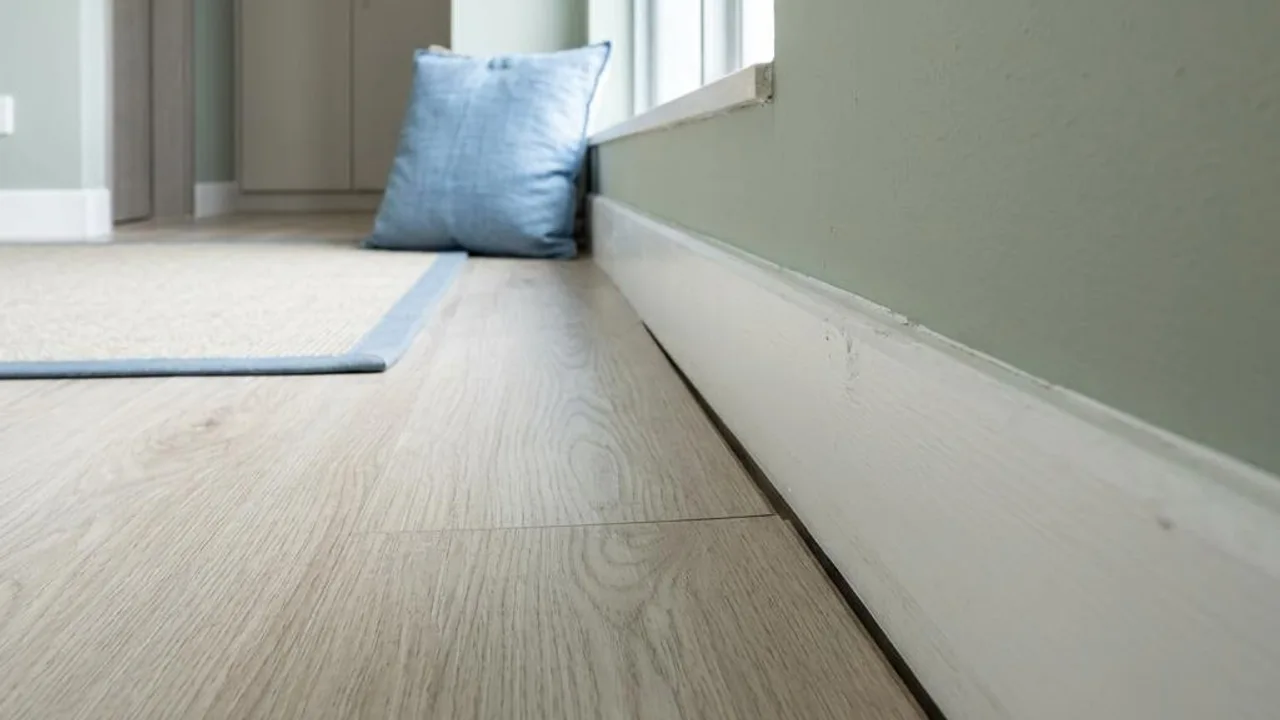
How to inspect floor flatness
During a property inspection, floor flatness directly affects the daily living experience and the stability of furniture placement. Professional inspections usually use a spirit level, placing the instrument at various locations on the floor to observe whether the bubble is within the center marking line to determine if the surface is level. This method can accurately measure the slope or tilting direction of the floor and is the standard way to judge flatness.
If no professional equipment is available, homeowners can use the simple ball-rolling test. In a draft-free environment, place a ping-pong ball or ball bearing on the floor surface and observe if it slides automatically or deviates from a set path. Additionally, carefully observing the height difference at floor joints, or feeling for obvious undulations or depressions while walking barefoot, are also practical techniques for an initial screening of floor quality.
- Use a spirit level to measure the level of the floor slab
- Perform a ball-rolling test to observe the inclination of the ground
- Visually inspect the height difference at the joints of floor tiles and wood flooring
- Perceive whether there are obvious depressions or undulations in the floor while barefoot
Common causes of uneven floors
There are many reasons for uneven floors; the first consideration is craftsmanship. If the floor screeding layer fails to meet flatness requirements, or if the cement mortar ratio used when laying tiles is improper, or if there is an operational error during construction, it will lead to an uneven surface. In addition, if the quality and deformation characteristics of the flooring material itself are not accounted for by leaving sufficient expansion joints during installation, arching can easily occur.
Another important cause involves building structural issues. If the floor slab itself experiences settlement or uneven loading, it may cause the floor to sag locally. This type of structural defect is often hidden; if uneven floors are discovered along with cracks in the corners of walls, it is recommended to commission a professional structural engineer for assessment to avoid affecting long-term living safety.
- Insufficient floor screeding craftsmanship
- Cement mortar was not fully filled during tile installation
- Material quality issues or insufficient expansion joints reserved
- Building structure settlement or beam/column deformation
Environmental factors and the influence of maintenance
Indoor environmental humidity is also an important variable in causing uneven floors. Hong Kong's climate is humid; if indoor humidity is consistently high, wood flooring can easily absorb moisture and swell, leading to arching. Furthermore, if the operation of air conditioners or dehumidifiers causes local humidity differences, it will also accelerate the expansion and contraction of wood flooring. Keeping indoor humidity within a reasonable range helps to reduce such problems.
Drastic temperature changes also affect the stability of the floor, especially for materials laid in areas with direct sunlight. Long-term uneven heat exposure leads to inconsistent internal stress release in the materials, causing deformation. In daily life, homeowners can slow down floor wear caused by environmental factors by controlling indoor ventilation and temperature/humidity.
- Long-term high environmental humidity causes swelling
- Indoor temperature differences cause thermal expansion and contraction of materials
- Sunlight exposure exacerbates deformation
- Lack of proper maintenance leads to material aging
Strategies for resolving uneven floors
Resolving floor flatness problems depends on the severity. If it is only slightly uneven and does not affect safety, stability can be improved by adjusting the height of furniture foot pads. If the problem stems from individual loose tiles or minor depressions, local removal, re-filling with cement mortar, and re-laying can be performed, which is relatively low in cost and has a shorter construction period.
If the floor unevenness is severe and affects walking safety, then floor renovation should be considered. This usually involves completely removing the existing floor, performing a floor leveling procedure again, and then laying new flooring materials. If diagnosed as a structural problem, a professional structural engineer must participate in developing a reinforcement plan; it should never be covered up by simple surface renovation.
- Use leveling pads to improve furniture placement
- Partial renovation to treat single-point unevenness
- Re-perform floor leveling work
- Commission professional assessment for structural settlement
Key points for observation and recording
When performing a floor inspection, the focus should be on recording the location and characteristics of the problem. It is recommended to use sticker labels or photography to record floor tiles with height differences and mark whether these locations are near wall corners or structural columns. Detailed observation notes are very helpful for subsequently hiring professionals to perform repairs or assessments.
During the observation process, do not attempt to pry open the floor or perform any destructive inspection yourself, especially in areas involving electrical wires or concealed conduits. If you suspect that ground undulation is related to building structure issues, you should immediately invite a professional property inspector or structural engineer to check the Buildings Department plans and perform a professional site inspection.
- Record the uneven locations and the scope of the impact
- Take photos to save evidence of obvious height difference phenomena
- Check for cracks or hollow sounds
- Take note of whether the uneven area is close to wall corners or structural columns
FAQs
How to judge whether an uneven floor is a structural problem?
If you find that the floor is uneven along with diagonal cracks in walls, door frames becoming deformed and difficult to open/close, or the floor sagging area expanding over time, these phenomena may be related to building structural settlement. It is recommended to consult a Registered Structural Engineer for a professional assessment.
How should wood flooring that has arched due to humidity be handled?
First, check the indoor humidity and maintain ventilation; if the situation is minor, it may stabilize as the seasons change. If it is severely deformed, you should ask a professional flooring technician to check the condition of the moisture-proof layer under the wood floor and evaluate whether the affected part needs to be removed and re-laid.
Does finding hollow tiles during a property inspection mean the floor is uneven?
The two are not the same. Hollow tiles mean that the cement under the tile has not bonded with the floor screed layer, while uneven flooring refers to insufficient levelness of the floor screed or material deformation. If the floor tiles are both hollow and uneven, it may be necessary to re-apply floor screeding to ensure long-term stability.


