
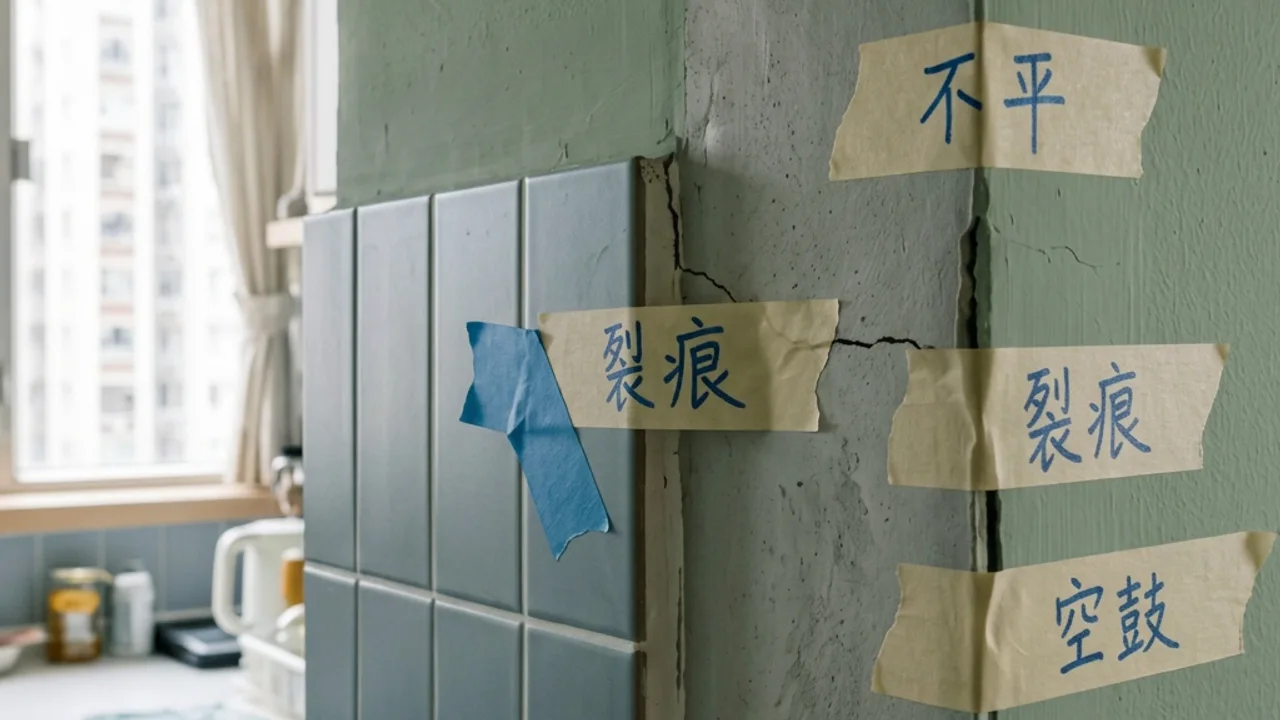
Why does excessive marking increase the communication costs of defect rectification?
When taking over a property, owners often use a large amount of masking tape to mark defects on walls, floor tiles, and window frames, expecting the renovation contractor to address them all at once. However, if these markings lack clear direction and are simply stuck on haphazardly, it can cause a breakdown in communication on site. For the contractor, excessive and cluttered tape makes it difficult to judge the urgency of repairs, easily blurring the focus and leading to a decrease in defect rectification efficiency.
When a contractor is dealing with a large number of units every day, overly cumbersome and poorly explained marking methods may trigger a defensive reaction, or even lead them to believe that the owner is being deliberately nitpicky. This cognitive dissonance can transform what should be an objective quality follow-up process into emotional confrontation and friction, seriously affecting the overall pace of property inspection and defect rectification.
- Blind markings lacking logic easily provoke resentment from renovation contractors.
- Large amounts of tape can mask the details of original defects.
- Failure to clearly distinguish types of defects causes errors in judgment.
- Increases the time cost for both parties to verify items afterwards.
Secondary damage to renovation finishes caused by improper marking
Improper use of tape often causes damage to renovated surfaces, especially on newly painted walls or delicate aluminium alloy frame edges. If the tape is too adhesive and exposed to long periods of sunlight, it can easily peel off the latex paint primer when removed, causing man-made secondary damage and necessitating further repair work. To a contractor, this behavior is often interpreted as the owner adding extra repair workload.
Furthermore, if tape applied to glass or window frame surfaces is not cleaned off in time, high temperatures under sunlight will accelerate the ageing of the adhesive, leaving stubborn glue stains that are difficult to remove. This not only causes trouble for subsequent cleaning, but incorrect cleaning methods (such as using hard tools to scrape) may also result in permanent scratches, causing irreparable damage to otherwise intact finishes.
- Tugging during removal leads to latex paint flaking off.
- Prolonged sun exposure leads to glue residue adhering to window frames.
- Incorrect cleaning methods damage the texture of the finishes.
- Man-made marks increase the complexity of defect rectification.
Professional property inspection marking rules: Precision and efficiency
Effective marking should prioritize precision rather than quantity. Owners should focus their inspection on structural defects, severe water seepage, or issues affecting daily living safety. For minor dust or surface particles, avoid using tape and opt for direct cleaning instead. Limiting the marking area to what is essential can effectively improve the efficiency and focus of the contractor's inspection.
When marking, it is recommended to include written explanations. Clearly noting words like "chipped corner," "scratched," or "hollow tile" directly on the tape or beside the mark allows the contractor to quickly grasp the repair requirements. The ideal communication method is to perform an on-site check with the contractor, reviewing the defect rectification list to confirm the specific treatment plan for each marked item, which avoids disputes arising from differing interpretations of the repair content later on.
- Distinguish between structural defects and general stains.
- Briefly note the nature of the defect on the tape.
- Take photos for future reference.
- Invite the contractor to confirm items one by one on-site.
Adhesive residue removal and post-rectification finishing techniques
After defect rectification work is completed, if there is residual glue on the surface, do not try to scrape it off forcibly with hard objects. If the glue residue is small, you can use a hair dryer set to a warm setting to blow gently at the residue to soften it, then wipe it off with a clean, soft cloth. This method is effective for removing residue while protecting the renovated surface and avoiding the risk of scratching.
For more stubborn glue stains, you can try applying a tiny amount of household cleaner or specialized adhesive remover, leave it for a few minutes, then wipe. Remember to test on an inconspicuous spot before proceeding to avoid damaging the paint or material finish. Careful follow-up is the final, crucial step in ensuring your new home retains its perfect condition.
- Use warm air to soften adhesive and prevent surface scratching.
- Strictly prohibit using hard objects to scrape off stubborn residue.
- Always conduct a spot test before using specialized adhesive removers.
- Use a soft cloth to maintain the integrity of material surfaces.
Common problems that owners can observe during the property inspection process
When conducting an initial property inspection, it is recommended that owners focus on visible surface finishes. For example, observe whether there are obvious gaps around window frames, or if floor tiles produce unusual hollow sounds. These observations should be recorded and archived via photos for follow-up with the property management office or engineering unit.
For issues where the cause cannot be determined, such as suspected signs of water seepage or structural damage, owners must not perform dismantling or forceful tests themselves. It is recommended to carefully record the specific location and situation after discovering the issue, and formally report it to the property management office, requesting the assignment of qualified personnel for a professional inspection to ensure the problem is properly handled.
- Check whether wall finishes are uneven or damaged.
- Note if there are obvious gaps in window seals.
- Test if floor tiles have abnormal vibrations or noises.
- Record the specific location and extent of any signs of water seepage.
FAQs
Is it necessary to put masking tape on every defect during a property inspection?
It is not necessary. Excessive marking can mask details of problems and increase the contractor's burden. It is recommended to mark only defects that need repair, such as structural flaws, deep scratches, or hollow tiles; minor stains should be cleaned instead.
If glue residue is found after removing the tape, how should it be handled?
Do not use hard objects or scrapers to remove it. You can first use a hair dryer with warm air to soften the residue, then wipe with a soft cotton cloth. If a cleaning solvent is needed, you must test it in an inconspicuous area first to ensure it does not damage the finish paint.
If suspected water seepage is found in the unit, how should the owner follow up correctly?
Owners should not perform any destructive leakage tests themselves. You should record the affected location and take photos as a record, then report the situation to the property management office or relevant professional unit immediately, requesting an inspection by qualified technicians.


