
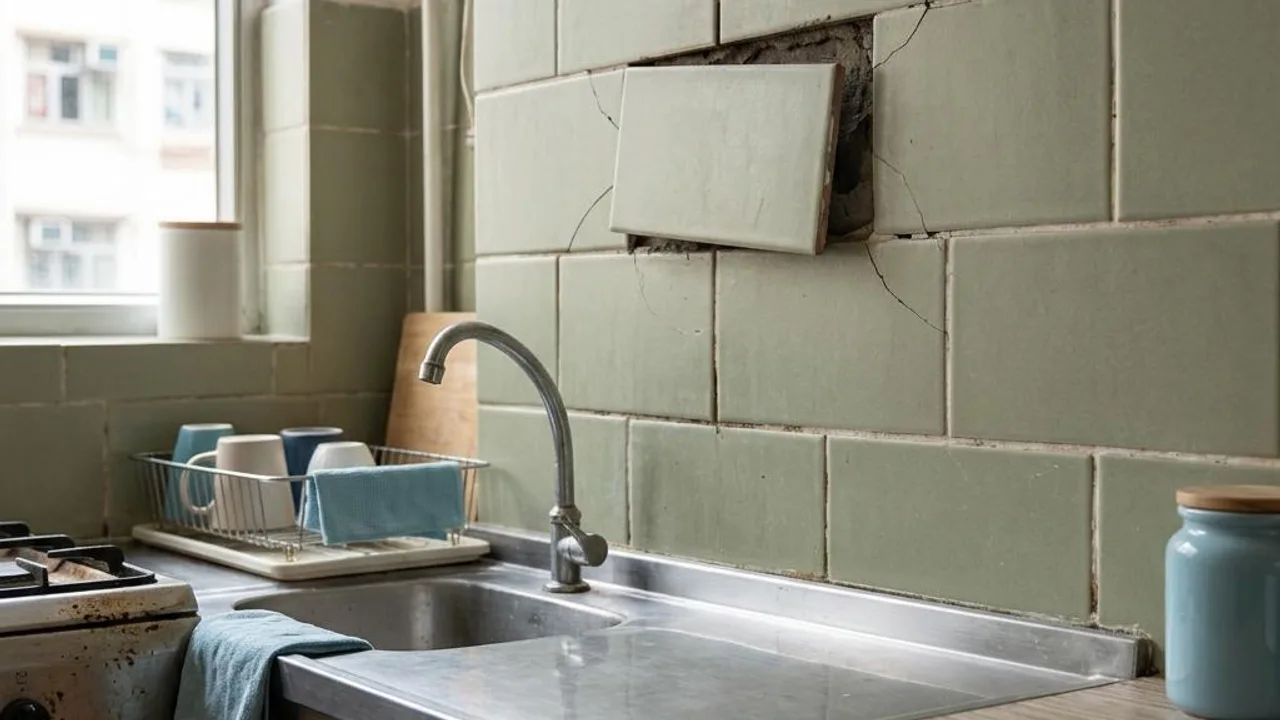
Causes of hollows and physical characteristics.
A 'hollow' in tiling refers to the phenomenon where the tile is not fully bonded to the base plaster, leaving a residual air layer. Causes are diverse, including improper cement-sand mortar ratios, excessively rapid evaporation of moisture from the plaster during construction, uneven application of cement slurry, or failure to press the tiles firmly during installation. These minor craftsmanship flaws can be exacerbated by changes in temperature and humidity, leading to the formation of hollows.
This phenomenon is common during the construction period. If the bonding between the underlying concrete and the surface tiles is insufficient, the air gap may expand over time due to thermal expansion and contraction. Tapping the tiles to listen for a change from a clear sound to a dull echo is the most common way to identify a hollow.
- Improper cement-sand mortar ratio.
- Plaster layer drying too quickly.
- Craftsmanship defects or failure to press firmly.
- Drastic changes in environmental temperature and humidity.
Long-term impacts and stress assessment.
Initial, minor hollows may only present as visual unevenness or strange tapping sounds and might not pose an immediate threat to daily life in the short term. However, the long-term stress from placing furniture on the tiles and the weight of daily walking will cause the bond strength to continue to weaken, leading to partial loosening or even the risk of buckling.
If the issue occurs in frequently walked-on floor areas or kitchen/bathroom walls where heavy objects are hung, the risk level is higher. Homeowners should pay attention to how these locations change over time. If the area of the hollow is observed to be expanding, action should be taken as soon as possible to prevent the problem from evolving into more complex repair work after moving in.
- Gravity pressure caused by frequent walking.
- Stress concentration caused by hanging heavy objects.
- Thermal expansion and contraction caused by daily temperature cycles.
- Bond strength continuously decaying over time.
Bursting risks and safety considerations.
When the hollow area is large or the center of the tile is completely suspended, its structural stability decreases. Drastic changes in environmental humidity or temperature trigger thermal expansion and contraction, leading to stress concentration in the hollow area. Under extreme conditions, severely hollow tiles can even burst suddenly without warning.
Scattered debris not only poses an accident risk but also damages the home environment. Therefore, if a large hollow area is detected, it is recommended to arrange for relevant defect rectification as soon as possible. For homeowners, ensuring the safety of wall and floor structures is a fundamental requirement for guaranteeing the stability of the daily living environment.
- Large-scale suspension leading to stress concentration.
- Sudden bursting caused by thermal expansion and contraction.
- Safety hazards caused by shattered tiles.
- Proposal for early repair.
Hidden water seepage and protective warning signs.
Hollows involve not only structural stability but are also frequently accompanied by waterproofing crises. In wet areas like kitchens, bathrooms, or balconies, the gaps from hollows can become channels for moisture to seep in and accumulate behind the tiles. Long-term dampness will cause the plaster layer to powder or mold to grow, which in turn affects the paint at the skirting and adjacent flooring.
This makes hollows a key warning sign for inspecting a property's waterproofing project. If continuous water stains or mold are found in relevant areas, one must consider whether the internal plaster layer has been affected and carry out targeted repairs to prevent seepage issues from spreading to other structural positions.
- Seepage risks in kitchen/bathroom wet areas.
- Moisture accumulation leading to plaster powdering.
- Hidden mold growth threats.
- Impact on skirting and adjacent floor structures.
Limitations of self-inspection.
General homeowners can distinguish hollows by tapping on the tiles, but hearing alone cannot determine whether a hollow is a local delamination or a large-scale separation of the plaster layer. For complex hidden flaws, without professional data support, it is very difficult for a homeowner to precisely demand the developer or contractor to perform targeted defect rectification, avoiding repeat construction due to wrong judgment.
In addition, the thickness and density of the tile material interfere with the echo of the tap. Without an understanding of the plaster layer structure, it is also difficult to accurately estimate the scope and risk level of the hollow. It is recommended to keep observation records for future discussion.
- The variable impact of tapping force.
- Interference of tile material thickness.
- Inability to accurately determine the depth of the hollow.
- Lack of knowledge about the plaster layer structure.
Professional inspection and basis for defect rectification.
When facing property flaws that involve long-term living safety, seeking assistance from a professional property inspection team can ensure objectivity. Professional teams can use appropriate instruments and procedures to assess plaster bonding and hidden risks, providing a structured written basis for discussing defect rectification with the developer and reducing potential disputes after moving in.
Through a professional assessment report, homeowners can clearly grasp the priority of repairs, clarify the boundaries of responsibility, and ensure that repair projects can effectively eradicate the problem rather than just providing a surface cover, thus providing safety guarantees for the long-term living environment.
- Objectively assess wall plaster bonding.
- Provide a persuasive inspection report.
- Reduce the chance of secondary defect rectification after moving in.
- Clarify boundaries of repair responsibility.
FAQs
If I discover a minor hollow, should I repair it immediately?
Minor hollows depend on their location and area. If they are in a non-load-bearing area and the range is small, they may not pose a danger in the short term and can be observed for changes. If the hollow is in a frequently walked area, a wet kitchen/bathroom area, or if there is a trend of expansion, it is recommended to consult a professional as soon as possible to reduce the risk of future bursting or seepage.
Does hearing a hollow sound when tapping a tile mean it will definitely fall off?
Not all hollows will fall off immediately; the hollow sound only indicates that there is a gap between the tile and the base plaster. However, hollows do reduce bonding stability. If subjected to thermal expansion and contraction, furniture stress, or humidity effects over a long period, the risk of falling off or bursting will increase significantly over time.
What is the practical use of a professional inspection report when dealing with tile hollows?
A professional inspection report provides an objective assessment supported by data, clearly pointing out the location, area, and potential structural impact of the hollows. This serves as an important basis for communication between the homeowner and the contractor regarding defect rectification, helping to clarify responsibilities and ensuring the repair work is targeted, preventing omissions or misjudgments.


