
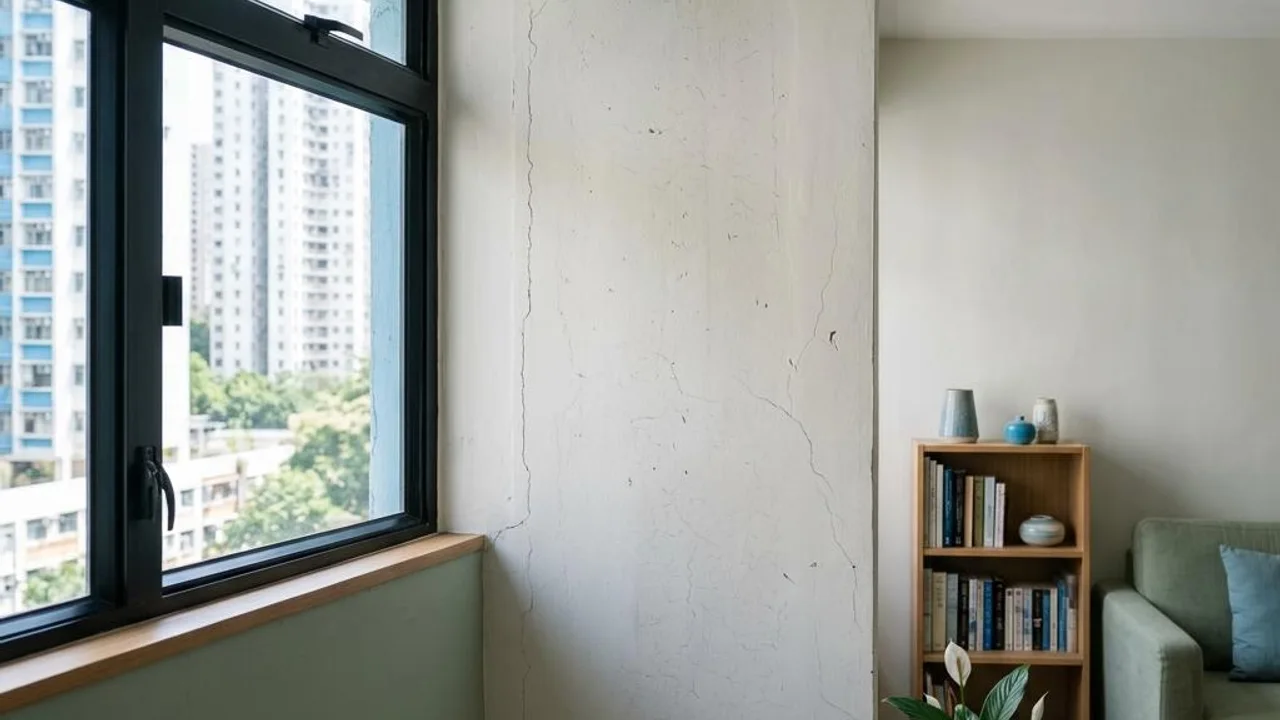
Causes and initial understanding of wall cracks
After moving in for a period of time or during the handover process, it is a common phenomenon for fine cracks to appear on walls. Many owners' primary worry is whether the building structure is stable, but in fact, the causes of wall marks are quite diverse. From the thermal expansion and contraction of materials to the natural shrinkage of the plastering layer, all can leave lines on the wall.
There is no need to be overly panicked before professional appraisal. Owners should learn to observe the characteristics, location, and development trends of the marks. Through correct categorization and continuous recording, it can help everyone clarify whether these lines are simple decoration technique flaws or structural warning signs that require further follow-up.
- Understand the impact of material changes due to the environment
- Distinguish between surface coating and wall structure problems
- Establish monitoring records of wall conditions
- Consult professional property inspection advice in a timely manner
Surface cracks in paint and plastering layers
Common fine cracks on interior walls are mostly limited to the outermost layer of paint or the plastering surface layer. These types of cracks often appear as irregular mesh, chicken-claw patterns, or capillary-like shapes, and their width is extremely fine. This is usually related to changes in temperature and humidity during construction, uneven paint drying speed, or the evaporation of moisture in the bottom layer.
Such surface marks generally do not expand significantly over time and do not affect the structural safety of the property. Typically, they can be properly repaired by localized wall sanding, filling, and repainting, which falls within the scope of routine home maintenance.
- Observe whether irregular, net-like marks are present.
- Confirm whether the cracks are only on the surface of the paint layer.
- Rule out the possibility of large-scale, deep cracking.
- Plan for localized plaster repair procedures.
Thermal joints at the boundary of different materials
Another common type of line appears at the joints of different building materials, such as the junction between brick walls and concrete beams/columns, or where plasterboard partitions meet solid walls. Due to differing thermal expansion coefficients, these junctions can easily develop straight cracks caused by minor tension during seasonal changes or temperature fluctuations.
Although such 'temperature cracks' affect aesthetics, they mostly represent surface material adaptation rather than deep structural instability. If homeowners observe that the lines are straight and located at material junctions, this is usually the cause, and it poses no direct threat to home safety.
- Confirm whether the cracks are located at material joints.
- Observe whether the cracks are straight and continuous.
- Note the impact of temperature fluctuations on the joints.
- Assess whether load-bearing structural surfaces are involved.
Distinguishing characteristics of structural cracks
Compared to the surface textures mentioned above, structural cracks require high vigilance. If cracks are significantly wide, extend at a 45-degree angle, run through both sides of a wall, or are accompanied by concrete spalling and exposed rebar, this may indicate that the building is experiencing settlement or uneven loading on structural components.
When such features are discovered, do not simply view them as decoration issues. Such cracks often reflect changes in the internal stress of the wall and require continuous observation and documentation. If you suspect it involves structural safety, contact a qualified professional for inspection as soon as possible.
- Check for significantly wide cracking.
- Observe whether it develops at a 45-degree angle.
- Monitor whether the cracks pass through both sides of the wall.
- Note the condition of concrete spalling and rebar.
Monitoring methods for crack direction and width
Recording the development trend of these marks is key to assessing their nature. Homeowners can use sticky notes or masking tape to mark the ends of the crack and take regular comparison photos to observe whether the length and width show signs of continuous expansion over several weeks or months.
If the lines remain unchanged for a long time, they are usually stable surface defects. Conversely, if they show obvious extension in a short period or the gap depth increases, it indicates that the area is still active. Continued records are of great value to professionals in determining the cause of the problem.
- Use tape to mark the ends of the cracks.
- Take regular photos to create a chronological file.
- Monitor changes in crack width and length.
- Record changes in environmental humidity and temperature.
Assessment and limitations of self-repair
For fine cracks caused purely by paint shrinkage, some homeowners attempt DIY filling. However, this only solves visual aesthetics. If the crack is caused by underlying structural movement or leakage-induced powdering, simple covering cannot cure the root cause and may even mask the underlying condition.
Therefore, until the root cause is clarified, blind DIY filling and painting have great limitations. If the issue reappears shortly after repair, it is proof that the underlying wall structure is still active or that moisture issues remain unresolved. For cracks in critical structural locations, it is recommended that they be handled by professionals.
- Only suitable for surface paint crack repair.
- Must consider risks of underlying powdering and water seepage.
- Be aware of the possibility of simple covering hiding the cause.
- Critical locations should be evaluated by professionals.
The role of professional property inspection teams
Although homeowners can make preliminary categorizations through features, the internal solidity of the wall, rebar stress, and the depth of the crack base cannot be determined by the naked eye. When cracks are located in key areas like load-bearing walls, beams, or around window frames, they may hide leakage or structural stress factors.
Choosing a professional team for detailed inspection is a safe choice to ensure peace of mind. Experts are equipped with professional equipment that can detect internal hidden hazards without damaging the decoration and provide objective reports, allowing homeowners to make clear judgments about subsequent maintenance work and avoid losses caused by blind work.
- Professional judgment of structural stress and hidden hazards.
- Provide objective wall quality analysis.
- Avoid unnecessary misjudgment and re-repairs.
- Ensure the safety of critical structural locations.
FAQs
How to distinguish if wall cracks are minor or structural problems?
Minor cracks usually appear as irregular thin lines or nets, limited to the paint or plaster surface; structural cracks may develop at a 45-degree angle, be wider, penetrate the wall, or be accompanied by spalling and exposed rebar.
What are the risks of DIY repair of wall cracks?
If the crack originates from deep water leakage, structural stress changes, or underlying powdering, DIY repair only acts as a surface cover and cannot resolve the root cause, even delaying professional handling of critical structural problems by hiding them.
What actions should be taken after discovering cracks?
Homeowners should mark the ends of the crack and regularly record changes with photos. If the crack does not expand, it can be viewed as a surface flaw; if it continues to lengthen or widen, consult a professional for a detailed inspection and assessment as soon as possible.


