
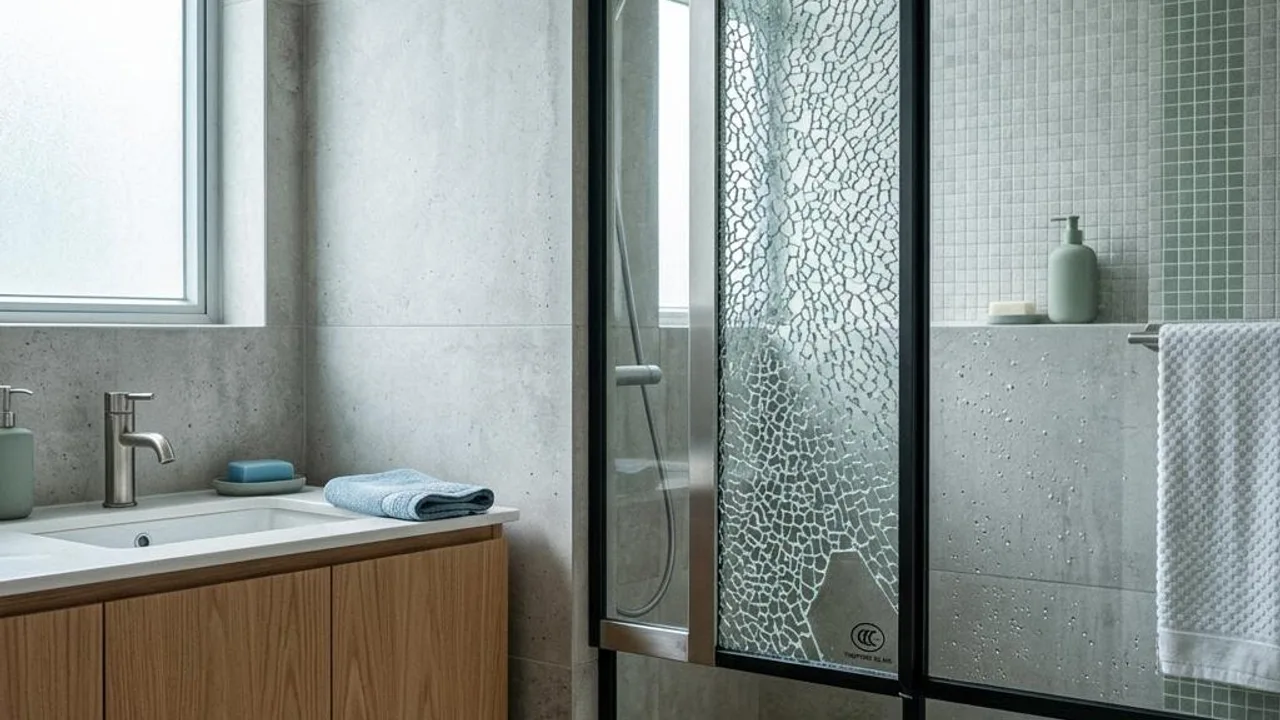
Shower screen glass spontaneous breakage phenomenon and physical principles
In Hong Kong's dense residential environment, glass shower screens have become mainstream in bathroom design due to their small footprint and high light transmission. However, some residents encounter instances where the glass shatters instantly into blunt-angled particles without external impact—commonly known as 'spontaneous glass breakage'.
Spontaneous breakage usually stems from uneven internal stress in the glass. When inner flaws occur during the manufacturing process, combined with thermal expansion and contraction (such as the drastic temperature change caused by steam during a hot shower in winter), the internal stress exceeds the glass's capacity, ultimately leading to structural collapse.
- Tempered glass has high strength, but its internal stress distribution is extremely sensitive
- The thermal expansion and contraction effect during showering may trigger the breakage of glass with pre-existing flaws
- Spontaneous breakage is not caused by impact but by the release of physical stress within the glass
Key physical causes triggering glass breakage
According to professional inspection experience, bathroom glass breakage is not caused by a single factor. The most common potential crises include raw material impurities, missing edge protection, and the accumulation of micro-damage during daily use; these factors can all long-term affect the glass's tolerance.
Nickel sulphide (NiS) impurities are the hardest to completely exclude during manufacturing; their expansion over time causes changes in glass volume. Additionally, if the installation process lacks proper rubber pad cushioning, the stress points of the metal clamps are applied directly to the fragile glass corners, significantly increasing the risk of breakage.
- Invisible nickel sulphide micro-particles mixed into glass raw materials
- Lack of cushion rubber pads during installation leads to rigid squeezing by metal clamps
- Glass corners having suffered fine hidden cracks during handling
- Micro-cracks accumulated during long-term use due to objects knocking against the glass surface
How to identify qualified tempered glass and safety standards
When receiving a property or replacing a shower screen, owners should not judge quality solely by appearance. Qualified tempered glass must undergo specific processing during manufacturing and possess traceable certification marks, which is the first line of defence in protecting safety.
High-quality glass products should have anti-counterfeit safety certification marks (such as the CCC mark or other international standard codes) printed in conspicuous positions. Meanwhile, compliant tempering ensures that if the glass were to break, it would shatter into small pieces rather than sharp knife-like shards, reducing the risk of severe cuts.
- Check whether the glass corners have a clear safety tempered seal sintered onto the glass
- Confirm whether the seal number genuinely exists rather than being a fictional sticker-like mark
- Consider choosing glass with a qualified explosion-proof film to enhance adhesion after shattering
- Be aware that inferior glass forms large, sharp glass blades after breaking
Practical guide for home shower screen safety inspection
Daily maintenance is the core of safeguarding home safety. Whether in the new property intake stage or daily cleaning, owners should establish regular inspection habits, focusing on the state of the glass edges and the stability of various connection hardware.
If you observe fine chips or cracks at the glass corners, stop using it immediately and arrange an assessment; do not treat it as a minor issue. At the same time, ensure the door assembly operates smoothly, without severe sagging or metal friction sounds; otherwise, it should be adjusted in a timely manner by a professional craftsman.
- Regularly check all four sides and corners of the glass for chips or cracks
- Ensure there are anti-collision rubber pads between the metal frame and the glass
- Observe whether the sliding door hardware is loose or causing the door panel to sag
- When opening and closing, check for any abnormal sounds or the sensation of colliding with hard objects.
Professional assessment and inspection advice
During daily inspections, owners should also pay attention to the connection interface between hardware components and glass, checking for signs of rust, leaking rust fluid, or component corrosion. If you notice excessive gaps between the glass and the frame or significant foreign objects, you should seek a professional assessment to ensure structural stability.
If you notice that the shower screen becomes difficult to open or close or emits abnormal sounds, it usually means that the hardware has become misaligned. You should stop using it and ask a professional maintenance technician to realign it to avoid continuous operation causing uneven stress on the glass, eventually triggering an unexpected stress-induced fracture.
- Evaluate the connection stability between the shower screen and various installation components.
- Professionally inspect hardware components for corrosion or structural aging.
- Provide professional operational advice on daily maintenance.
- Ensure the inspection process complies with home safety standards.
FAQs
If you find small chipped corners on the edge of the shower screen glass, can it continue to be used?
No. Chipped corners or cracks on the glass edge are major safety hazards; even small ones can lead to stress concentration. You should immediately stop using the shower screen and arrange for a professional to assess it to avoid stress propagation leading to a sudden shattering.
Why is it said that installing explosion-proof film on shower screen glass is helpful for safety?
Qualified explosion-proof film can improve adhesion after shattering. When glass shatters due to the release of internal stress, the explosion-proof film can bond the glass fragments to the film, preventing glass particles from flying off and causing personnel injuries.
Is the shattering of shower screen glass caused by hot showers?
Temperature changes caused by hot showers are one of the factors inducing spontaneous shattering, but not the sole cause. The main cause of spontaneous shattering is usually the nickel sulfide particles contained within the glass itself or stress defects left over during installation; the temperature difference from showering is merely a trigger point.


