
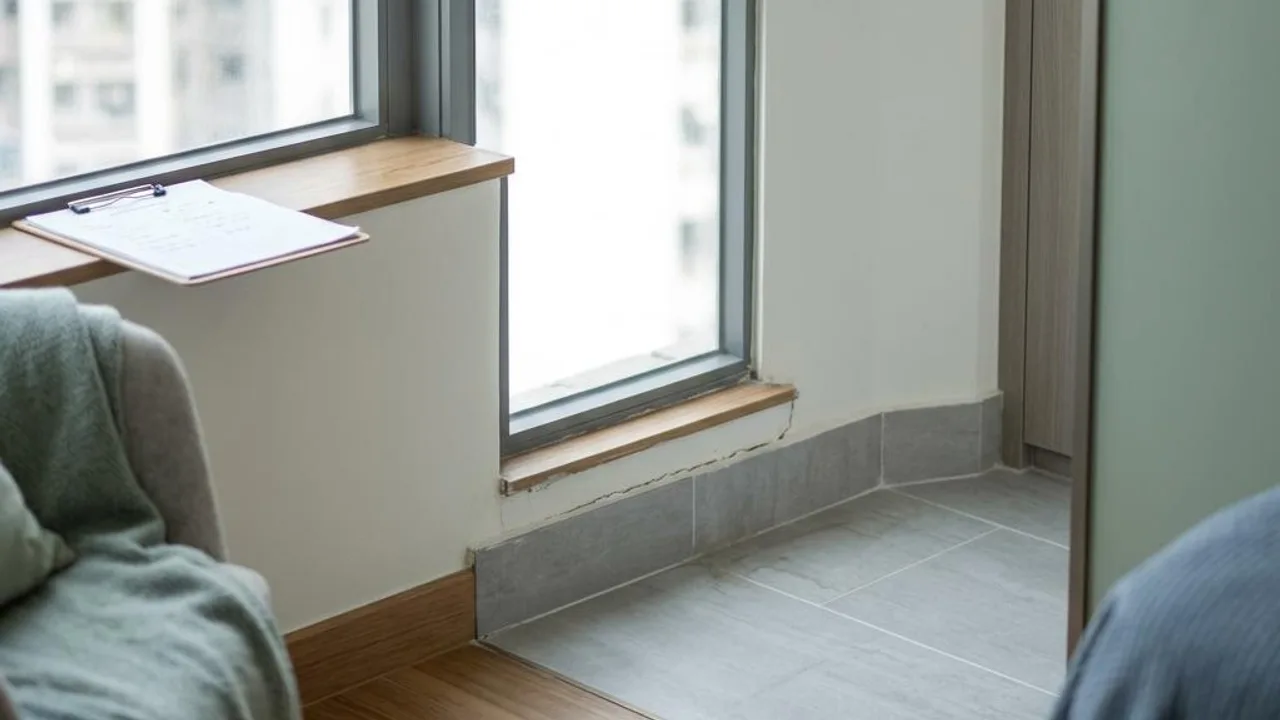
Breaking the myths of new property handovers
Many beginner owners often mistakenly believe that a newly completed first-hand property must be flawless, but due to the high-speed construction schedule of modern buildings, defects can occur in plastering, windows, and plumbing/electrical installations. Beginners should establish objective awareness and take the initiative to conduct rigorous inspections during the handover stage to avoid future troubles.
Although owners enjoy the right to remedy during the developer's defect rectification period, if hidden water leakage or structural problems are only discovered after renovation work has started, leading to demolition and repairs, it will bring great financial burden and mental stress. Therefore, initial inspection is a key step.
- Understanding the prevalence of construction defects in first-hand properties
- Regarding new property handovers, attention must be paid to hidden engineering inspections to avoid the need for large-scale demolition and repair later. Please note that general home inspections cannot guarantee structural, electrical, or gas safety or regulatory compliance, and cannot detect hidden pipes, the thickness of waterproof layers, remaining service life, or the effectiveness of repairs. Thermal imaging cameras only display surface temperature distribution and cannot be considered as proof of a leakage source or hidden structure. Regarding window inspection, please note that this is a statutory procedure for individual properties, which must be performed by a registered qualified person under the Buildings Department and does not fall within the scope of daily inspections. For issues involving professional technical fields, please consult relevant qualified professionals. It is recommended that homeowners do not perform electrical testing, dismantle fixed installations, adjust water pressure valves, or climb onto roofs and external wall windows themselves.
- Establishing the concept of identifying and dealing with problems immediately at the handover stage
Doors, windows, and airtightness performance evaluation
Doors and windows are the first line of defense for a residence; their performance directly affects home safety and comfort. Owners should confirm that the entrance door and room doors open and close smoothly, and ensure that when windows are closed, the locking mechanisms can lock tightly without any loosening or abnormal noise.
Additionally, it is necessary to observe whether there are cracks on the surface of window frame glass and to focus on inspecting the waterproof silicone around the frames for any missing application or cracking. Good sealing can effectively reduce the risk of indoor water seepage during future typhoon days.
- Confirm that the entrance door and room doors open and close smoothly without abnormal noise.
- Check the integrity of the waterproof rubber seals around the window frames.
- Observe the airtight state of the windows after locking.
Wall and tile hollow detection
Hollow tiles are a common construction defect in new properties, referring to situations where wall plaster or tiles are not fully bonded to the substrate. If left unaddressed, tiles are very likely to crack under pressure, creating safety hazards.
Owners can use the tapping method for preliminary screening, judging whether there are hollow areas on the wall surface through sound. If the sound is clearly hollow, it indicates that the internal adhesion is not solid, which is an obvious engineering quality issue that must be specifically marked and required to be repaired by the contractor.
- Check wall flatness and for obvious cracks.
- Use professional tools to perform tapping tests on kitchen and bathroom tiles.
- Mark the location of hollow tiles and require the contractor to repair them.
Wet area drainage and plumbing/electrical system testing
The drainage efficiency of the kitchen and bathroom is crucial; water storage and discharge tests should be performed. Observe whether the water from the sink, shower area, or bathtub drains smoothly and if there is any backflow, to ensure that the drainage system is operating normally and to avoid future leakage.
At the same time, it is necessary to test the power status of all electrical sockets, ensure that the grounding device is functioning normally, and confirm that lighting switches and the residual current circuit breakers (RCCB) in the main distribution box can trip normally to safeguard daily household electrical safety.
- Perform water storage and discharge tests to check drainage efficiency.
- Test the power status of all sockets in the house and the grounding device.
- Check the operating performance of the residual current circuit breaker in the distribution box.
Floor flatness and precision measurement
Floor flatness not only affects the visual aesthetics of laying floor tiles or wooden floors, but if the slope is too steep, it will also affect the comfort of daily use and may even cause gaps to appear at the skirting boards.
Owners can use a spirit level to measure the floor and check for significant slopes or height differences. This is a basic construction standard; discovering it early helps ensure that subsequent home renovation work can proceed smoothly without needing additional leveling work due to floor problems.
- Use a spirit level to measure the flatness of the floor throughout the house.
- Assess the impact of floor slope on subsequent flooring installation.
- Confirm whether the floor height difference meets standards.
The differences between professional property inspection and self-inspection
Although owners can conduct preliminary visual inspections, professional OPO Inspection teams are usually equipped with infrared thermal imaging cameras and laser instruments, which can more accurately identify hidden leaks or wall verticality problems that are difficult to perceive with the naked eye.
A report containing specific professional data and photo/text records is more persuasive when striving for the developer's commitment to defect rectification, significantly improving the efficiency and quality of rectifications and reducing the communication costs between owners and developers.
- Use high-precision instruments to identify hidden defects.
- Increase the developer's proactivity in defect rectification with professional reports.
- Save the owner's mental exhaustion from handling trivial engineering matters.
FAQs
If I find that the waterproof silicone of the window frame is cracked, how should I handle it?
Please take a photo of the location and clearly mark it in the property inspection report, requesting the developer to refill the waterproof silicone. Do not attempt to fill it yourself from the outside to avoid waterproof failure due to improper renovation or construction.
If hollow tiles are discovered during a property inspection, is it mandatory to require the developer to handle them?
Yes. Hollow tiles belong to engineering quality defects. If not handled, they may affect later wall finishes or tile adhesion. It is recommended to request the contractor to perform repairs to ensure the wall substrate is stable.
What should I pay attention to during the water discharge test?
The water discharge test should ensure smooth drainage and observe for any backflow. If slow drainage or blockage is found, please immediately notify the inspection personnel or contractor to record it, and do not attempt to dismantle the water pipes for inspection.


