
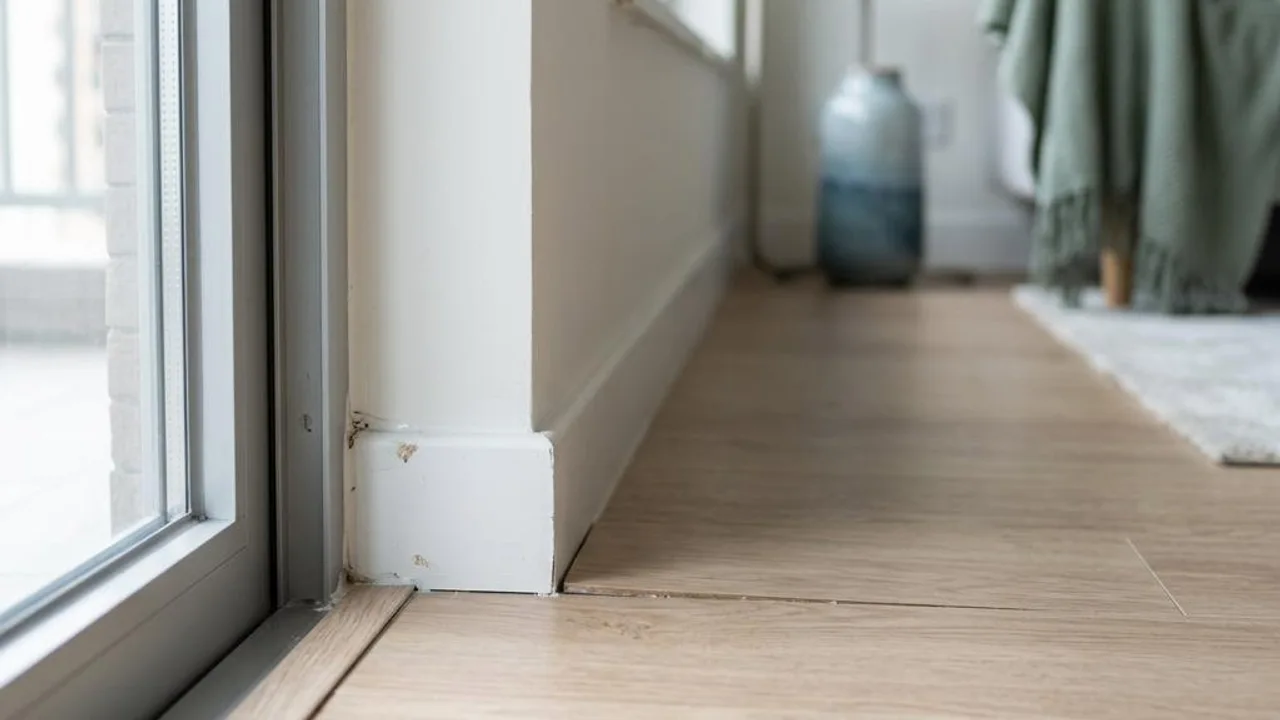
Waterproofing and structural inspection of window systems.
The window system is the main line of defense for the interior against wind and rain; its installation precision directly affects future living experience and structural safety. During inspection, owners should prioritize observing the junctions between the glass and window frame, confirming if there is any obvious looseness or gaps. At the same time, check the waterproof rubber seals around the window frame to observe if they are complete, well-fitted, and show any signs of aging, hardening, or cracking. If seals are missing, rain can easily penetrate the interior during strong winds and rain, leading to wall mold or even damaging wooden decorations or flooring near the window.
Regarding the mechanical functions of windows, all moving components must be tested in detail, including the operational smoothness of window locks, handles, and hinges. If you feel resistance, hear unusual noises, or cannot lock them tightly when opening and closing, it may reflect deviation in window frame installation or part failure. Although it is difficult for owners to perform professional high-pressure water jet tests, carefully observing whether there are water stain marks, mineral crystals, or oil stains on the inner or bottom side of the window frame can still help determine if the window's waterproofing function has previously had seepage risks.
- Check whether the glass surface has obvious chips, cracks, or is unstable.
- Test whether window locks and handles open/close smoothly, tightly, and securely.
- Check if waterproof rubber strips around the window frame are completely sealed without damage.
- Note whether there are water accumulation marks or foreign debris in the window frame tracks.
Inspection of wall and floor tile construction quality.
Wall flatness and floor tile adhesion are the basic criteria for judging renovation craftsmanship. The tapping method is the most practical means of checking for hollow tiles (i.e., insufficient adhesive under the tile). Use a metal rod to tap the surface of the floor tile lightly; if you hear a dull or hollow 'dong-dong' sound, it means there may be a risk of hollow tiles there. If the area of hollow tiles is widespread, the tiles can easily warp or crack under uneven pressure or temperature changes. If large areas of hollow tiles are found, they should be included in the rectification list and the contractor should be asked to assess and handle them.
Regarding wall plastering, carefully observe whether there is paint sagging, color difference, bubbling, or uneven plastering. Paint sagging (tear marks) is mostly caused by uneven spray painting; if it affects the overall appearance, consider repainting. Using a side light source (such as a mobile phone flashlight scanning across the wall surface) best reveals bumps, wave patterns, or cracks in the wall. The straightness of corners is also crucial; if you find corners or ceiling junctions are crooked, it will cause great difficulties for the subsequent placement of custom-made furniture, so it is recommended to discover this early and confirm a correction plan.
- Use a metal rod to tap floor tiles lightly to detect for any hollow tile phenomena.
- Observe if paint has tear marks, color differences, or bubbling phenomena.
- Inspect walls for structural cracks or uneven plaster.
- Confirm whether the joints between the wall corners and the ceiling are perfectly vertical and straight.
Waterproofing and performance of water supply and drainage systems.
The key to inspecting the water system lies in the smoothness of the drainage and the leak-proof functionality of the pipe joints. During inspection, fill the sink, bathtub, or washbasin with water and release it all at once to observe whether the drainage pipe is clear and if there is any backflow or slow drainage. At the same time, you must check the joints of the drainage pipes; it is recommended to wrap a dry paper towel around the joint and observe if it becomes damp. If even the slightest moisture is found, it indicates a potential risk of leakage. You should request a professional to inspect the seal of the pipe joints to prevent water damage from spreading to the wooden cabinets below.
For toilet testing, pay attention to the flushing power, air-backflow efficiency, and the performance of the inlet valve. Ensure that there is no severe splashing during flushing, and confirm that the tank inlet valve shuts off automatically and accurately once it reaches the preset water level, without continuous dripping. These functional details should be thoroughly tested during the initial handover phase. If hidden water inlet or drainage issues are only discovered after moving in, the cost and scope of rectification work will increase significantly, and may even affect the rights and interests of neighbors.
- Test if the drainage speed of the sink, bathtub, and floor is smooth.
- Wipe the pipe joints with a dry paper towel to confirm if there are any leaks.
- Confirm that the toilet flushing power and the water tank inlet valve are operating normally.
- Check if the hot and cold water tap controls in the kitchen and bathroom are flexible.
Safety and operation of electrical installations.
The electrical system installed in a new property must be tested one by one to ensure a stable power supply. The owner can prepare simple testing tools, such as a socket tester or a small night light, to check if every socket in the house is energized correctly. This can initially rule out the risk of individual socket power failure or wiring errors. In addition, you can also note whether the circuit labels in the distribution box are clear, ensuring that every circuit can be switched on and off normally to avoid maintenance trouble later due to unclear circuit labeling.
For appliances pre-installed by the developer, such as range hoods, air conditioners, and water heaters, they should be run for at least 15 minutes to listen for any abnormal vibration, dripping, or harsh noises. The air conditioner is a key inspection target; you need to confirm that the airflow at the outlet is stable, the cooling performance is normal, and watch for any leakage from the condensate drainage pipes at the bottom of the unit. If the appliance exhibits excessive vibration or odors during operation, you should require the developer to provide a test report and address the relevant installation defects to ensure the safety and stability of the equipment during long-term use.
- Confirm one by one that the power supply to every socket in the house is normal.
- Switch on all appliances provided with the property for at least 15 minutes to observe their operation.
- Check the air conditioning outlet temperature, performance, and any dripping.
- Watch for any abnormal vibration or noise when appliances are running.
Professional detection methods during inspection.
Although owners can inspect most visible surface defects themselves, many structural or hidden engineering problems, such as water seepage within walls, poor internal pipe connections, or defects in electrical circuits, are often difficult to detect with the naked eye alone. Professional OPO Inspection teams usually use high-end instruments for targeted detection, which can quantify physical phenomena invisible to the naked eye. The data obtained through these instruments can provide owners with strong evidence to request the developer to carry out repairs on core structural hidden hazards.
For example, using an infrared thermal imager can detect temperature differences within walls to determine if there is hidden water seepage, while a high-precision moisture meter can quantify the water content of the wall to confirm the possibility of a leakage source. These instruments not only improve detection efficiency but also avoid unnecessary destructive inspections. When compiling the defect rectification list, a detailed written report supplemented with instrument readings allows contractors to clearly understand the severity and specific location of the problem, thereby improving the accuracy and efficiency of the defect rectification work.
- Use an infrared thermal imager to detect signs of hidden water seepage in walls.
- Use a high-precision moisture meter to detect the moisture content of walls.
- Use a laser level to detect the flatness of walls and floors.
- Compile a detailed written record to assist with subsequent defect rectification arrangements.
FAQs
If hollow tiles are discovered during a property inspection, is it mandatory to immediately request the contractor to replace them?
The phenomenon of hollow tiles indicates uneven distribution of the adhesive underneath the tiles. If the hollow area is large or located in a high-traffic area, the floor tiles are prone to cracking due to thermal expansion and contraction in the future. It is recommended to record the location of the hollow tiles and require the contractor to perform a professional assessment to decide whether to carry out localized grouting for repair or complete removal and re-laying, depending on the severity.
During a self-conducted property inspection, what should I do if I discover slight dripping from the air conditioner?
Air conditioner dripping may be caused by insufficient incline of the condensate pipe, poor connection, or a blocked drain pipe. The owner should stop using it, record the specific situation with photos, and immediately notify the developer's customer service department or the defect rectification team, requesting them to appoint a professional technician to re-inspect the installation workmanship and pipe drainage. Do not attempt to dismantle the unit yourself.
Can the data detected by professional property inspection instruments be used as a legal basis for repairs?
Data provided by professional property inspection instruments are objective test results that reflect the current physical condition. This data can assist owners in clearly explaining the location of problems to the developer, prompting them to take correct repair measures. The specific legal effect depends on the defect rectification clauses in the property sale and purchase agreement, but a detailed inspection report helps in communication and requesting compliant repair services.


