
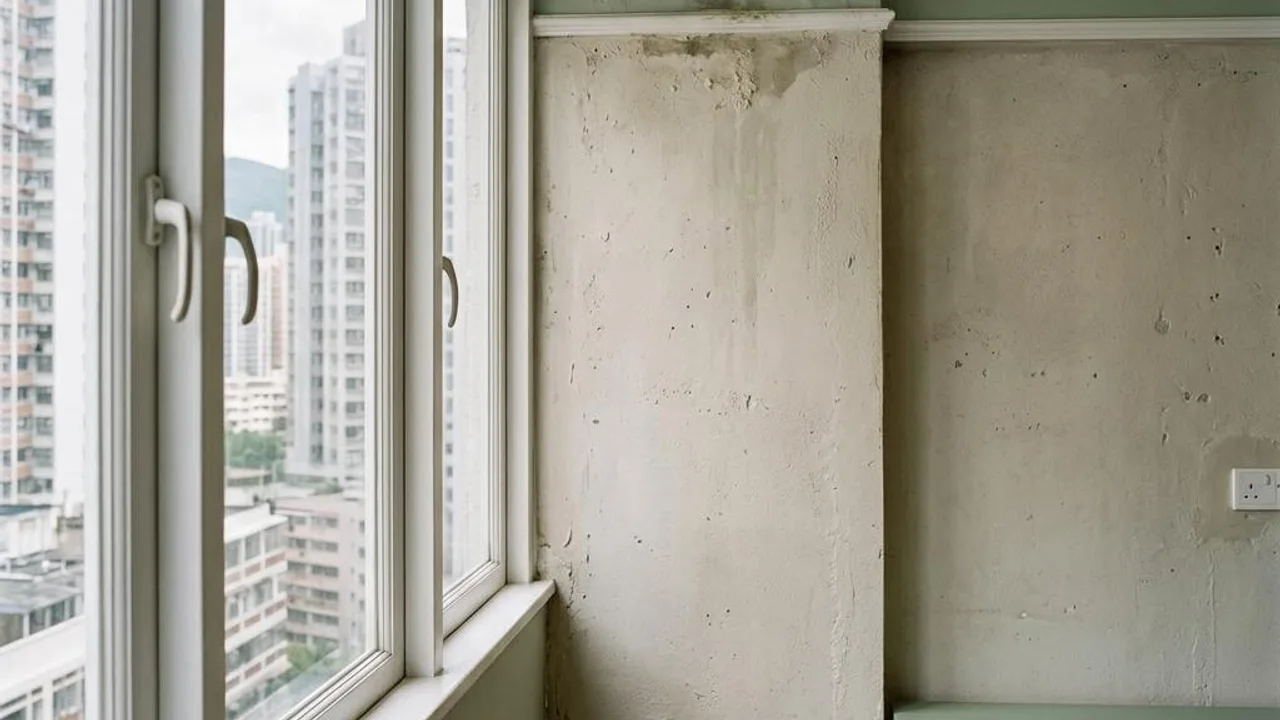
Focal points for residential structural safety inspection.
Structural safety is the foundation of a living environment. When inspecting a property, one should prioritise the condition of load-bearing walls, beams, columns, and floor slabs. Owners can note whether there are penetrating cracks in the walls, especially around windows and door frames. If the crack width is abnormal or runs diagonally, it may suggest uneven stress distribution in the building structure, requiring further assessment by a professional.
Furthermore, floor slab flatness is equally important. Besides observing the ground for obvious level differences or abnormal sensations of sagging with the naked eye, one must also be alert if there are unexplained water stains or mould spots on the wall; such signs may be caused by structural leakage. All discovered cracks and abnormalities should be recorded in detail to serve as a basis for demanding follow-up from the contractor.
- Observe beams, columns, and load-bearing walls for concrete spalling or structural cracks.
- Check around window edges and door frames for penetrating cracks.
- Assess the indoor floor for abnormal sagging or flatness issues.
- Record any suspected structural cracks and request professional verification.
Basic testing of water and electricity system operation.
The stability of water and electricity systems directly affects daily life. When checking the water system, focus on testing the water output speed of each tap and observe the efficiency of the drainage channel. It is recommended to fill the sink with water and drain it all at once to test for leaks or blockages in the drainage system, and carefully check the joints of hidden pipes in the kitchen and bathroom for leaks.
Regarding electricity, residents should ensure that all socket power is stable and check the exterior of the sockets for looseness, deformation, or charring. Check if the labels for each switch in the distribution box are correct and operating normally. Please note that any alterations to fixed electrical installations or in-depth testing must be performed by a registered electrical contractor to ensure compliance with safety regulatory requirements.
- Test the water output speed of all taps and the drainage efficiency of the channels.
- Check for signs of leakage at the joints of hidden pipes in the kitchen and bathroom.
- Observe electrical sockets for signs of looseness, deformation, or burn marks.
- Confirm that the labels for each switch in the distribution box are correct and functional.
Indoor ventilation and humidity management.
Maintaining good indoor ventilation is the key to maintaining health. During a property inspection, check if the exhaust fans in the bathroom and kitchen are operating normally. If indoor humidity consistently exceeds 70%, it is easy for mould to grow on wall corners or ceilings. Observing for mould spots or smelling a musty odour indoors is an important indicator for judging whether the ventilation environment is ideal.
If mould spots are found on wall corners or ceilings, consider checking whether the exhaust pipes are connected properly and whether there is hidden leakage causing moisture accumulation. Owners should strive to clear visible mould and adjust indoor humidity by adjusting ventilation equipment or using dehumidifying equipment to improve air quality in the living environment.
- Confirm that bathroom and kitchen exhaust fans are operating normally with smooth ventilation.
- Check for mould or water stain signs on wall corners and ceilings.
- Maintain indoor humidity below 70% to prevent mould growth.
- Investigate and record possible sources of abnormal indoor odours.
Door/window sound insulation and thermal insulation performance.
The quietness and thermal insulation of a home rely heavily on the sealing of doors and windows. During property inspection, check if the window frame rubber seals are tightly fitted and undamaged; after closing doors and windows, notice if any external noise penetrates. If window rubber seals are aged or do not close tightly, it will not only affect sound insulation but also lead to energy loss and reduce air conditioning efficiency; if damage is found, replacement should be arranged.
Thermal insulation performance concerns wall materials and door/window structures. Check for gaps in the window frames to ensure there is no risk of water leakage during hot or humid weather. Good insulation can reduce indoor condensation caused by heat exchange. It is recommended to focus on window sealing during changeable weather to ensure it can adapt to indoor temperature differences.
- Check if window frame rubber seals are tightly fitted and free from aging or damage.
- Test whether the sound insulation effect of doors and windows meets the expected level.
- Notice if there are air conditioning leakage or water seepage gaps around the windows.
- Ensure that the window structure can adapt to temperature fluctuations to help with thermal insulation.
External and ancillary structural safety.
The external structure and auxiliary equipment of a property must not be ignored. Key inspection points include checking the exterior wall finishes for detachment or deformation, ensuring balcony railings are stable and secure, and checking for potential leakage risks. For top-floor units, it is crucial to inspect the condition of the waterproofing on ceilings and around window frames.
If any external structural damage is not repaired promptly, long-term erosion from rainwater may lead to serious structural risks. Property owners should also test balcony drainage channels for blockages to ensure that standing water does not seep indoors due to poor drainage. If abnormal deformation of external finishes is found, a professional should be engaged as soon as possible to assess the potential impact.
- Ensure the balcony railing structure is firm with no signs of loosening.
- Check exterior wall finishes for any signs of detachment or deformation.
- Inspect the integrity of roof waterproofing and drainage conditions.
- Test balcony drainage channels for blockages to prevent standing water.
The necessity of seeking professional inspection.
Although owners can conduct preliminary observations, OPO Inspection services provide systematic assessments. Inspectors are equipped with professional tools and extensive experience, allowing them to identify latent defects that are difficult to detect with the naked eye, such as deep-seated leakage paths and electrical circuit compliance. Through systematic property inspection, the root cause of problems can be identified more accurately.
Commissioning a professional not only gives the inspection process credibility but also assists owners in creating a defect rectification list that meets technical standards. This helps in demanding repairs from contractors and reduces the burden of extra maintenance costs for owners caused by long-term neglect of potential issues.
- Use professional tools to help detect hidden leaks within walls or pipes.
- Obtain a systematic and impartial property inspection record as evidence for defect rectification.
- Ensure that repair requirements comply with relevant building technical standards.
- Prevent hidden hazards to reduce the potential burden of long-term maintenance costs.
FAQs
When carrying out a self-inspection, how should an owner deal with slight cracks found near a window?
The owner should first record the specific location, length, and width of the crack, and take photos for documentation. It is advised not to attempt self-repair; instead, engage a qualified person to assess whether the crack is a structural issue and confirm if there is any water seepage.
How can one determine whether consistently high indoor humidity is caused by structural water seepage or poor ventilation?
You can first check if the exhaust fans are functioning correctly and if the ventilation ducts are blocked. If ventilation is normal but mold continues to appear on the walls, professional equipment is needed to detect moisture distribution within the walls to confirm if the source of seepage originates from external structural damage or leaking concealed pipes.
If slight scorched marks are found on an electrical socket, can the faceplate be replaced by the owner?
According to safety regulations, any fixed installation or modification involving electrical devices must be carried out by a Registered Electrical Contractor. If an owner discovers scorched marks on a socket, they should immediately stop using it and contact a registered professional to inspect the circuit for overheating risks.


