
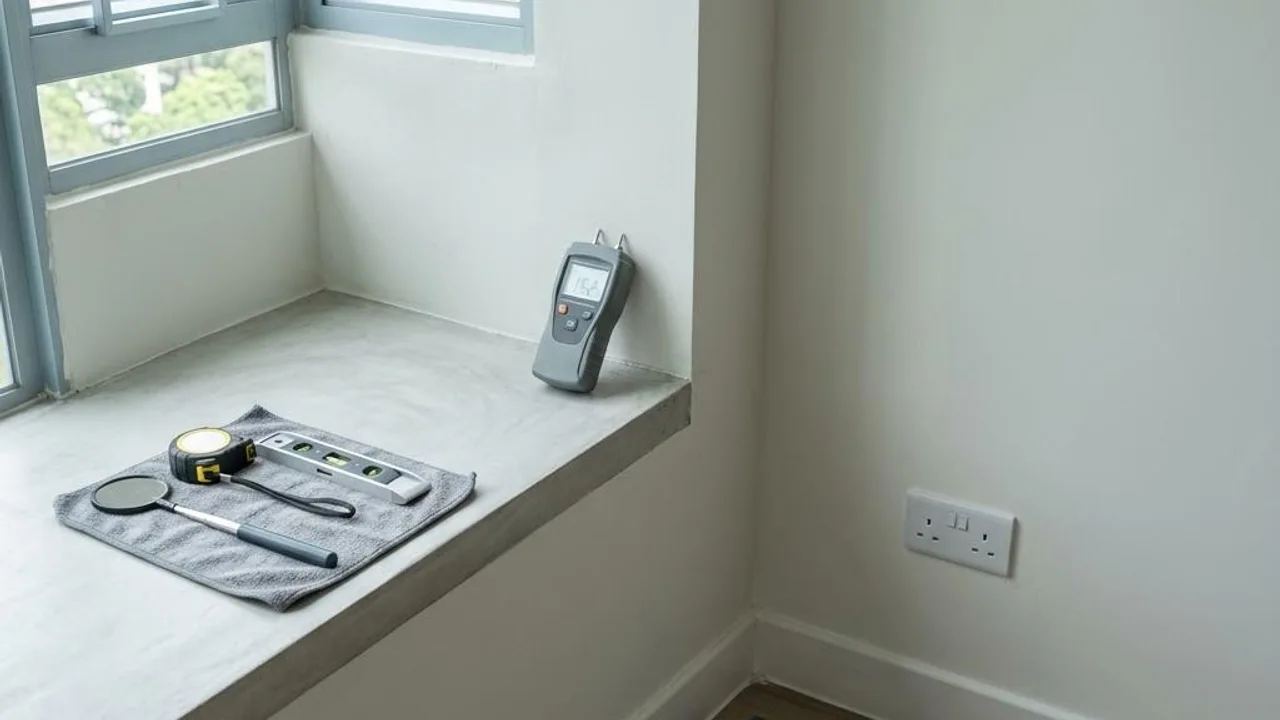
Preparation and process suggestions before handover.
Hong Kong HOS handover is a key step in ensuring property quality. After receiving notification from the Housing Authority, owners should take time to prepare. It is recommended to avoid time periods with insufficient light and choose to go during the day when there is plenty of light so that details can be checked more clearly. If you lack experience, you may consider hiring a qualified building surveyor to help assess the property condition from a professional perspective, ensuring that the inspection coverage is more comprehensive and reducing future disputes.
Before officially entering the unit for inspection, it is recommended to create a dedicated inspection checklist, prepare recording tools, and ensure that you remain calm and meticulous during the inspection. Signing handover documents means you have accepted the current status of the property, so before signing, be sure to record all problems found one by one and request the developer to confirm the defect list in writing as proof for subsequent repair works.
- Reserve sufficient inspection time and avoid evening or time periods with weak light.
- Prepare recording equipment and an inspection checklist.
- Appoint a professional property inspector to conduct a comprehensive assessment
- Ensure you obtain a written commitment for defect rectification from the developer before signing any documents
Inspection points for wall structure and ceramic tiles.
The structural quality of walls and floors is central to a residence. During inspection, focus on observing whether there are any abnormal cracks or spalling in wall plaster, and check ceilings for obvious water stains. For floor and wall tiles, owners can tap them to get a preliminary sense of any 'hollow' areas, where gaps have formed between the tile and the substrate; these phenomena should be reported to the developer immediately to avoid more serious bursting or damage later.
Apart from walls, decoration details cannot be ignored. Key inspection areas include whether the door and window frames are installed level, whether windows open and close smoothly without abnormal noise, and whether skirting boards are flush with the wall. The quality of these details directly affects the future comfort of living and the ease of any subsequent decoration. If you find improper installation or gaps that are too large, you should request that the contractor make adjustments.
- Inspect wall paint for cracks and plaster for hollow spots
- Confirm that the ceiling is level and free of abnormal water stains
- Test floor tiles to see if there is any hollow sound
- Verify whether the installation of door frames and skirting boards is tight
Acceptance procedures for water and electrical facility systems.
The safety and stability of the power supply are essential for living. During inspection, you must confirm that all sockets and light switches are functioning properly. If the property is equipped with a distribution board, ensure that the residual current device (RCD) for each circuit is working correctly and pay attention to whether there is any obviously exposed wiring. If any electrical modifications are required, you must hire a registered electrical contractor. The property inspection stage is focused on confirming that the current state meets delivery standards, rather than requesting large-scale modifications.
The water supply system inspection requires a full house drainage test. Perform water flow tests on the washbasins, shower areas, and toilets in the kitchen and bathroom to ensure drainage is smooth and there is no backflow. Check that all tap switches are tight and that there are no traces of dripping at the connection points. If you observe slow drainage or localized overflow, you should immediately record this and request that the relevant person in charge carry out an inspection and unblocking.
- Test the stability of the power supply at sockets
- Observe the operation of the residual current circuit breaker in the distribution board
- Conduct a drainage flow test for the kitchen and bathroom
- Check if there are any drips or leaks at the taps and connection points
Assessment of public facilities and estate environment.
The scope of receiving a property should not be limited only to the private unit; the quality of the estate's public spaces also affects future living experience. Owners should pay attention to the integrity of floor tiles in corridors and lobbies, and whether there is any damage to wall finishes. At the same time, check that fire safety facilities such as fire hose reels are intact and unobstructed, ensuring safety in emergencies. These are basic requirements for quality of living.
Furthermore, other facilities within the estate, such as the operational frequency of lifts, the hygiene conditions of the car park, and whether the recreational facilities within the estate are well-maintained, are also worth the attention of owners. If obvious facility failures or deficiencies in environmental management are found in public areas, you should report them to the property management office in a timely manner to maintain your property value and quality of life.
- Check the condition of floor tiles and wall surfaces in public corridors
- Confirm that fire safety equipment is unobstructed and ready for use at any time
- Observe whether the lift operation is stable
- Assess the environmental hygiene and facility maintenance of the estate
Common questions and consultation advice.
During the process of taking possession of a Home Ownership Scheme (HOS) property, owners often encounter various technical questions. The correct way to handle this is to keep records, and do not attempt repairs or dismantling yourself without professional assessment, so as not to affect the original warranty rights. For complex structural or leakage queries, you should consult the developer or professional technicians in writing to seek compliant solutions.
This section compiles the most core common queries regarding the property handover stage. If you find major defects during the inspection that you cannot judge yourself, it is recommended to seek out qualified persons to investigate, and keep all property inspection records and written communication documents to ensure that all defects can be properly handled.
- Q: What should I do if I find suspected signs of water seepage on the walls? A: You should take photos for the record immediately and notify the developer, requesting them to arrange for professionals to check the waterproofing layer and water pipes; do not dig them out yourself.
- Q: Is it necessary for a newly handed over HOS flat to participate in the Mandatory Window Inspection Scheme? A: The Mandatory Window Inspection Scheme mainly regulates private buildings that are 10 years or older; newly completed HOS flats generally do not meet this requirement. However, owners still need to pay attention to the daily condition of the windows. If there are any questions regarding window safety, you should consult a registered inspector; do not carry out works yourself.
- Q: If hollow floor tiles are found, should I replace them myself? A: You should first record it and require the developer to repair it; replacing them yourself may affect the original warranty eligibility, and you also need to pay attention to construction safety.
FAQs
What should I do if I find suspected signs of water seepage inside the unit?
You should immediately take photos for the record and notify the developer, requesting them to arrange for professionals to check the waterproofing layer and water pipes; do not carry out large-scale digging for repairs yourself.
Does the Mandatory Window Inspection Scheme apply to newly handed over HOS flats?
The Mandatory Window Inspection Scheme usually applies to private buildings aged 10 years or above; newly completed HOS flats are generally not in this category, but it is recommended to still maintain daily window upkeep. Please note that the inspection provided on this website is not the mandatory window inspection procedure; that procedure must be carried out by a qualified person on the Buildings Department's register. If it involves professional regulations or safety testing, it is recommended to consult a qualified professional.
If the hollow floor tile situation is serious, how should the owner follow up?
The owner should clearly mark the hollow areas in the handover inspection list and request that the developer or contractor carry out an assessment and professional repair, to avoid invalidating the warranty by replacing them yourself.


