
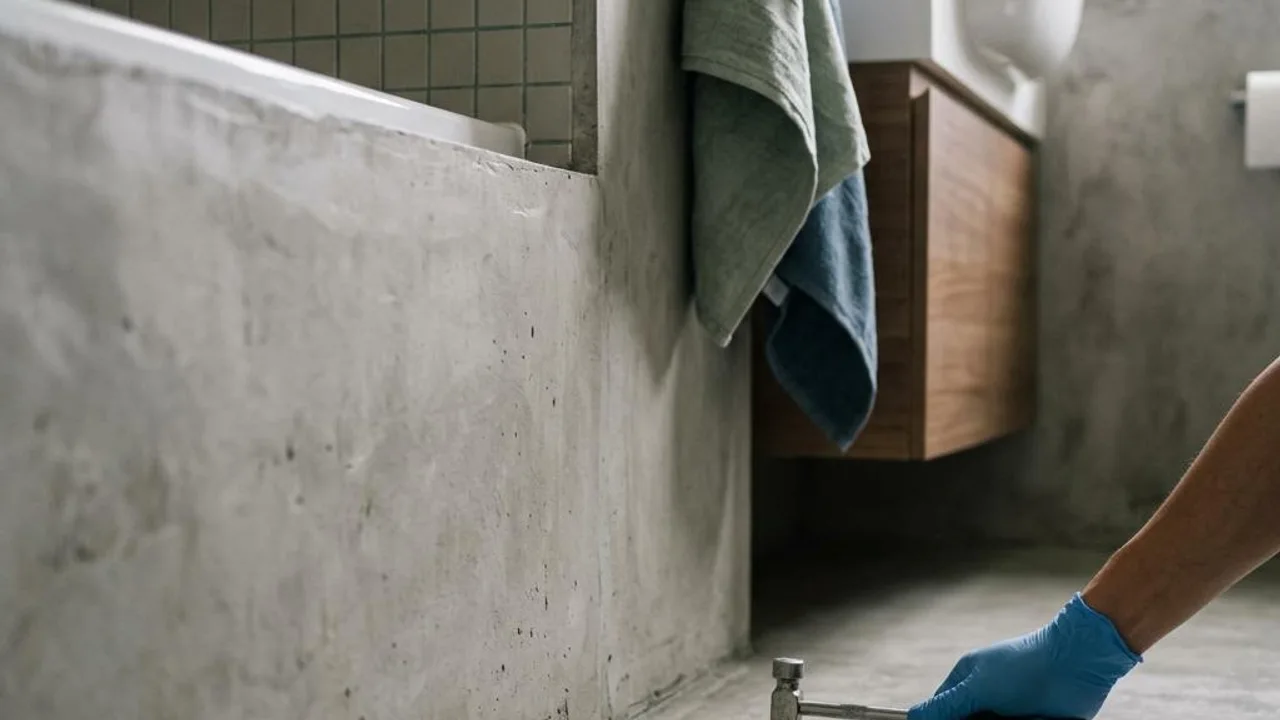
Characteristics and substrate requirements of seamless cement renovations.
As a trend in modern bathroom renovations, seamless cement is known for having no joints and a strong sense of spatial extension. However, this material is not traditional tile; its structural strength relies heavily on the mortar leveling layer of the wall or floor. If the base surface was not thoroughly cleaned during construction, or if the leveling layer ratio was improper, it is very prone to separating from the wall structure.
In the long-term humid bathroom environment, this potential hollow problem will be further exacerbated by frequent temperature fluctuations and water vapor penetration. If the substrate inspection is not done well before completion, once the surface layer cracks due to uneven stress, repair costs will increase significantly. A solid base is the only prerequisite for ensuring the wear resistance and crack resistance of seamless cement.
- Use suitable anti-crack mesh for the substrate to strengthen structural performance.
- Ensure the base surface is completely dry and clean before construction.
- Strictly monitor the cement ratio and drying time of the leveling layer.
Causes and risks of substrate hollowness.
Hollowness refers to air gaps formed between the surface mortar and the original structure, which may be difficult to observe with the naked eye initially. If the construction process is affected by temperature and humidity, or if the leveling layer is too thick or dries too quickly, it will cause uneven volume shrinkage, resulting in separation. Hollow areas lose structural support, so even if the surface looks flat, the vulnerability increases accordingly.
The bathroom environment is complex, and frequent foot traffic will subject the surface in hollow areas to immense shear force, causing the coating to crack. When tiny cracks appear, accumulated water from showering will seep into the substrate and gather in the gaps; not only is it difficult to drain, but it will also create persistent dampness, triggering internal wall seepage or odor problems.
- Avoid excessive moisture during substrate construction which leads to gaps after drying.
- Anti-cracking measures for thermal expansion and contraction are crucial.
- Be alert to construction details at the junction of wall corners and the floor.
Scientific inspection to prevent hidden seepage.
The bathroom is the core area for water use in the home; the integrity of the waterproofing layer is essential. The internal space created by hollowness often becomes a breeding ground for water vapor accumulation. Once the waterproofing layer is damaged, moisture cannot evaporate through the surface and instead erodes the floor below or adjacent walls. This hidden seepage is often only discovered during repairs and is extremely tricky to handle.
Through professional inspection, hidden hollow areas can be identified early, and tilers can be arranged to perform local grouting or re-leveling repairs. This preventive treatment can fundamentally stop moisture from seeping into the internal structure, improve the overall waterproofing performance of the bathroom, and avoid expensive subsequent renovation demolition projects.
- Prioritize checking the structural fit around the shower area and drainage outlets.
- Regularly check if the wall paint shows signs of water stains.
- Avoid sealing for renovation before dealing with hollowness.
Modernized acceptance process.
Including hollow inspection in the acceptance standard process is an important part of modern renovation engineering. Conducting scientific tapping assessments on the base before the surface coating is applied not only finds omissions in construction details but also guarantees the durability of every subsequent process step. When the base meets the standard of density and stability, seamless cement can exert its proper aesthetic and waterproof effects.
Before taking over the property, owners should ask the renovation contractor to provide photos or records of substrate construction and conduct physical probing on specific walls during acceptance. This pragmatic renovation spirit ensures a high-quality living environment and avoids chain-reaction maintenance hazards caused by poor construction in the future.
- Use professional equipment for hollow tapping tests during acceptance.
- Ensure the wall leveling layer reaches sufficient strength indicators.
- The bathroom seamless cement substrate hollow inspection is limited to observation of surface conditions and cannot guarantee structural strength, waterproofing layer integrity, or the status of hidden pipelines. The inspection results do not represent long-term durability after maintenance. If hollowness is found, please consult a professional renovation contractor for assessment; do not dismantle or cut the finish yourself. This inspection does not constitute structural safety certification or regulatory compliance appraisal; if water leakage is involved, it is recommended to hire qualified professionals for detailed instrument testing.
Importance of professional technical assessment.
Bathroom substrate hollowness involves knowledge of building materials science, tiling craftsmanship, and structural mechanics; it is difficult for the general owner to judge hidden internal problems based on senses alone. Seeking personnel with professional knowledge to use professional hollow hammers or acoustic detectors for inspection can accurately locate the range of hollowness and assess the severity without damaging the wall structure.
If large-area hollowness or structural hazards are found, it is recommended to ask a professional property inspector or senior tiler to analyze the source of the problem and formulate a repair plan. Before an assessment by professionals, avoid arbitrary chiseling to prevent larger-scale structural damage or rupture of the waterproofing layer.
- Professional technical personnel can precisely locate the severity of the hollow.
- Objective assessment reports help clarify construction quality.
- Do not recommend arbitrary wall chiseling without professional tools.
FAQs
Does the appearance of tiny cracks on the seamless cement surface necessarily mean the substrate has hollowness?
Cracks do not necessarily prove hollowness directly but may be a manifestation of shrinkage or stress release in the substrate leveling layer. If hollowness occurs at that location, water vapor is more likely to seep in and cause the cracks to deteriorate; it is recommended to hire professionals to use instruments for a tapping test to verify.
If small-scale hollowness is found during acceptance, can it be repaired by grouting?
For small-scale hollowness that does not affect the overall structure, the grouting method is a common repair measure aimed at filling gaps and re-strengthening the compactness of the substrate. Specific repair plans should be professionally assessed by qualified tilers based on the actual damage area and location.
Why does bathroom renovation require more attention to substrate inspection rather than just looking at the surface appearance?
Bathrooms have high humidity characteristics, and any substrate gaps will become hidden points for water accumulation. Good waterproofing performance depends on whether the substrate is stable and dense; if substrate quality is ignored, the maintenance costs and engineering complexity caused by leakage in the future will far exceed the investment in initial inspection.


