
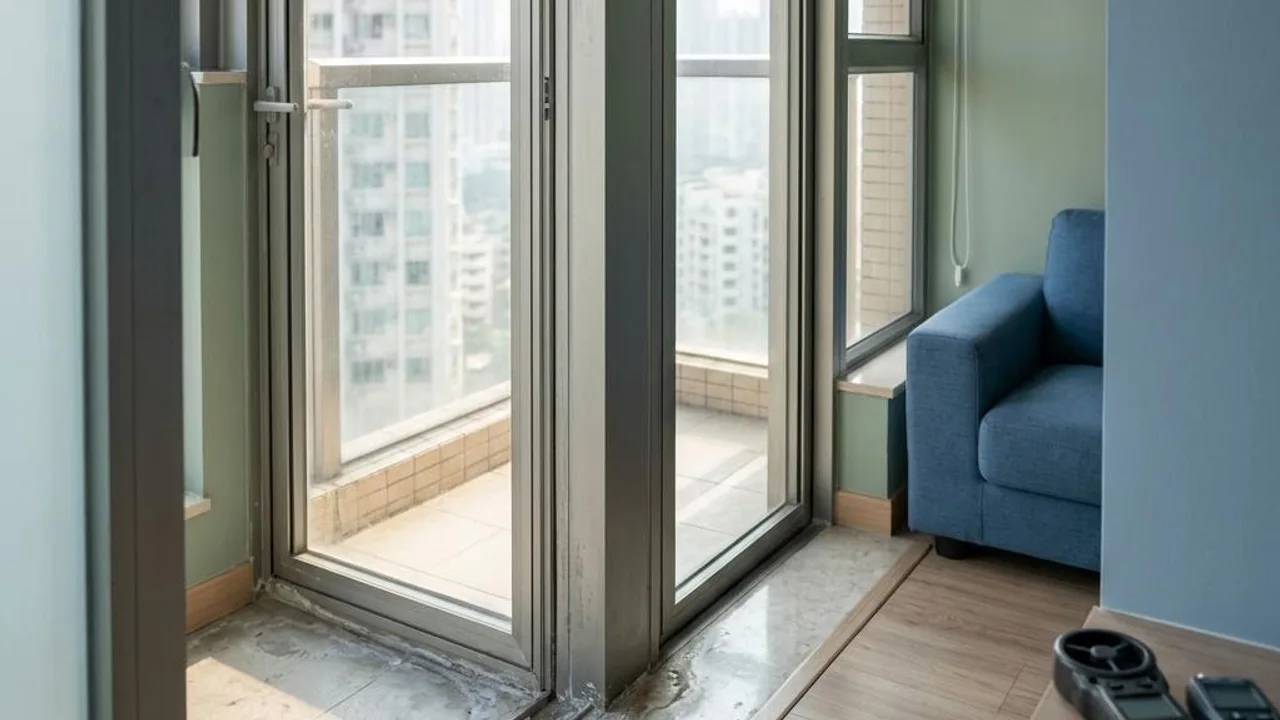
Wind pressure and structural hazards of high-rise balconies.
Although high-rise units offer open views from their balconies, they must withstand significant wind pressure effects. When strong winds strike the building's facade, they create marked positive and negative pressure differentials, posing a severe test for sliding glass doors, window frame structures, and waterproofing layers. If construction details or material durability are insufficient, long-term impact from strong winds can easily trigger window frame vibrations and abnormal noises; this not only disrupts residential quietness but also indicates a state of structural stress.
Beyond structural stress, wind pressure also directly threatens the sealing performance of window frames. Long-term pressure can lead to minute shifts in window frame joints, increasing the risk of rainwater seepage. Meanwhile, if balcony drainage systems are not designed to handle extreme weather, backflow is highly likely during heavy rain. Property owners should check the balcony floor gradient to ensure smooth drainage and prevent water accumulation from seeping into the interior and damaging the flooring.
- Inspection of window vibration and structural stress under strong wind pressure
- Sealing degree of balcony door frames and exterior walls to prevent wind and rain seepage
- Investigation of drainage system gradients and blockage conditions
The long-term wear and tear effect of west-facing sun on the indoor environment.
West-facing sun exposure is a common residential issue in high-rise units. Afternoon sunlight hits balcony and living room glass directly, causing indoor temperatures to rise sharply; this not only increases the load on air conditioning but also causes chronic ageing of interior decoration materials. Under continuous high heat and strong light, wooden furniture, sofas, and flooring can easily fade, crack, or even warp, severely affecting interior quality.
Property owners should pay attention to window surface area and the thermal insulation performance of the glass. If the glass lacks effective thermal insulation, it is difficult to maintain a stable indoor temperature by relying solely on air conditioning. In addition, long-term overheating indoors will accelerate the ageing of consumables such as window frame sealant strips. Understanding the impact of the west-facing sun effect on long-term maintenance costs is a necessary step for maintaining the durability of high-rise units.
- Drastic indoor temperature fluctuations and air conditioning overload issues caused by west-facing sun exposure
- Fading and wear of wooden flooring and furniture caused by UV radiation
- Risk of excessive ageing of window frame sealant strips and waterproofing materials
Professional inspection standards for window frames and glass.
High-rise facilities such as glass, sliding doors, and railings wear out faster under the dual pressure of wind and UV radiation. The focus of the inspection should be on whether the window frame rubber seals are aged or cracked, as this is directly related to the probability of water seepage in the unit. Furthermore, the smoothness of sliding glass door tracks and the anti-collision mechanism are prone to failure under the influence of high-rise wind pressure and must be carefully inspected to prevent opening/closing obstacles or the risk of derailing.
In addition to physical part wear, the anti-rust condition of metal railings is equally critical. High-altitude environments are full of salt and moisture, making metal joints highly susceptible to corrosion. Property owners should regularly inspect railings for rust or looseness; conducting on-site observation of these physical components is the only way to discover potential safety issues early and arrange for appropriate personnel to perform repairs.
- Test for smoothness and deformation of sliding glass door tracks
- Inspection of ageing levels of window frame sealant strips to prevent seepage
- Assessment of structural stability and hidden rust risks for metal railings
DIY preliminary observation and daily maintenance techniques.
In daily life, property owners can carry out preliminary observations themselves. In the afternoon, touch the window frame or wall behind the balcony glass; if it feels abnormally warm, it reflects a severe west-facing sun impact. Meanwhile, observe whether the window frame sealant edges have hardening or cracking marks; this is a common sign of high-rise water seepage problems and should be recorded immediately so that professional personnel can evaluate it.
Property owners can also try sliding the balcony door to observe whether there is friction or resistance caused by frame deformation. Carefully check for old water stains around the floor drainage outlet. These simple observation records can provide important information for subsequent professional inspections, avoiding the escalation of small flaws into serious seepage or insulation problems.
- Touching window frames and walls to sense changes in afternoon indoor temperatures
- Checking the integrity of window frame sealant strips to prevent rainwater seepage
- Testing whether the opening and closing smoothness of glass doors is affected by frame deformation
The necessity of seeking professional inspection.
When frequent vibrations, serious water seepage, or corrosion of metal structures are found in balcony glass, it is recommended to seek an evaluation from professional personnel with structural safety knowledge. Professionals can perform detailed inspections based on the wind load standards of high-rise buildings and suggest suitable repair schemes, such as replacing sealant materials that meet wind-resistance standards or adjusting damaged structures.
If property owners have safety concerns regarding balcony facilities, they should prepare a detailed observation list for the inspector to reference, including weather conditions during which abnormal noises occur, and the location and frequency of water seepage. Professional inspection can clarify the root cause of the problem, rather than merely performing surface-level repairs, thereby ensuring the long-term structural safety and performance of the unit in a high-rise environment.
- Have a professional evaluate the structural integrity of high-specification window frames and glass.
- Conduct professional inspections and provide rectification advice for potential water seepage risks.
FAQs
Is it mandatory for high-rise units to use thicker glass?
Yes. As high-rise units face immense wind pressure, the glass thickness and specifications of windows must comply with Building Regulations requirements to withstand the positive and negative pressure impacts of strong winds, and to prevent window frames from deforming under pressure, which could lead to glass breakage or water seepage.
Beyond air conditioning, how can one effectively improve the sensation of heat caused by the western sun?
In addition to air conditioning, applying high-efficiency thermal insulation and anti-shatter film can block most ultraviolet rays and heat. When paired with blackout curtains or external shading facilities, this can effectively reduce heat entry, thereby improving the efficiency of air conditioning and narrowing the indoor temperature difference.
Why do balconies make strange noises during strong winds?
This is a wind-whistling effect created as strong winds pass through narrow gaps in the balcony. If the sound is noticeable, you should check whether the window frame sealing is adequate, or consult a professional to assess whether the sealing condition needs improvement to reduce the direct impact of wind force on the window structure.


