
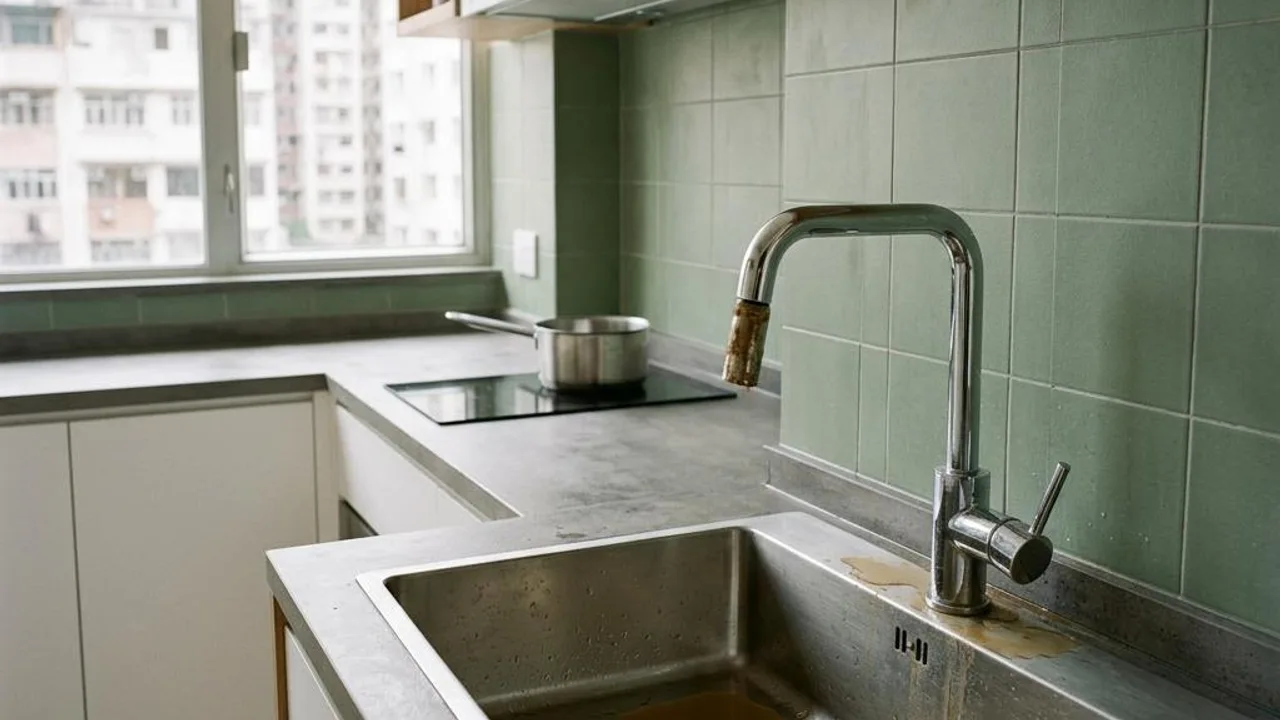
The physical truth of muddy water gushing out when turning on taps at handover.
Many owners are startled by muddy water gushing out when they first turn on a tap after receiving the keys to their new home. This is very common in new developments with long vacant periods or in units that have just completed renovations. When a unit is left uninhabited for a long time, the water inside the supply pipes remains stagnant, causing microscopic metal ions, oxides, and impurities left over during installation within the pipes to settle and accumulate while static.
When the owner turns on the tap for the first time, the pressure change from the stagnant water flow will flush out these accumulated deposits from the pipe walls or corners all at once. This is a physical sedimentation phenomenon and does not directly equate to severe rusting or structural damage in the building's overall water supply system. During the acceptance process, correctly identifying this phenomenon can effectively reduce an owner's psychological burden and solve the problem through orderly drainage procedures.
- Long-term vacancy leads to water stagnation and sedimentation.
- Pipe wall oxides being flushed out with the water flow.
- Construction debris and powder left inside the pipes.
- Physical sedimentation does not mean structural damage.
Analysis of the pipe stagnation and metal oxidation process.
From a plumbing engineering perspective, if the pipes in a new building are not continuously used after completion and handover, the oxygen in the water will undergo a slow oxidation reaction with the metal pipe walls. This reaction produces trace amounts of rust particles. Coupled with welding slag or installation impurities that are inevitably left inside the pipes during construction, these substances settle at the bottom of the pipes or in bends when soaked in water for a long time.
During initial use, water flow pressure stirs up these long-settled particles and carries them out through the tap. This phenomenon is more pronounced in old pipes, but it also exists in brand-new buildings. As long as the water supply pipes themselves are reasonably designed and the materials meet standards, the water quality will return to normal clarity after continuous flushing to drain the old stagnant water, and it will not affect long-term water safety.
- Oxidation reaction with oxygen inside pipes produces fine rust.
- Construction debris settles at pipe bottoms and bends.
- Long-term soaking accelerates mineral sedimentation.
- Water flow pressure stirs up static impurities causing turbidity.
Owner-led drainage and safety inspection steps.
Faced with turbid water quality upon first use, owners should adopt scientific drainage steps. First, you should turn on the kitchen and all bathroom taps at the same time and let the water run continuously for about one hour. During this time, observe whether the water quality gradually changes from the initial muddy yellow to clear and transparent. If there is a marked improvement in water quality during the process, it usually means the problem has been resolved.
Please note that if you notice abnormal or unstable water pressure or if the water flow carries obvious impurities during the drainage process, you should check the aerator filter at the tap's outlet. These filters often intercept impurities flushed from the pipes; regularly cleaning these filters ensures smooth water flow. If the water quality remains turbid after one hour of continuous drainage, this exceeds the scope of general physical sedimentation and may involve pipe corrosion or more serious installation issues, requiring professional intervention for follow-up.
- Turn on all taps to perform continuous drainage.
- Observe whether the water quality tends towards clarity.
- Clean tap aerators and filters.
- Monitor whether water pressure stabilizes during the drainage process.
Risk comparison and judgment for abnormal water supply.
Not all water quality issues belong to normal sedimentation. To help owners accurately judge risks, we have compiled several common abnormal phenomena. Short-term muddy water is usually resolved with drainage, but if the water quality remains turbid and is accompanied by a metallic odor, it may reflect flaws in pipe materials or potential rusting in the building's overall water supply system. Owners should possess basic screening ability when inspecting the property and must not confirm acceptance hastily.
If intermittent water stoppage or long-term low water pressure occurs, this often implies potential issues such as flattened pipes, blockages, or water supply valves not being fully opened. These hazards involving internal structures cannot be solved by simply running the water yourself; professional water pressure testing equipment must be used, and professional personnel must assess whether there are connection errors or serious leakage hazards to ensure the quality of living and water usage after moving in.
- Short-term muddy water is a common physical sedimentation.
- Continuous turbidity with a rust smell requires in-depth inspection.
- Insufficient water pressure implies pipe blockage or valve problems.
- Intermittent water stoppage may involve serious structural defects.
The role of professional inspection in property handover.
During handover inspection, if unusual water quality is observed with the naked eye, professionals will usually use instruments to perform systematic testing. This includes checking whether the water pressure stability meets building specifications and confirming whether there are signs of obstruction inside the pipes, thus judging whether structural repairs are needed.
If owners have concerns about water quality or pressure, they should clearly inform the inspection personnel about the time and duration of the phenomena occurring. By recording test data, professionals can assist owners in clarifying the root cause of the problem, avoiding the misjudgment of potential engineering flaws as simple temporary impurities, thereby ensuring that the property's water system is maintained at a standard level upon handover.
- Systematic measurement of water supply pipe pressure values.
- Examine the nature of sediments inside the filter to judge the source.
- Ensure indoor pipe installation meets building specifications.
- Judge whether further repairs or replacements are needed.
FAQs
Does seeing muddy water when turning on taps at handover mean it is absolutely undrinkable?
Because it contains a large amount of sediment when the water is first turned on, it is strongly recommended to avoid using it for contact with eating utensils or drinking directly. You should first perform thorough drainage and only resume use after the water quality is completely clear; consider installing a water filter if necessary.
What should be done if there is still a small amount of rust after running the water for a period of time?
This may be because the filter at the tap outlet has trapped impurities. It is recommended to try unscrewing the filter to clean it. If there is still a large amount of impurities spraying out after this treatment, it indicates that there may be persistent corrosion problems inside the pipes, and you should contact professionals to intervene for inspection.
When should I consider booking a professional team for detailed inspection?
When you discover persistent water turbidity, significantly low water pressure, or intermittent water stoppage, it means there are hazards in the water system. To avoid needing to knock down walls for repairs only after discovering problems during subsequent renovations, inviting a professional team to conduct pressure and water flow tests at the start of handover is the best practice.


