
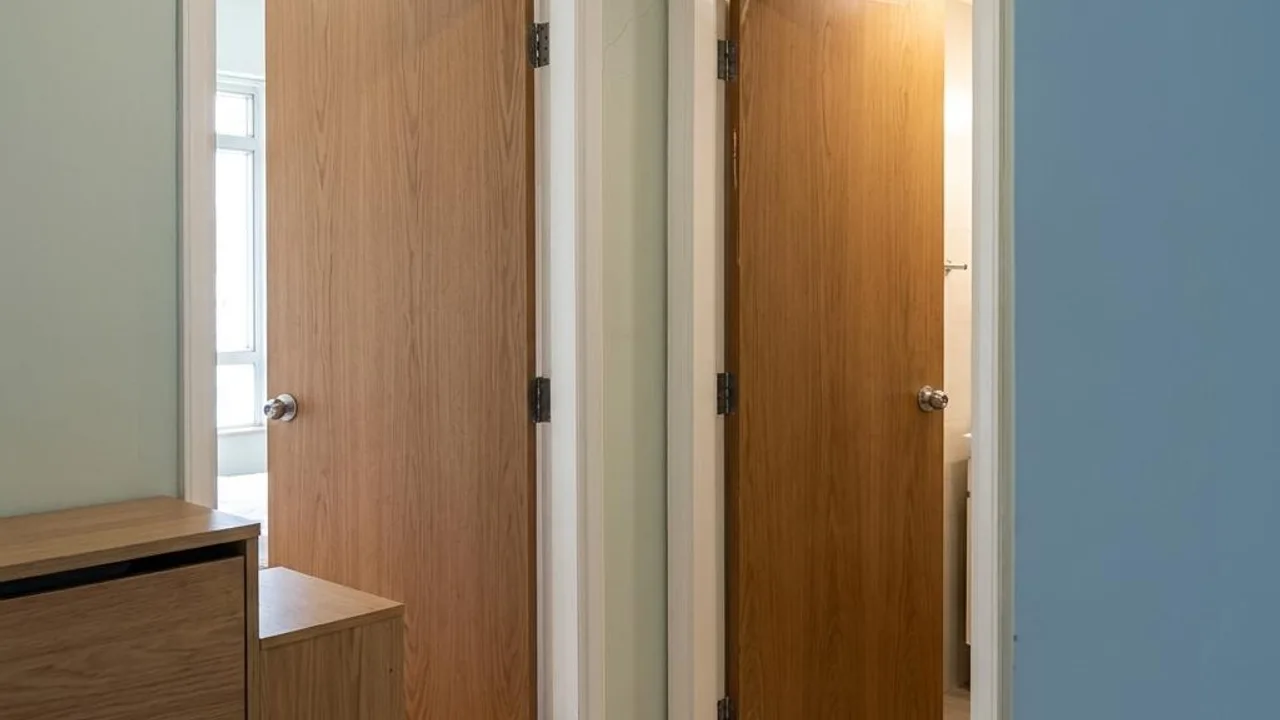
The truth behind door frame distortion: Wooden door expansion and structural crises.
Hong Kong's climate is humid for long periods, and wooden interior doors do easily swell due to seasonal moisture absorption, usually manifesting as tight operation, which improves in drier seasons. However, when the problem is not limited to a single door, but multiple room door frames cannot close simultaneously and door gaps are asymmetrical, this is often not just a humidity issue, but a potential signal of building structural displacement or settlement.
Door frames are fixed within concrete structural walls. When a building experiences foundation settlement, surrounding site works, or uneven structural stress, the wall undergoes subtle but continuous displacement. This structural-level change directly causes the embedded door frame to twist. If an owner views this only as simple humidity wear and ignores the possibility of structural settlement, it may eventually lead to enlarged wall cracks and even impact home safety.
- Slight door gap tightness caused by seasonal humidity.
- Multiple room doors distort simultaneously and are difficult to close.
- Unusual cracks appearing on walls surrounding the door frame.
- Structural settlement causing displacement between the door frame and the wall.
Avoiding temporary fixes: Planing the door is not the solution.
When faced with a jammed door frame, the first reaction of many renovation workers or owners is to plane the edges of the wooden door or sand down the frame. While this provides an immediate fix for the door operation, it is a superficial solution for distortion caused by structural settlement. If the building structure is settling, the door frame will continue to tilt over time, and the space created by planing will soon be filled by further deformation.
More dangerously, this cosmetic repair masks the structural problem of the wall, leading you to believe the crisis has been resolved and causing you to miss the optimal window for professional inspection. When walls bear excessive stress, the internal concrete may develop cracks or lead to exposed reinforcement hazards. Therefore, if severe door frame distortion is discovered, the root cause must be clarified, rather than relying solely on physical modifications, to ensure long-term structural safety risks are not overlooked.
- Planing the door only provides short-term adjustment to the door gap.
- Cannot slow down the continuous displacement of the wall structure.
- Masking cracks may lead to an escalation of structural hazards.
- Long-term neglect of structural pressure leads to increased cracking.
Identifying structural warning signs: Distinguishing between settlement and wear.
The key to distinguishing between common wooden door wear and structural settlement lies in the range of impact and wall appearance. Difficulty in closing a single toilet door due to humidity usually falls under the scope of maintenance and can be resolved by adjusting the hinges or keeping the room dry. However, if multiple door frames throughout the flat show simultaneous closing difficulties and uneven top-to-bottom door gaps, accompanied by obvious diagonal cracks on the walls (commonly known as 'eight-character' cracks), this usually suggests the building structure is under stress.
Through observation, owners can perform an initial assessment of the severity. If the cracks appear stepped or extend diagonally, this is usually a reflection of shear force on the wall or uneven settlement. This phenomenon is far beyond the scope of general repair work and must be handled by professionals conducting rigorous settlement monitoring and assessment to decide if further reinforcement is needed.
- Single door malfunction is usually due to humidity or hardware issues.
- Simultaneous distortion of multiple doors suggests structural displacement.
- Diagonal eight-character cracks are common signs of settlement.
- Repeated jamming after adjustment reflects continuous structural changes.
The boundary between safe DIY and professional technical expertise.
Regarding door frame distortion, an owner's autonomous DIY inspection should be strictly limited to minor repairs and maintenance. For example, checking if hardware hinges have loosened over time, trying to adjust them with a screwdriver, or using a dehumidifier in humid seasons to reduce indoor humidity, thereby decreasing minor jamming caused by wood expansion. These are routine home maintenance items that do not affect the integrity of the building structure.
However, remember not to perform any changes involving structural walls, such as randomly chiselling concrete walls, using electric drills on walls around door frames, or using chemical agents for forced repairs. When the situation exceeds the aforementioned maintenance, especially if door gaps are extremely uneven, accompanied by severe wall cracks or structural sounds, this is beyond the capabilities of an average person and must be entrusted to professionals for analysis.
- Adjusting hinge screws to ensure alignment.
- Using a dehumidifier to prevent wooden doors from absorbing moisture.
- Prohibited from chiselling structural wall surfaces to handle door frames.
- Must seek professional inspection for severe distortion.
The value of seeking professional inspection assessments.
When an owner discovers inexplicable door frame distortion or wall cracks, the assessment provided by a professional OPO Inspection team is crucial. Experts can use instruments to determine whether the wall is experiencing abnormal stress concentration or displacement, rather than just patching the surface.
Professional intervention can assist owners in clarifying the root cause of the problem, determining whether the phenomenon falls within the range of normal building ageing or if it is a preliminary signal of structural settlement. Obtaining a professional assessment report helps owners communicate with the management office or take appropriate reinforcement measures when necessary, ensuring long-term residential safety.
- Scientific judgement of structural settlement and stress displacement.
- Analysing the causes of abnormal wall stress.
- Providing repair advice to prevent the problem from worsening.
FAQs
Why can't planing a door permanently solve door frame distortion?
Planing the door only adjusts the gap between the wooden door and the frame and is a surface repair. If the distortion is caused by building structural settlement, the wall displacement will continue, the door frame will keep twisting, and the space planed away will soon be compressed again, failing to solve the root structural issue.
If all interior doors in the flat are distorted at the same time, what does this represent?
A single jammed wooden door is usually due to humidity or ageing hinges, but if multiple doors across the house are distorted and hard to close simultaneously, it usually implies the building structure is affected by stress, potentially due to foundation settlement or structural wall displacement; it is recommended to seek professional personnel to inspect the condition of the walls.
Does the appearance of diagonal cracks on the wall mean the house is about to collapse?
Diagonal cracks (eight-character cracks) usually reflect the wall being subjected to shear force or uneven settlement and do not mean the house is collapsing, but they are a warning sign of changes in the structural state. Owners should record the location and length of the cracks and request a professional inspection team to assess their structural safety.


