
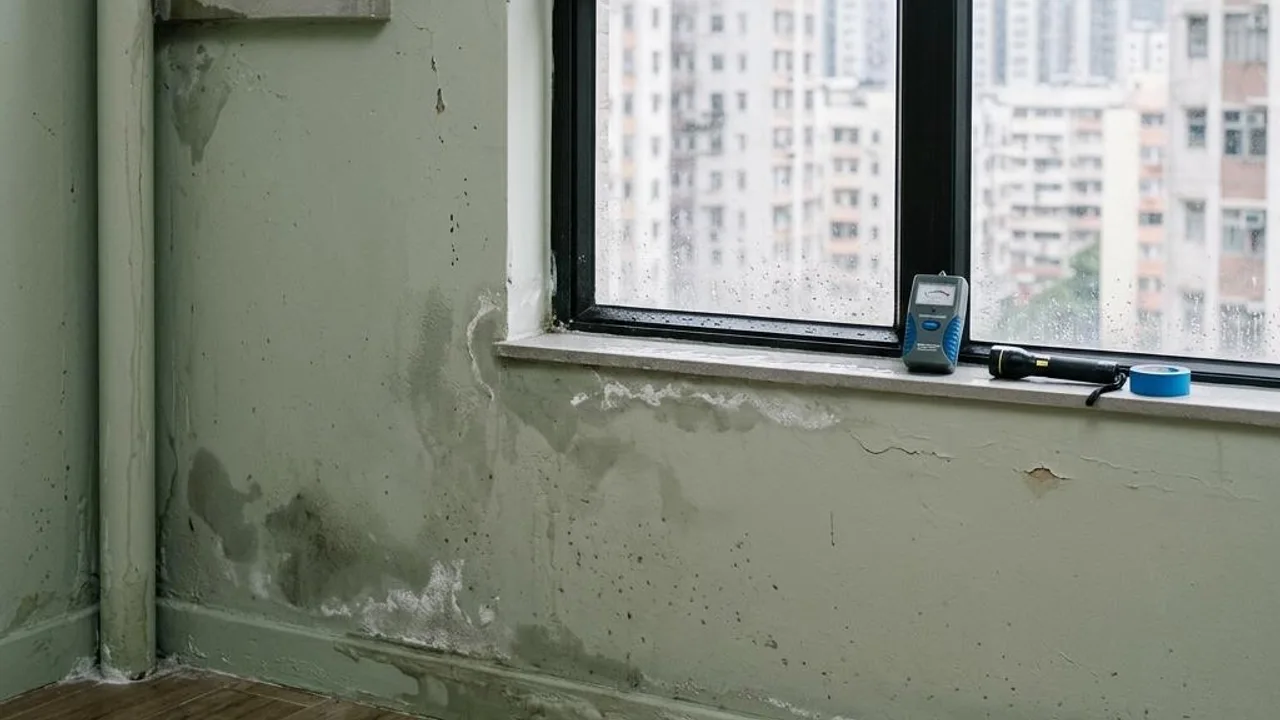
Observation of foundation and overall structure
Extreme rainfall can cause a surge in soil moisture content, exerting pressure on foundations and building structures. After wind and rain, owners should, under safe conditions, observe whether new cracks, spalling of finishes, or abnormal tilting have appeared on the unit's external walls, beams, or columns. If cracks are seen to be widening, a qualified engineer should be commissioned as soon as possible for a professional assessment.
Property inspections will examine whether the structure has watermarks or saltpetering deposits caused by foundation movement. These phenomena may be signs of damage to the waterproof layer or pressure on the foundation. Owners should pay attention to indoor floor flatness and record any new cracks in order to report them to the management office and follow up on repairs.
- Observe if new cracks have appeared on the unit's external walls or rooftop.
- Check if main walls show abnormal tilting or bending.
- Notice if there are unusual water stains or spalling at beam and column locations.
- Record crack locations and periodically take photos to compare changes.
Inspection for wall and ceiling seepage
After heavy rain, walls and ceilings are high-incidence areas for seepage. If wall paper turns black, paint blisters, or obvious water stains appear, it usually means rain has invaded the structure or external wall waterproofing has failed. During inspection, a professional moisture meter can be used to measure the moisture content of walls, identify wet areas difficult to detect with the naked eye, and identify potential mold growth risks.
Window seepage is common due to aging or cracking of the sealant at window frame joints. If there is long-term water seepage around windows, it not only affects the interior decoration but may also lead to rusting of steel reinforcements. Owners should conduct a detailed inspection after the weather clears to confirm the status of window frame seals and whether drainage holes are clogged by debris.
- Check if water droplets have seeped into the edges of all window frames.
- Use a moisture meter to detect moisture content of wall bases and ceilings.
- Clear silt and debris from window drainage holes.
- Check if paint blistering locations have been in a high-humidity state for a long time.
Roof and rooftop drainage systems
The roof is an important barrier for a building. If the rooftop drainage system is blocked by trash, gravel, or silt, accumulated water during extreme rainfall can cause severe seepage in top-floor units. Owners should contact the management office to check if rooftop drainage channels are clear, and observe if there is accumulated water or plant growth on the surface of the waterproof layer, to prevent rain from backing up into the unit.
In addition, the safety of facilities on the rooftop must be checked after strong winds. This includes exposed equipment such as lightning conductors, windows, and air conditioner racks; confirm they are firmly installed and show no signs of loosening to prevent equipment from falling or rain seepage caused by structural damage, thereby reducing unnecessary damage to the internal environment.
- Confirm rooftop drainage openings are not blocked by any debris.
- Inspect the waterproof layer for damage or vegetation growth.
- Confirm exposed roof facilities are installed firmly and without loosening.
- Check if lightning rods and antenna racks remain stable after strong winds.
Protection of low-lying areas and basements
For residences located in low-lying areas or equipped with basements, the functioning of drainage pumps is crucial. Owners should check if pump components are operating normally and ensure the backup power supply system is ready. If water accumulates on-site and cannot be removed immediately, priority must be given to electrical safety; do not approach power supply devices in slippery or flooded environments.
Check if there are water seepage marks, such as watermarks or saltpetering deposits, on basement walls and corners; these are signs of flooding. If severe flooding is found, avoid entering the site; wait for professionals to clear the water and conduct an electrical safety assessment, and enter only after confirming the environment is safe.
- Confirm that the basement water pump is operating normally and is not blocked by debris.
- Check the floor or wall base areas for signs of water stains or seepage.
- Clear any silt from the drainage channel covers.
- Ensure the basement is well-ventilated to prevent mould growth.
Inspection of electrical systems and air conditioning
Rainwater contact with electrical equipment is highly dangerous. If you discover moisture in indoor electrical installations, you must cut the power immediately. Check sockets, air conditioners, and switchboards for signs of water ingress or a burning smell. If appliances spark, emit unusual odours, or trip the circuit breaker, do not attempt to turn them on yourself; you must hire a registered electrical contractor for a professional inspection.
If an air conditioner is not properly handled during heavy rain, the unit may fail due to water accumulation. Check if the air conditioner bracket has been tilted by strong winds and ensure the drainage pipe is clear. Any repairs or additions involving fixed electrical installations must be handled by a professional electrical worker to ensure compliance with regulations and safety requirements.
- Check if there are water stains or signs of deformation inside the electrical sockets.
- Ensure electrical plugs are dry and kept away from water sources.
- Check whether the air conditioner bracket has shifted due to wind force.
- Hire a professional electrical contractor to inspect tripped circuit breakers or abnormal appliances.
FAQs
What should a property owner do after discovering wall seepage?
The owner should first document the damp area and keep it ventilated. If the seepage is near sockets or wires, the power should be turned off immediately. Subsequently, you may entrust a professional to use an infrared detector or moisture meter to inspect the leakage path; do not attempt large-scale renovations or repairs before confirming the cause.
How can one determine if an air conditioner bracket is safe after strong winds?
The owner should observe whether the bracket screws have loosened, whether there is any rust on the bracket surface, and whether the unit has any obvious tilt. If the bracket is found to be unstable, do not climb up to check it yourself; hire a qualified technician to conduct a professional safety inspection and reinforcement.
When is it necessary to find an engineer if cracks appear in the structure?
If cracks appear in a diagonal distribution, increase significantly in width, or are accompanied by concrete spalling on beams and columns with exposed reinforcement, it indicates potential structural damage. The owner should commission a registered structural engineer to conduct a professional assessment and diagnose the foundation or building support system.


