
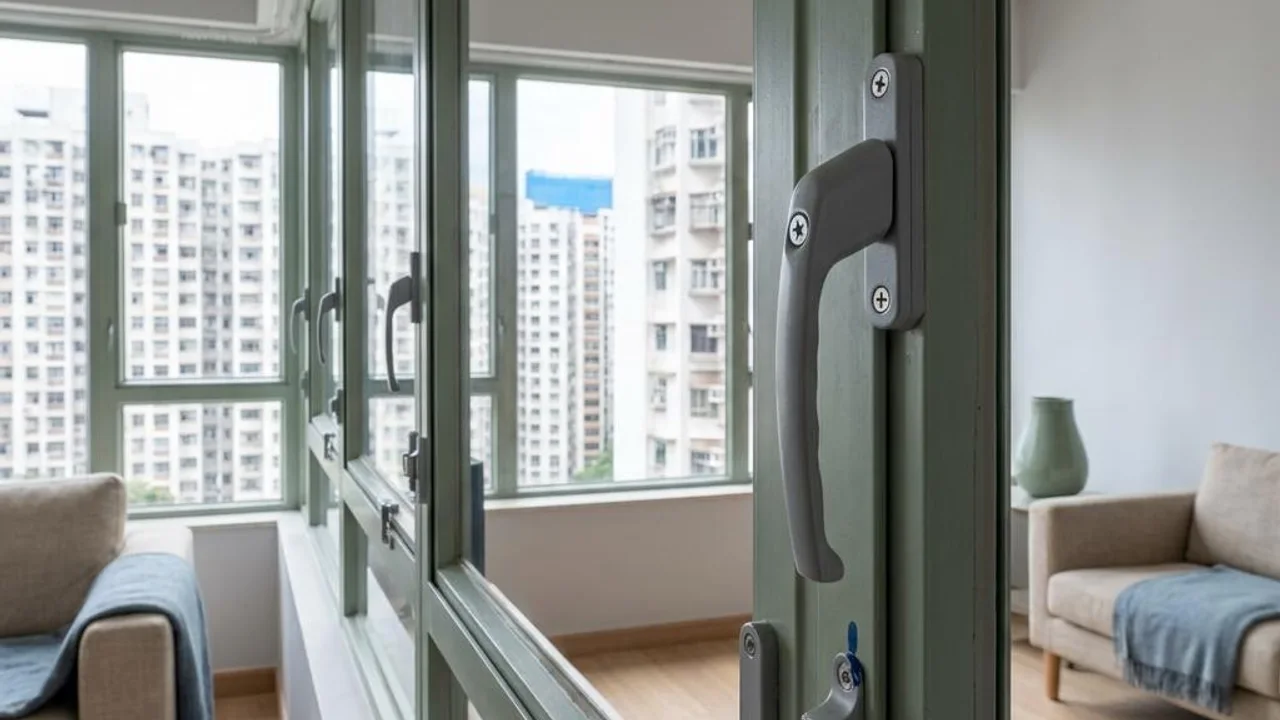
The link between door/window screws and home safety
Many owners focus on obvious renovation flaws during property inspections but often ignore small accessories like door and window screws. These screws are not just decorative components but are central to maintaining the stability of the entire door and window frame. If they are missing or corroded, it will directly threaten the structural safety of the windows, especially in Hong Kong's typhoon-prone environment, where such hidden dangers cannot be ignored.
In addition to structural support, the tightness of the screws directly affects the sealing performance of doors and windows. When screws are missing or loose, the window frame may not fit perfectly with the window sill, leading to seepage during windy and rainy days, damaging interior decorations and furniture. Keeping all connection screws intact can effectively reduce maintenance troubles caused by ageing and loosening.
- Maintain the geometric structural integrity of door and window frames to prevent deformation under long-term stress
- Ensure window frame sealing to prevent external wall seepage from affecting the indoor environment
- Extend the service life of window hardware and slow down wear and tear caused by opening and closing
- Avoid potential risks of falling windows caused by loose frames
Systematic property inspection procedures
When performing operational checks, you should repeatedly open and close the windows to feel if the resistance is uniform. If there is obvious noise during opening/closing, or if the doors and windows feel shaky, it usually means that the screws at some connection points have loosened.
Be sure to pay attention to the seams between the sealing strips and the window frames, and observe whether light or obvious airflow is entering; this is often the primary sign of loose screws. At the same time, check whether the window frame connections are misaligned due to loose screws.
- Visually check all screw positions on window frames and hinges
- Repeatedly test the smoothness of opening/closing and check for any wobbling or metallic clanking sounds
- Try pushing the window frame to check if all corner connections are tight
- Conduct optical observations at the gaps in the window frame to check the continuity of the sealed space
Professional practical techniques of property inspectors
In property inspection practice, checking screws requires not just visual inspection but also experience-based judgment of window hardware. For example, when checking the fixed position of window hinges, pay special attention to whether the screw holes have widened or are stripped, causing the screws to fail to lock tightly. Although these details are hidden, they are the core of keeping windows steady during daily use.
Owners should actively record the location of every window and mark specific problems such as missing or too-short screws on the inspection sheet, which can effectively improve repair efficiency. In addition, for the sealing fit between the aluminium window's weather stripping and the screw positions, stay vigilant, because once a screw loosens, the rubber seal will lose pressure, causing rainwater to seep into the room.
- Prioritise checking the tightness of screws on window hinges and opening handles
- Check whether there are excessive rust or corrosion marks on the screw heads
- Check whether all screw models are uniform to avoid mixing
- Observe whether there are abnormal gaps or wobbling points at the window frame edges
The correct approach to handling screw problems
If serious damage involving screws or window frame deformation is found during the property inspection, owners should not attempt high-risk repairs themselves. Especially regarding structural problems involving high-altitude work or exceeding general maintenance, these must be handled by a registered contractor or professional engineering personnel.
Owners only need to be responsible for accurately recording the problem and clearly pointing out the location and status in the report. Through detailed image records and text descriptions, it can help professionals assess repair solutions more quickly and accurately, avoiding secondary damage caused by improper handling.
- Use a camera to record the specific location of screw rust or missing screws
- Record abnormal sounds or wobbling phenomena when opening/closing windows
- Note whether there are obvious gaps between the window frame and the wall
- Commission professionals to evaluate repair solutions to ensure structural safety
Long-term awareness of screw maintenance
As door and window hardware screws are consumables, long-term exposure to outdoor humidity and thermal expansion and contraction makes rust and loosening common phenomena. Regular inspection of screw conditions is a key habit for maintaining the long-term good operation of windows.
When micro-rust is found on screws, they should be cleaned early and assessed for replacement, rather than waiting until the screws break or cause the window frame to shift before taking action. Good maintenance awareness can effectively extend the service life of door and window hardware and reduce unnecessary repair frequency.
- Perform a basic visual inspection of window hardware every six months
- Observe whether there is powdery rust or water accumulation around the screws
- Ensure windows open and close smoothly, avoiding forced pushing that puts pressure on the screws
- Before seasonal changes, note whether sealing strips are lifted due to loose screws
FAQs
If rust is found on window frame screws during a property inspection, does it mean the window is no longer safe?
Light rust may just be a surface phenomenon, but if the rust is severe enough to cause a decline in the screw's structural strength, or causes looseness or wobbling at the window frame joints, it is a structural hazard and it is recommended to have it checked by a professional.
If loose aluminium window screws are found, can owners buy and replace them themselves?
It is not recommended for owners to carry out repairs themselves. Because windows involve high-altitude structural safety and require ensuring that the screw length and specifications match the window frame perfectly, it should be left to qualified engineering personnel to replace them to ensure safety.
How do you determine if window frame seepage is caused by loose screws?
If loose screws cause the junction between the window frame and window sill to be unsealed, seepage may occur at the window edge during wind and rain. Owners can record whether the water leakage location is adjacent to the loose screw position and provide it to professionals to investigate the cause.


