
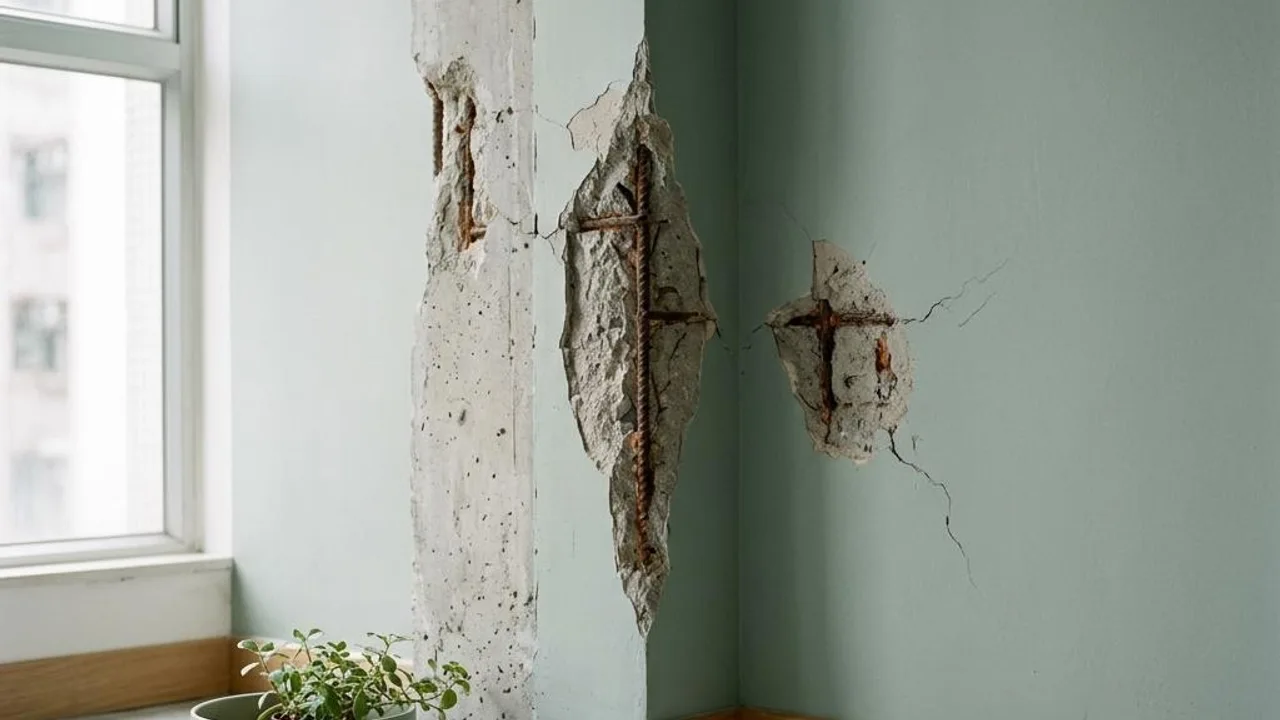
Structural safety and wall inspection.
Structural stability is the core of housing safety. Although visual inspection cannot directly prove the absolute safety of a building's structure, observing whether walls have abnormal cracks, concrete spalling, or component deformation can effectively discover potential hazards. Buyers should pay attention to these phenomena and record their location and scale so that they can assess whether further structural appraisal is needed.
In addition to internal walls, evaluating public areas such as whether fire escapes are unobstructed is also crucial. If you find that escape routes are blocked by debris, you should report it to the property management office immediately. Furthermore, for older properties, owners must pay attention to whether they meet the requirements of the Buildings Department's Mandatory Window Inspection Scheme to ensure that window components are safe and avoid the risk of falling objects due to disrepair. Such inspections are limited to general visible areas and cannot guarantee structural safety or the compliance of electrical equipment. The Mandatory Window Inspection Scheme is an independent statutory procedure that must be carried out by a qualified person registered with the Buildings Department, not part of general property inspection services.
When involving professional engineering or safety hazards, please consult relevant professionals; do not dismantle structures or perform dangerous tests yourself.
- Observe whether there are abnormal cracks or concrete spalling on the walls and floor slabs.
- Check if there are signs of deformation at internal structural connections.
- Evaluate the unobstructedness of fire escapes in public areas.
- Check whether the windows of an old building have completed the compliance requirements of the Mandatory Window Inspection Scheme; such mandatory window inspections are independent statutory procedures that must be carried out by a qualified person registered with the Buildings Department, not part of general property inspection services.
Water systems and leakage prevention.
Leakage problems are often hidden in floor slabs or concealed pipes. Buyers should focus on checking whether the drainage systems in kitchens and bathrooms are unobstructed and observe whether there are phenomena such as mold, water stains, or peeling paint on ceilings, wall corners, or window edges. These signs often indicate that the waterproof layer has failed or pipes are corroded and are common sources of building maintenance.
If signs of water seepage are discovered before handover, the owner can request the seller to clarify the cause and deal with it. With professional assistance, inspection personnel can further test the condition of the pipes through means such as water pressure tests. Taking active preventive measures can avoid losses from dealing with complex leakage problems after moving in.
- Check the unobstructed status of drainage outlets in kitchens and bathrooms.
- Observe whether there are obvious water stains or mold on ceilings and wall corners.
- Evaluate whether there are signs of corrosion or water droplets at exposed locations of pipes.
- Confirm that the waterproof layer has no obvious damage within the visible range.
Electrical configuration and electricity safety.
The safety of electrical systems directly affects the stability of daily living. Inspection focus is on whether wall sockets are stable and whether electrical switch panels show signs of overheating such as burning or discoloration. Ensure that the electrical load is reasonable and avoid excessive use of extension leads for high-power appliances (such as air conditioners and water heaters) to reduce the risk of circuit failure caused by overheating.
For fixed electrical equipment such as air conditioners or electric water heaters, their circuit connections should be installed by registered electrical contractors, and it must be ensured that they have a valid Work Completion Certificate. When taking possession, buyers should ensure that the residual current device function in the fuse box is normal and confirm that the circuit layout meets safety standards. If exposed wires or chaotic wiring are found, a registered electrician should be requested to perform an assessment.
- Check the stability of wall-mounted sockets and the appearance of panels.
- Observe whether there are overheating discoloration or scorched marks at electrical switch positions.
- Confirm that high-power electrical appliances have dedicated sockets and comply with safety clearances.
- Check the condition of the distribution board and verify the certificates for electrical appliances.
Compliance inspection and ownership risks.
A property's title and compliance are directly linked to the owner's financial and legal risks. Buyers must compare the property's actual internal layout against approved building plans to check for unauthorized alterations, such as the removal of load-bearing walls or illegal enclosures on balconies. Such alterations may lead to the Buildings Department issuing a demolition order, resulting in additional reinstatement costs.
Before completing a purchase, confirming whether a property is subject to outstanding statutory repair orders can effectively avoid financial disputes. If a unit has undergone significant alterations, it is essential to request the relevant submission documents from the seller. Through a professional on-site inspection, buyers can gain a more accurate understanding of the property's legal status and avoid assuming responsibility for unauthorized building works left by the previous owner.
- Compare the actual layout of the property with the approved building plans from the Buildings Department.
- Observe whether there are any unauthorized alterations to load-bearing walls.
- Inspect balconies or external walls for any illegal enclosure works.
- Confirm whether the property is subject to any outstanding statutory repair orders.
Cost control and maintenance planning.
An effective inspection process is key to a buyer controlling property acquisition costs. Through a detailed status report, buyers can clearly identify which items require immediate rectification and which fall under long-term maintenance budgets. This data-driven analysis can serve as an objective basis for negotiating repair costs with the seller, avoiding the discovery of hidden expenses after completion.
Reasonable maintenance planning can prevent small issues from becoming major problems. For example, repairing aging electrical wiring or minor damage to waterproof layers early is often much cheaper than waiting for the problem to deteriorate into large-scale power outages or seepage disputes with neighbours. Treating property inspection as part of asset management helps in planning future renovation sequences and enhancing the value of the home.
- Estimate subsequent repair costs based on the defects listed in the report.
- Use inspection results as an objective basis for negotiation with the seller.
- Avoid future collateral damage caused by ignoring minor defects.
- Plan a logical sequence for renovation and repair works.
FAQs
Can a property inspector guarantee that the property's structure is absolutely safe?
No. Property inspectors primarily use visual observation and relevant equipment to check the current state of a unit, identifying surface-visible structural anomalies (such as significant cracks or deformation). If the safety of the building's overall structure is in question, it is recommended to hire a qualified structural engineer for an in-depth assessment.
How should an owner handle signs of water seepage if discovered?
Owners should record the location, extent, and colour of the seepage in detail and take photos for their records. Before completion, they should require the seller to clarify the source of the leakage; if necessary, a qualified professional can be hired to perform a seepage test. Do not perform any demolition or destructive testing yourself, as this may expand the scope of the damage.
Why is it necessary to compare the unit layout with the building plans?
Comparing the layout with plans helps identify whether the property contains unauthorized alterations, such as illegal removal of load-bearing walls or illegal extensions. These alterations can lead the Buildings Department to issue a demolition order; if they cannot be reinstated, the new owner must bear the legal liability and the high costs of demolition works.


