
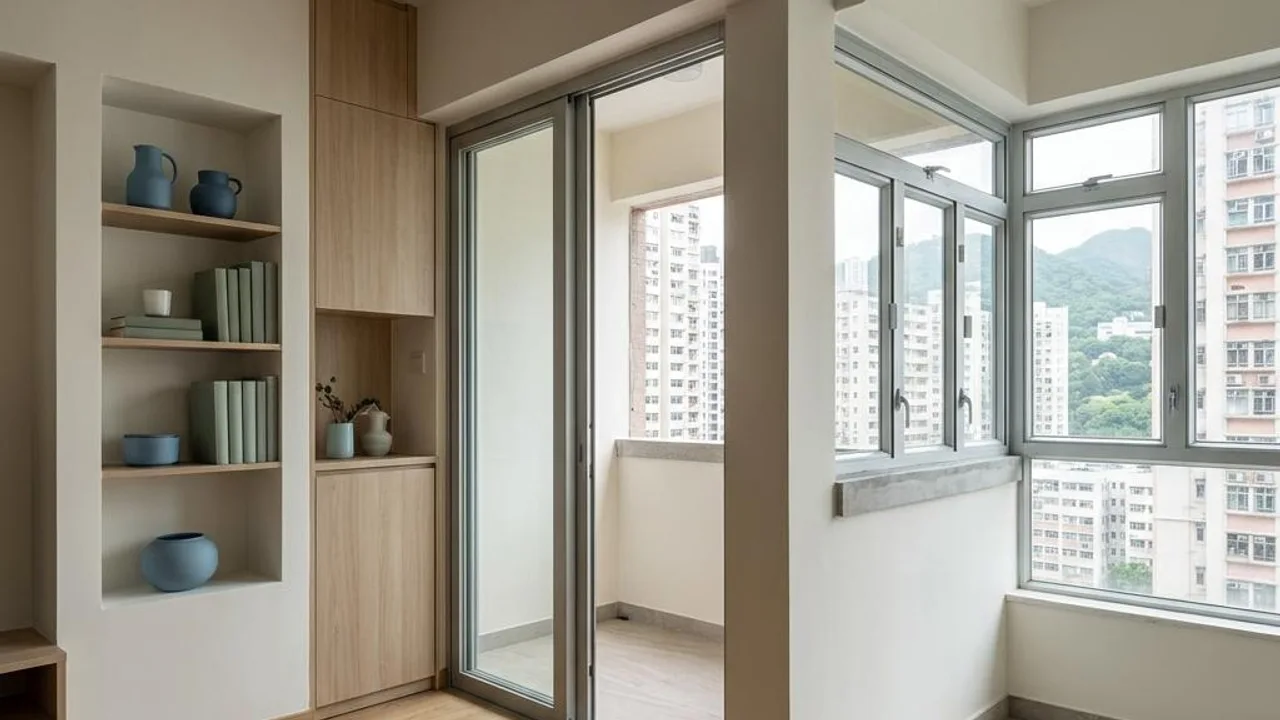
Structural and legal concerns regarding UBWs.
Unauthorized building works refer to building or alteration works carried out without the approval of the Building Authority, commonly found in balconies, rooftops, or subdivided units of residences. Such works often lack professional structural calculations, which may lead to excessive building load, threatening overall structural safety, and even violating fire safety regulations by blocking escape routes.
At a legal level, once an owner is issued a demolition order by the Buildings Department, they have the responsibility to remove the UBW within a specified deadline. Failure to comply with the demolition order not only leads to fines but may also affect mortgage applications and the transfer of the property; therefore, identifying such illegal facilities is crucial when taking possession or purchasing a second-hand property.
- Affects building structural load-bearing and safety.
- Violates fire safety regulations and escape route limitations.
- Owners must bear legal demolition responsibility.
- May be refused mortgage provision by banks.
- Affects the future sale liquidity of the property.
Economic and social impacts brought by UBWs.
UBWs will directly damage the economic value of the property. Properties with illegal structures not only increase the financial burden of future cleanup but may also cause buyers to adopt a wait-and-see attitude toward the transaction price, reducing the property's liquidity. In addition, owners should pay attention to the insurance company's claim clauses; losses involving illegal structures are often refused compensation.
From a community perspective, UBWs lead to chaotic building management and affect the stability of the sewage system and electrical load. Such actions not only ruin the building's aesthetic appearance but also affect the property rating of the entire neighborhood, which in the long run constitutes damage to the common interests of all owners.
- Property value is negatively affected or discounted.
- Risk of insurance invalidation due to unauthorised building works
- Overloading of communal electricity and drainage systems
- Reduction in overall property management standards and reputation
- Increased long-term maintenance costs for clearing unauthorised facilities
Professional property inspection and UBW identification process.
During site inspections, OPO Inspection professionals rigorously compare the property against original building plans, examining the unit for additional wall construction, enclosed platforms, or unapproved partitioning. Although our inspectors primarily conduct visual observations and cannot provide legally binding unauthorised building works (UBW) certifications, their professional experience assists owners in identifying clearly suspicious non-compliant items.
If owners have doubts regarding the property's condition, apart from commissioning a property inspection, they should personally view the plans through the Buildings Department's Building Information Centre. If discrepancies between the actual state and statutory plans are discovered, consult an architect or relevant legal professional to obtain a legally valid assessment to protect your personal interests.
- Checking for discrepancies between site structures and building plans
- Marking suspected unapproved partition walls
- Testing for illegal enclosure of balconies or window modifications
- Checking whether electrical equipment exceeds original design capacity
- Advising owners to check official Buildings Department records
How owners should properly handle suspected UBWs.
Upon discovering suspected unauthorised building works, owners should first remain calm and avoid carrying out any demolition or large-scale alteration works. It is recommended to record the location of suspected works in detail and take photographs for reference when communicating with the Owners' Corporation or legal professionals; do not attempt to dismantle or handle relevant electrical facilities yourself.
If the facilities involve building structures or communal pipes, owners should not interfere without authorisation. You should proactively enquire with the Buildings Department for accurate information on building plans and, under the advice of professional consultants, determine whether legal procedures or proactive restoration are required to avoid subsequent legal liabilities and demolition costs.
- Taking photographic records of the location of suspected non-compliant facilities
- Checking official approved plans from the Buildings Department
- Consulting professional architects for advice
- Enquiring with the management office about building structure and regulations
- Retaining all relevant records for professional assessment
Daily maintenance and legal compliance recommendations.
Maintaining the legality of a unit is not only for property transactions but is also a crucial part of ensuring residential safety. Before commencing any renovation work, owners must ensure that designs comply with the Buildings Authority’s standards, especially regarding modifications to structural walls, drainage systems, and balconies.
Regular property inspections can help owners rectify minor non-compliant situations in a timely manner. If a survey or removal order is received from the Buildings Department, owners must actively cooperate and consult qualified contractors to handle the matter, ensuring work complies with current legislation to avoid subsequent fines and criminal liability.
- Ensure you check the unit's building plans before renovation
- Avoid making any modifications to load-bearing walls
- Ensure drainage systems are not connected to non-compliant facilities
- Cooperate with the Buildings Department's Mandatory Building Inspection Scheme
- Consult professionals to ensure the legality of construction work
FAQs
Can an inspector determine whether a facility is an illegal unauthorised building work in a property inspection report?
No. Inspectors mainly point out discrepancies based on visual observation and comparison with building plans, but the authority for legal identification of unauthorised building works belongs to the Buildings Department. Inspection records are for reference only and cannot serve as legal evidence.
If a hidden unauthorised building work is discovered after purchasing a unit, how should the owner handle it?
Owners should first stop using the unauthorised building work and commission professionals to review the plans and current situation to determine if it poses an immediate structural hazard. If necessary, consult legal advisors to evaluate whether reporting to relevant departments or carrying out legal repairs is required.
If the Buildings Department's plan records do not match reality, does it definitely mean there is an unauthorised building work?
Plan discrepancies are indeed a high-risk indicator of unauthorised building works, such as changes in wall positions or enclosed balconies. However, the final result must be analysed by a professional architect to confirm whether unapproved alterations are involved; it is recommended that owners use government official records as the baseline.


