
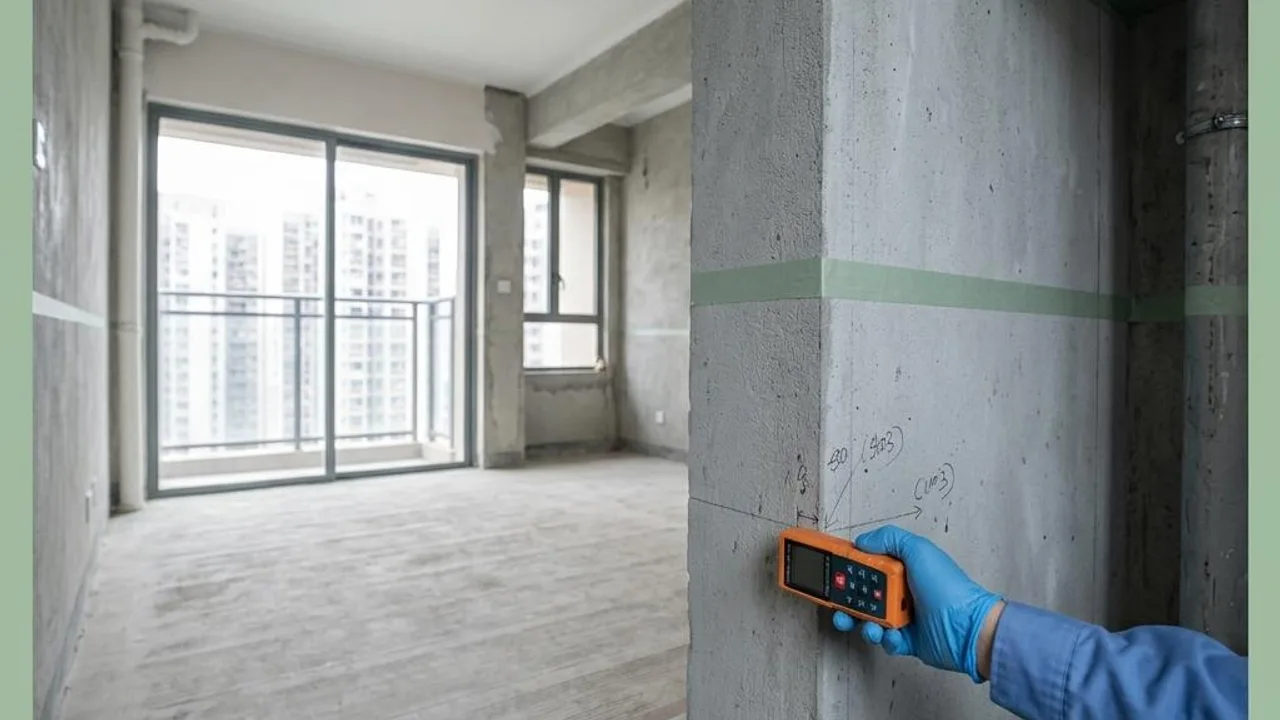
Why property inspection for unfurnished flats cannot be overlooked
Government-subsidized housing is commonly handed over in an unfurnished state, meaning the original raw state without interior decoration. Many prospective owners mistakenly believe that raw flats have a simple structure and do not require professional inspection. However, walls, floor slabs, and floor bases in unfurnished flats often have hollows, cracks, or leakage hazards left by construction. If problems are only discovered after decoration, the repair cost will be much higher than at the beginning of the handover.
The core purpose of property inspection is to identify potential defects at the project handover stage, ensuring the house structure meets the handover standards and safeguarding the safety of future decoration. A professional property inspection process can provide owners with data support to request warranty repairs from the developer, preventing secondary damage and budget overruns caused by dealing with structural problems after decoration.
- Check whether there are severe hollows or irregular cracks in the walls
- Confirm the flatness of the floor base to prevent uneven tiling later
- Check if the locations of water supply and drainage pipe outlets match the floor plans
- Assess whether exposed structural beams and columns have protective layers
- Check if the electrical box connection is stable and complies with the expected settings
Key inspection steps for professional property inspection
Structural inspection is the top priority for unfurnished flat acceptance. Property inspectors will inspect walls, beams, columns, and floor slabs in detail, using equipment to test whether walls have delamination or hollowness and identifying the type and severity of cracks. If these structural problems are not handled at the time of handover, it may lead to the collapse of the plaster layer during subsequent decoration, or even affect living safety.
Plumbing and drainage facility testing is equally important, including checking whether all drainage outlets are unobstructed and whether there is a risk of leakage at pipe joints. Since unfurnished flats have not yet installed sanitary ware, inspection personnel must ensure that the pipes are well sealed to avoid water accumulation or leakage inside the unit after moving in, which would affect the floor and indoor air quality.
- Use a metal rod to tap and test the wall hollowness rate
- Check the distribution of construction cracks on floor slabs and wall corners
- Confirm the smooth flow of all drainage pipes and missing protective covers
- Check the safety and labeling of electricity and water entry points
- Assess the condition of the property's surrounding supporting facilities and outdoor amenities
Common misconceptions and prevention of property inspection
Many owners think that an unfurnished flat is empty and does not need inspection. In fact, the quality of wall plastering in unfurnished flats is highly prone to problems. If tiles are laid directly on walls with severe hollowness, it will cause the tiles to fall off in the long run. In addition, many owners overlook the inspection of water pipe pressure, leading to the discovery of micro-seepage in concealed pipes after handover, making repair work complicated.
At handover, one should make good use of the warranty period provided by the developer and keep a written record of all detected defects. Professional opinions can help you clarify responsibility and ensure all engineering flaws are repaired before decoration begins, thereby reducing future maintenance risks for the residence.
- Avoid discovering wall hollowness that needs scraping and redoing after decoration
- It is recommended to deal with leakage hazards before laying floors
- Key inspection should include the smoothness of window operation
- Regularly check electrical installations and confirm the WR1 certificate
Environmental and maintenance suggestions after property inspection
Property inspection not only focuses on the work itself; after handover, attention must also be paid to the ventilation and air quality within the unit. Even in new buildings, maintaining good ventilation inside can effectively prevent mold growth caused by dampness. It is recommended to keep indoor humidity below 70% and check the condition of all electrical sockets to ensure safe use.
After handover, owners should properly keep all handover documents and property inspection reports as the basis for repairs during the warranty period. If there is abnormal power supply or abnormal odors in the unit, record the location in time and hire qualified professionals to inspect it; do not carry out any electrical or plumbing modifications yourself.
- Maintain indoor air circulation to reduce the risk of mold growth
- Keep indoor ambient humidity below 70%
- Periodically check whether plugs and wires are damaged
- It is strictly forbidden to modify circuits for high-power electrical appliances yourself
- If electrical abnormalities are discovered, hire qualified professionals
The professional role of the property inspector and communication
When conducting a property inspection, owners can observe how inspection personnel mark defects. Correct marking methods can effectively assist repair personnel in locating problems, thereby increasing repair efficiency. Owners should take the initiative to understand the terminology in the report to ensure they are clear about every structural detail in the unit.
Effective communication is the key to solving problems. After problems are detected, owners should refer to professional reports to negotiate reasonably with the developer to ensure that the repair plan meets the original engineering quality standards, rather than just short-term repairs that mask the problems.
- Confirm the clarity of defect markings in the property inspection report
- Request specific photographic records regarding structural defects
- Ensure that the repair proposals comply with building standards
- Properly back up the property inspection report as a maintenance record
FAQs
Is it really necessary to have a property inspection for a bare-shell flat, or can it be handled during renovation?
Although a bare-shell flat has exposed structures, if issues like wall hollows, cracks, and drainage leaks are not addressed before renovation, discovering them after tiling or installing cabinets will result in wasted renovation work and additional budget expenditure; therefore, it is essential to carry out an inspection during the handover stage.
If wall hollows are discovered during the property inspection, how should the owner proceed?
The owner should record the hollowed locations in detail in the property inspection report and require the developer to carry out repairs according to the maintenance terms. The repair method usually includes removing the plaster at the hollowed locations and re-plastering; once completed, re-inspection is required to ensure the wall surface is solid.
After taking possession of the flat, can the owner check the electricity box themselves if the connections are messy?
Owners are strictly forbidden from opening the electricity box themselves for any testing or modification. If you believe the circuit layout is unreasonable or discover connection problems, you should record the relevant situation and hire a licensed electrical worker to conduct a formal inspection and adjustment to ensure electrical safety.


